


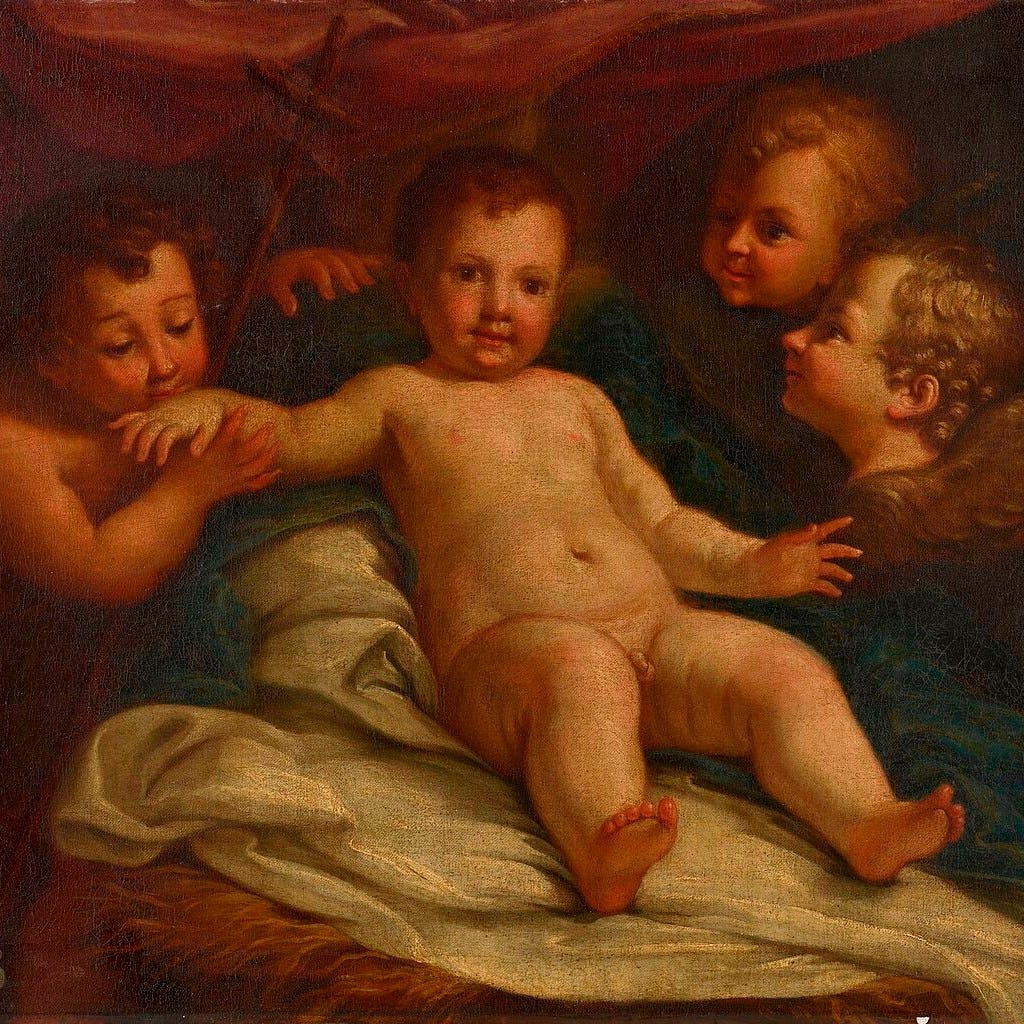
What if the Christ-child change the world even before His first breath?
We rush past Christmas straight to the Cross, treating the Incarnation like a mere opening act.
But what if God’s becoming man had profound spiritual effects on the world even before the Cross?
St. Thomas Aquinas, building on St. Augustine, reveals ten profound ways: five that draw us irresistibly toward God’s goodness, and five that pull us powerfully away from evil.
The Incarnation is very well known but not well understood. Take a second-look at the Christ-child in the manger.
You’ll never see Christmas the same way again.
Reminder: this is a teaser of our members-only deep dives.
To support our mission and get our premium content every week, upgrade for a few dollars per month. You’ll get:
New, full-length articles every Tuesday and Friday
The entire archive of members-only essays
Access to our paid subscriber chat room
The Mystery of the Incarnation
Christmas (Christ’s Mass) is a celebration of the birth of Jesus Christ, God incarnate. The term incarnation means “in fleshed” and refers to the Christian belief that the Second Person of the Blessed Trinity, the Son, became man and was born of the Virgin Mary. God becomes flesh at the Annunciation, when He is conceived in Mary’s womb, and is then born at Christmas.
There are two central mysteries to the Christian religion: the Trinity and the Incarnation. The Incarnation, however, is often overlooked. In other words, if people ask why God became incarnate, most Christians immediately jump to Christ’s Passion, i.e., Christ became man to die for us. Yet, this view often misses the spiritual effects of the Incarnation itself. Few understand the Incarnation had a spiritual effect upon mankind apart from the Cross. In other words, the Incarnation is not reducible to a prelude to the Cross but is rather a mystery that had profound spiritual effects upon mankind in and of itself. The God-man changed the world even before His death and resurrection.
Christmas invites us to ponder this mystery—though few do.
St. Thomas Aquinas (drawing largely from St. Augustine) offers a tremendous reflection on the Incarnation by giving five ways the Incarnation moved us toward the goodness of God and five additional ways the Incarnation pulled humanity from evil.
It is a life-changing lesson.
5 Ways the Incarnation Drew Humanity to God
1. Faith: Greater Assurance in the Truth
First, it helps you find the truth. Truth is the conformity of the mind to reality, and mankind often struggles to understand the truth. St. Augustine sees the Incarnation as helping mankind better find the truth. He states: “In order that man might journey more trustfully toward the truth, the Truth itself, the Son of God, having assumed human nature, established and founded faith” (De Civ. Dei xi, 2). Jesus does not come to share the truth, like a prophet, rather He is the Truth. Truth-itself speaks directly to humanity, which is a great benefit to the intellect and to the faith of mankind. Faith is the assent of the intellect to the revealed truth of God, and the Incarnation allows God to speak directly to man as a man—a tremendous bolstering of your faith.
2. Hope: The Depth of Divine Love
St. Augustine sees that the Incarnation also strengthened man’s hope. Now, the theological virtue of hope is often misunderstood. You might use the word hope to mean you wish something happens, like “I hope my team wins the game.” But the theological virtue of hope is much richer. It is a desire and trust in Christ’s promises of eternal happiness with God in heaven. It is a belief held to be true that arranges your entire life, like a destination does to a journey.
As such, St. Augustine states: “Nothing was so necessary for raising our hope as to show us how deeply God loved us. And what could afford us a stronger proof of this than that the Son of God should become a partner with us of human nature?” (De Trin. xiii). The Incarnation gives man greater hope in God because what God would wed Himself to human nature and come to dwell amongst us save one that loved us? What God would humble Himself to do this except for a good and beautiful God?
The Incarnation is an image. St. Paul tells us that Christ, the God-man, is the visible image of the invisible God.
And it is an image that gives hope.
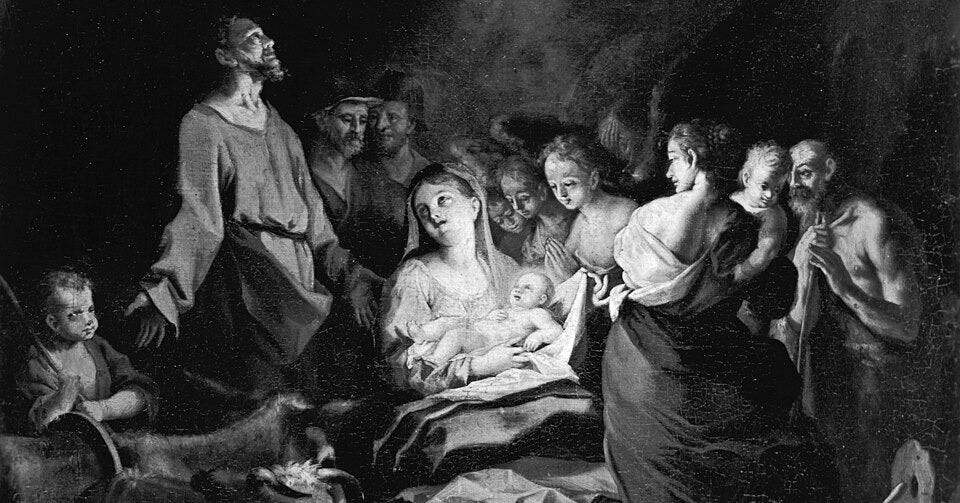
3. Charity: An Invitation to Love
As implied in the first two spiritual effects of the Incarnation, the act of God becoming man draws mankind deeper into the love of God. Remember that knowledge is an antecedent to love; or rather, you cannot love that which you do not know. Knowledge comes first. It is notable that the first two effects help increase your knowledge of God, and this, naturally, will be an invitation for you to increase your love of Him.
St. Augustine comments: “What greater cause is there of the Lord’s coming than to show God’s love for us?” And he afterwards adds: “If we have been slow to love, at least let us hasten to love in return” (De Catech. Rudib. iv).
In the Incarnation we see God’s love, and it is an invitation to love in return.
4. So That God May Be Seen & Followed
God leads by example. He calls man to live a good and beautiful life, and in the Incarnation God models this life for you. As St. Augustine teaches: “Man who might be seen was not to be followed; but God was to be followed, Who could not be seen. And therefore God was made man, that He Who might be seen by man, and Whom man might follow, might be shown to man” (xxii de Temp.). Here, you should contemplate the concept of mimetic power. Young men mimic Achilles because of his spiritedness (thumos) and prowess in battle and the respect that comes from it—and they mimic Achilles more than any written lesson. As such, God came in the Incarnation to show us how to live—not just tell us. He gives us something to mimic, to be Christ-like.
Humanity needed an exemplar who could be seen and followed.
God gave mankind Himself as an image, a potent mimetic sign.
5. A Full Participation with the Divine
The last way the Incarnation draws you closer to God is the most sublime: the Incarnation is an invitation to participate in the life of God. As St. Augustine proclaims: “God was made man, that man might be made God” (xiii de Temp.). The Incarnation weds human nature with the divine nature—and human nature can never be the same. The Second Person of the Trinity, the Son, is now also a man. Moreover, He is the man, the Second Adam, the bringer of the new Genesis and the new humanity. By moving out from the old headship of Adam to the new headship of Jesus Christ, humanity joins the body of Christ (the Church). It is by uniting to Jesus that you are brought up into the love and life of the Trinity.
St. Thomas Aquinas, following St. Augustine, shares these as five ways the Incarnation invites us into deeper love of God.
But, that is not all the Incarnation did.
The Incarnation occurred in a fallen world—a world suffering from evil.
And just as it invites man deeper love of God, it also helps to draw him out of evil.