


Dear Supporters of Ascend,
Plato’s Lovers (sometimes called Rival Lovers) is one of the short, strange, and so-called “forgotten” dialogues. It is definitional—asking “What is philosophy?”—and ends in aporia, that fruitful perplexity in which we learn, at least, what philosophy is not. The erotic setting of the Lovers also merits your consideration, as Plato hands you a mirror to examine what your soul loves and how it loves it.
I am grateful to Dr. Frank Grabowski and Dr. Brett Larson for joining me to work through this text. Both have been generous companions to our journey through Plato here on Ascend, and I am indebted to them. Their insights sharpened my own reading of a dialogue that, on its face, appears simple yet quietly sets the stage for the education of the soul, the ordering of eros, and the first movements of political philosophy.
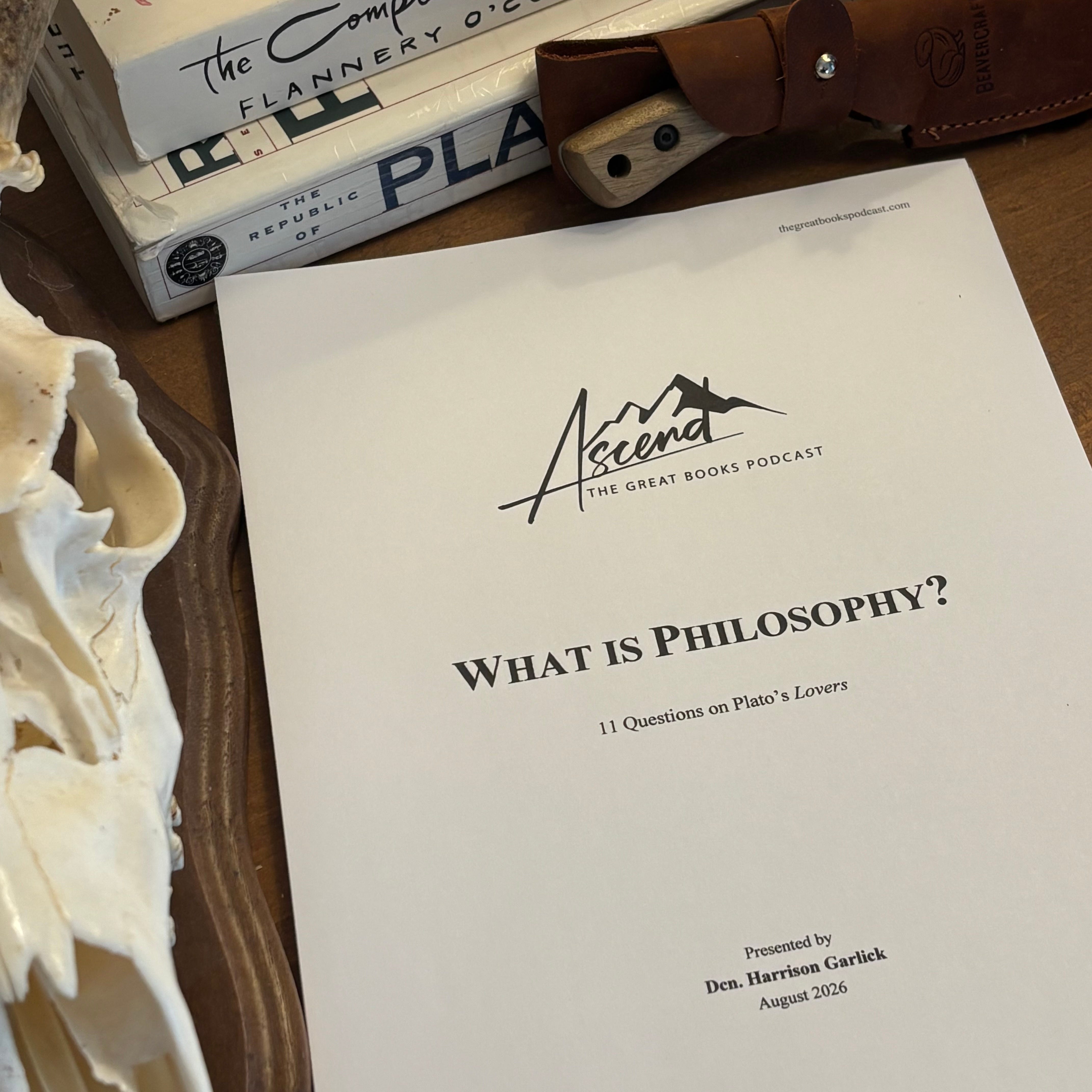
Here is everything you receive in the guide:
A 8-page guide (3000+ words)
An introductory letter from Dcn. Garlick
Detailed outline of the Lovers
Preliminary reading questions
11 thorough questions on Plato’s Lovers
The setting of the dialogue is a grammar school. Two older rivals—one devoted to athletics, the other to music and “much learning”—compete for the favor of younger boys who are themselves disputing astronomy and geometry. Into this erotic and educational contest walks Socrates. The dialogue raises the question of who truly loves the young, and what a true love of the soul looks like. It also offers subtle images of the tripartite soul and serves as a notable appetizer for the richer conversations of the Republic.
Below is the full guide available to download.