


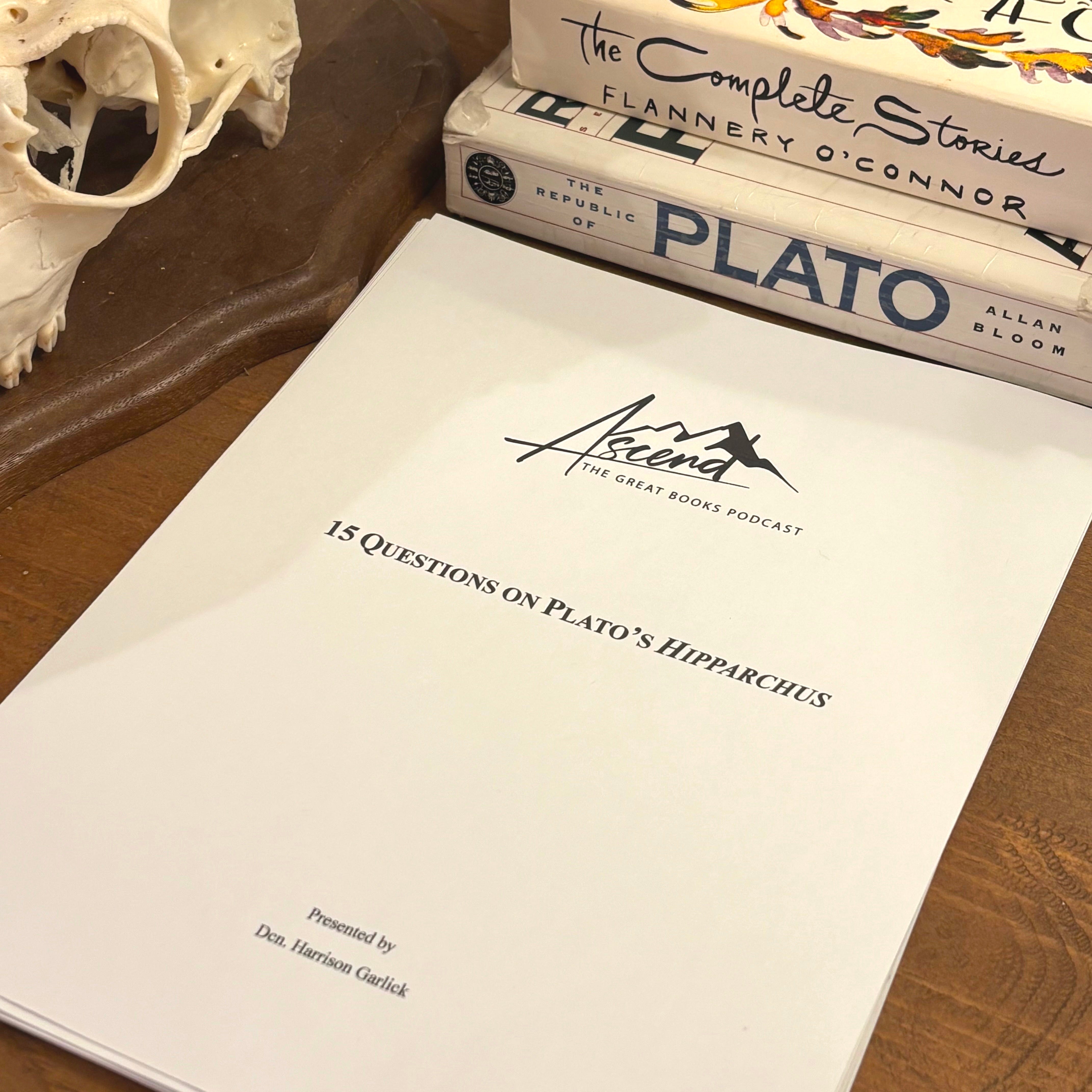
Dear Supporters of Ascend,
What is “love of gain”? What does it mean that an undeniable trait of the human condition is the insatiable desire for more? In Plato’s Hipparchus, we turn to a short, strange, somewhat forgotten dialogue to explore this exact question. It is a mysterious dialogue, as it begins abruptly, has no setting, the interlocutor is nameless, and ends in aporetic bewilderment. At first glance, the Hipparchus is most remarkable for how unremarkable it is.
Join our reading group and study the great books with us!
To support our mission and get all our resources, become a paid book club member. In addition to the weekly podcast, you’ll get:
Live book club discussions with Dcn. Garlick & guest scholars (monthly)
In-depth reading guides and essays to lead you through the great books
Access to our incredible community of readers
The full archive of members-only content (guides, essays, and podcasts)
But the simple question of “what is love of gain” soon turns to a subtle but sharp examination of the democratic man—he is timid, shame-based, egalitarian, whose imagination cannot rise above the love of money. Socrates invokes the so-called tyrant, Hipparchus, as an example of the soul turning toward a love of wisdom, bewildering his democratic interlocutor. Yet Plato quietly invites his reader to explore the surprising parallel between the supposed tyrant Hipparchus and Socrates—leading the reader to understand how democratic egalitarianism hates greatness and struggles to distinguish between the two souls who would rise above its leveling effect: the tyrant and the philosopher.
Here is everything you receive in the guide:
A 9-page guide (3700+ words)
An introductory letter from Dcn. Garlick
Detailed outline of the Hipparchus
15 thorough questions on Plato’s Hipparchus
The dialogue is aporetic and leaves the reader without a positive definition of “love of gain.” Yet Socrates’ capacity to beautifully deconstruct common definitions and democratic presuppositions does teach the reader something about “love of gain”—and many of the teachings of the Hipparchus set up the reader for the more mature conversation on these same subjects in the Republic.
Below is the full guide available to download.