


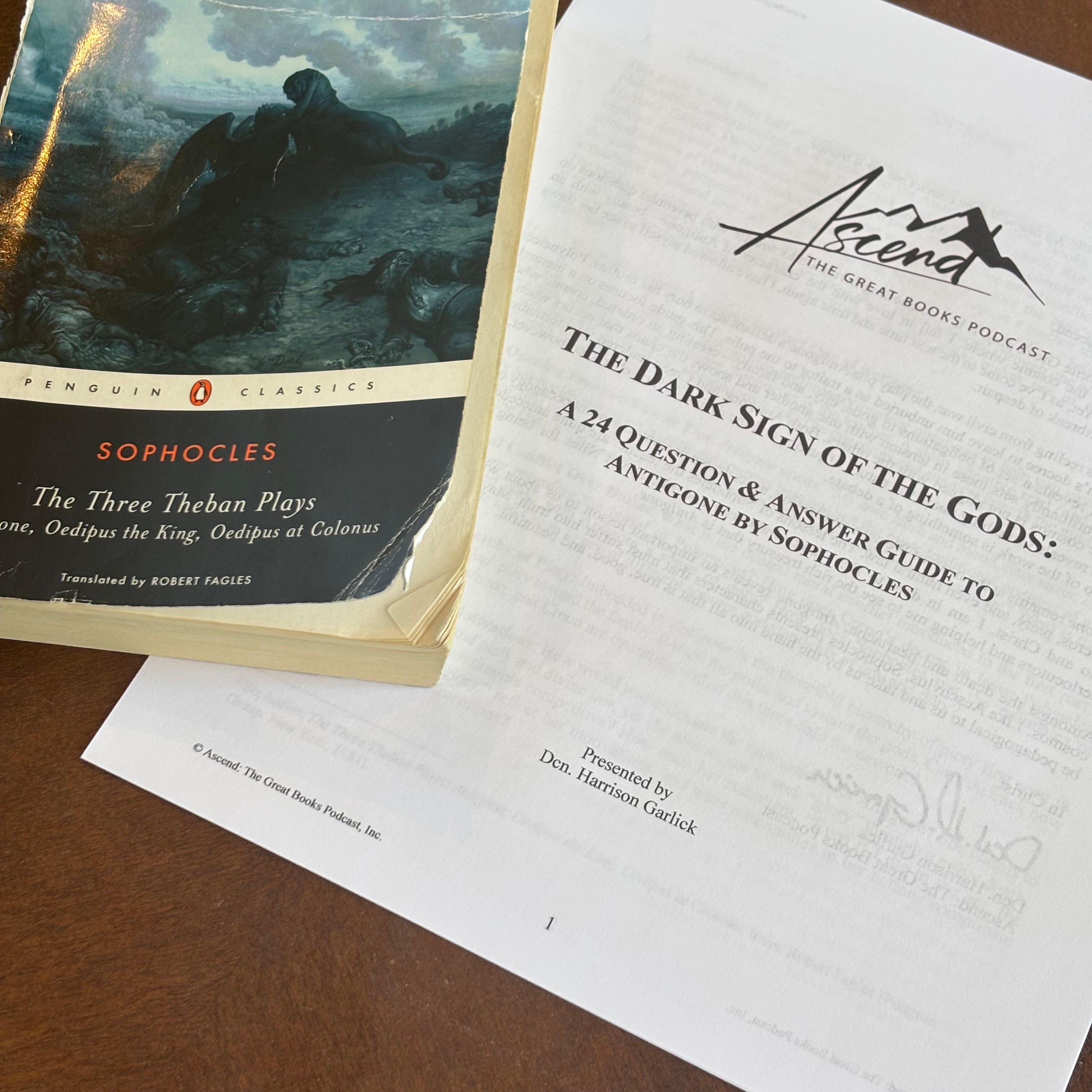
Antigone is one of the best dramas in Western civilization. If you were going to read any ancient Greek play, it would be Antigone. It is a masterwork on piety, justice, and the nature of the divine.
To help you read this work, we’ve attached a 13-page guide that includes an introductory letter, preliminary reading questions, and a 24-question deep dive into Antigone. Everything you need to read Antigone well.
Join our reading group and study the great books with us!
To support our mission and get all our resources, become a paid book club member. In addition to the weekly podcast, you’ll get:
Live book club discussions / Q&A with Dcn. Garlick & guest scholars
In-depth reading guides and essays to lead you through the great books
Access to our incredible community of readers
The full archive of members-only content (guides, essays, and podcasts)

Introductory Letter & Guide
Dear Supporters of Ascend,
Antigone is my favorite Greek play. It is a compelling invitation to wrestle with perennial questions on piety, justice, and the cosmic whole. I fell in love with the character of Antigone—beauty with an adamantine will. Yet, as I’ve come to the text time and time again, I have allowed myself to see her flaws and feel the heartbreak of despair.
Set in a Thebes reeling from civil war, the play pits Antigone’s defiant act to bury her brother, Polyneices, against Creon’s decree to leave him unburied as a traitor to the polis. This guide focuses on a hierarchy of piety that reveals a set of obligations to gods, city, and family—creating an ordered, cosmic whole. Sophocles brilliantly sets these in tension with one another and shows the chaos that occurs when one part of the cosmos is not aligned with the others. Both Antigone and Creon undergo transformations—and each reveals something about the nature of justice and the divine. Which character, however, is the true hero of the work is something of a debate.
