


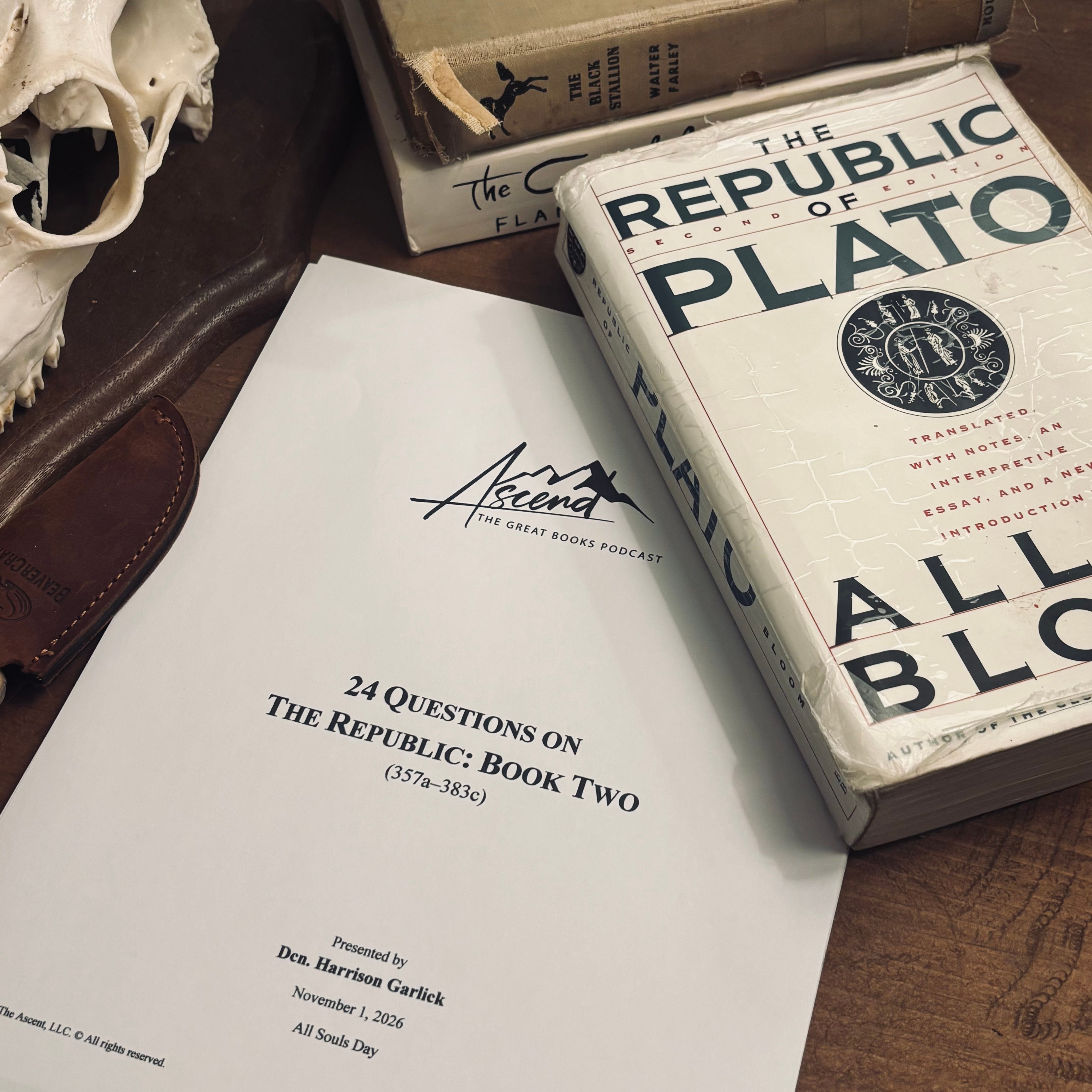
Dear Members of the Ascend Book Club,
Book Two of the Republic is the foundation for the rest of the text. Glaucon restores Thrasymachus’ argument and strengthens it. Does Glaucon believe his own argument against justice? Presumably not—but the culture has kneaded into Glaucon and Adeimantus a belief that the best life is to be unjust while appearing just. In this way, you receive the benefit of both. Glaucon and Adeimantus press Socrates to truly explain what justice is and why justice is more profitable to the soul than injustice. Out of piety toward justice, Socrates agrees—and we receive a wonderful text that includes the ring of Gyges, the attributes of the god, the first use of the term theology in the West, the purpose of education as divinization, and so much more.
Join our slow read-along of Plato’s Republic!
We begin reading this life-changing book on October 6. Check out the full reading schedule here.
To support our mission and get all our resources, become a paid book club member. In addition to the weekly podcast, you’ll get:
Live book club discussions with Dcn. Garlick & guest scholars (monthly)
In-depth reading guides and essays to lead you through the great books
Access to our incredible community of readers
The full archive of members-only content (guides, essays, and podcasts)
In Book Two, Plato, through his characters, is able to presage many of the arguments of modern philosophy—revealing again that the Republic is a reference point for the entire Western philosophic tradition. In fact, many of the novel philosophies of the moderns are little more than resurrected rejected arguments in the Republic. Pay special attention to his comments on justice under the social contract and the benefit of appearing just but being unjust—as these will come back under such thinkers as Machiavelli, Hobbes, and Locke.
Here is everything you receive in the guide:
A 16-page guide (8500+ words)
An introductory letter from Dcn. Garlick
A detailed outline
A list of questions to consider as you read
24 robust questions on the text
Book Two also famously gives the first Christological allusion. Plato is of course writing about his master, Socrates, but his words about the just man with a reputation for injustice who is crucified captures the Christian imagination—and is not the last time the close parallels between Socrates and Christ will make Plato sound prophetic.
Finally, the very namesake of the Republic is found in this book, as Socrates, Glaucon, and Adeimantus become legislators in the new city in speech. The purpose and nature of this city (and how you read it) leads to deep, decisive debates about the true purpose of this text. The book will end by speaking about education and its purpose of divinizing the student.
Below is the full guide available to download. A wonderful resource!