


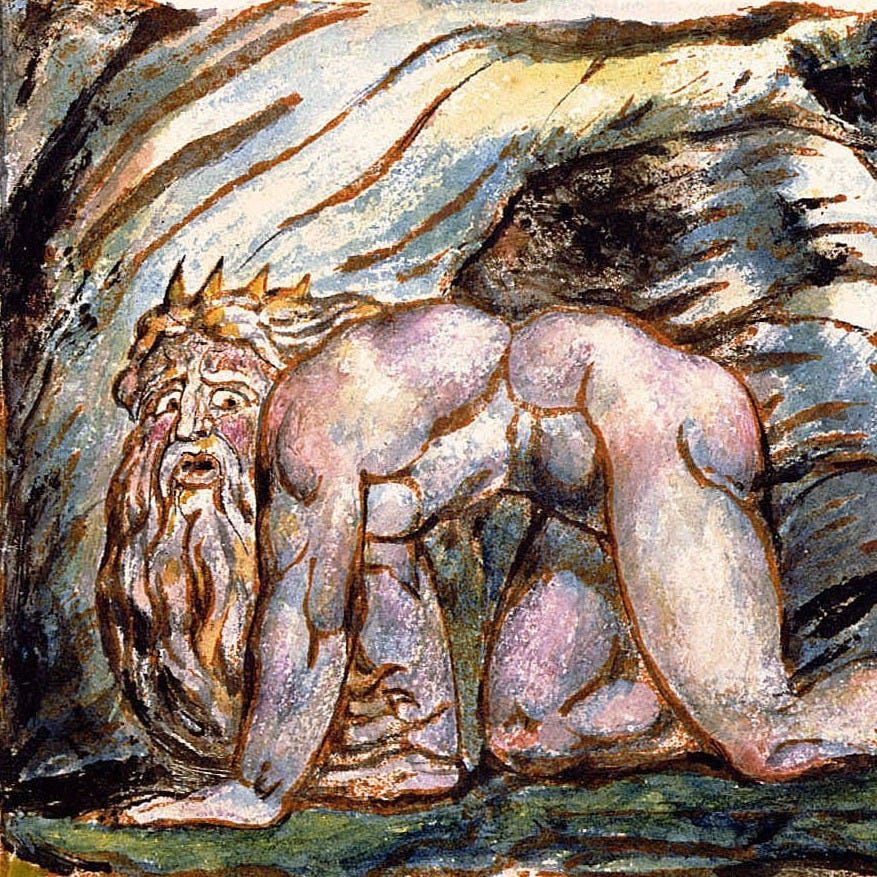
Are you living the life of a cow?
Head down. Eyes fixed on the ground. Grazing from one pleasure to the next, always hungry, never satisfied. Fighting the other cattle when they get in your way.
Many people—whether they admit it or not—believe this is the good life: maximize freedom, seize power, and satisfy every desire. They call it freedom. Plato calls it the tyranny of the soul.
Even the best of the ancient pagans saw that such a life is not worth living. The freedom of tyranny only brings slavery.
Do you have a tyrannical soul?
Do you live like a cow?
Reminder: this is a teaser of our members-only deep dives.
To support our mission and get our premium content every week, upgrade for a few dollars per month. You’ll get:
New, full-length articles every Tuesday and Friday (or Saturday!)
The entire archive of members-only essays
Access to our paid subscriber chat room
Do you have a Tyrannical Soul?
At the end of his Republic, Plato’s Socrates articulates the characteristics of the tyrannical soul. He is unjust, licentious, and has an insatiable desire for pleasure. Plato will often use the word pleonexia to describe these tyrannical appetites in the human soul, a word that means the endless and unjust desire for more—like envy, greed, gluttony, and lust all rolled into one voracious appetite.
And here is the irony.
The tyrant’s rise to power turns him into a slave. The soul of the tyrant suffers from self-slavery, as the soul becomes a slave to its lowest appetites. Recall that Plato often sets forth a tripartite soul: the intellect that loves truth, the spirited (thumos) that loves nobility, and the appetitive that loves pleasure. The virtuous soul is the one that is governed by the intellect with the help of the thumotic to bridle the desires of the appetitive; the tyrant’s soul, however, is inverted. The appetitive governs the soul and the intellect and the thumotic are in its service.
The tyrant is a slave.
He is mastered by his desire for pleasure and everything is oriented toward this goal.
In his Gorgias, Plato gives us a haunting but beautiful myth that when people die, they are stripped of their bodies and their souls are judged. The virtuous man has a beautiful soul. The vicious man has a scarred and ugly soul. For, as Socrates notes in the Republic, virtue is a type of health and beauty of the soul, whereas vice is a type of disease and disfigurement of the soul.
To wit, as the tyrant beats his slave, so too does the unjust man beat his own soul.
The tyrannical life is one of restlessness, injustice, and bestial pleasure.
Yet many dismiss Plato’s warning.
They think, “I am not a tyrant. I am not the despotic ruler of a city or the unjust king of a kingdom.” But this misses that Plato first and foremost introduces the different types of regimes—like tyranny, democracy, or oligarchy—as poetic images of different types of soul.
The question is not whether you are politically a tyrant.
The question is whether you are spiritually a tyrant.
And to this question, Socrates gives us the image of a cow.
