


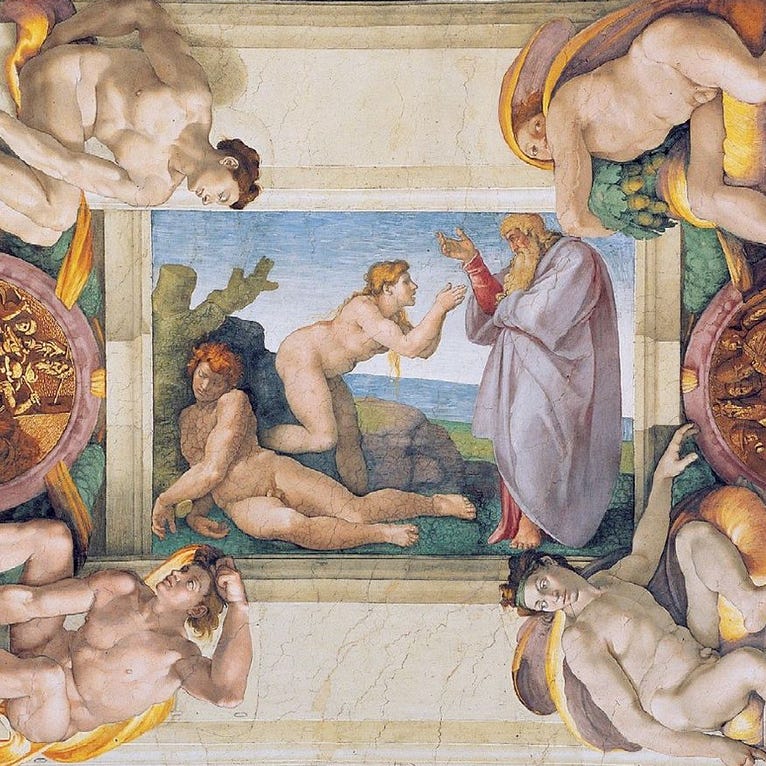
The creation of Eve is far more radical than the children’s story most know.
Adam is named by God, but woman is named by Adam—and only given the name “Eve” after original sin. Woman is the only animal in creation not made from the dust of the earth, as she is made of Adam’s flesh—and particularly his rib, not his head or feet—neither slave nor master.
Woman is the last thing made by God—an afterthought or a crescendo?
The story of Eve is the story of how men and women enter into relation.
In an age allergic to authority and complementarity, Genesis reveals the primordial template for the union of the sexes.
Reminder: this is a teaser of our members-only deep dives.
To support our mission and get our premium content every week, upgrade for a few dollars per month. You’ll get:
New, full-length articles every Tuesday and Friday (or Saturday!)
The entire archive of members-only essays
Access to our paid subscriber chat room
The Charge to Keep Order in Eden
The danger with biblical stories is the familiarity. We think we know the stories, because we know them culturally—but rarely do we revisit the Bible and give it the slow, attentive reading it deserves. Too many Christians never spend the time to mature the biblical stories they received as children, leaving them with an elementary understanding of the faith.
So, what lessons can we learn if we spend time in the story of the creation of Eve?
The story of Eve starts with the story of Adam. First, turning to the second chapter of Genesis, we see that the Lord God made Adam and placed him in the Garden of Eden. Adam was told to “till and keep it,” which could also be translated as “guard” (Gen 2:15). The language is used elsewhere in Scripture to denote the liturgical role of priests and their guardianship of the Tabernacle (Num 3:7-9; 8:26; 18:5-6). There are deep parallels between the Temple and Creation, to the degree that one can set forth a biblical teaching of the world as a Cosmic Temple.
Regardless, here, Adam being told to “guard” the Garden of Eden, to keep its order, implies there will be a threat of disorder, which anticipates the Serpent (Gen 3:1).
Moreover, you should take seriously that this command to “till and keep” Eden and to not eat of the Tree of the Knowledge of Good and Evil is only given to Adam. Eve is not yet created. In other words, the keeping of the order of creation is given to Adam, the man. It is notable that the Bible never records a similar passage of God instructing Eve in this command, though Eve knows God commanded it (Gen 3:1-3) and will be punished for not keeping it (Gen 3:16).
What is more interesting is that Eve believes that God said she was not supposed to even touch the Tree of the Knowledge of Good and Evil (Gen 3:3). God’s command to Adam is not to eat but is silent about touching.
What is the origin of the command not to touch?
One idea would be that God gave Adam the explicit command to not eat of the Tree of the Knowledge of Good and Evil, and Adam, in giving this command to Eve, expands it to provide an additional layer of guardianship—do not even touch it.
In other words, Adam is acting as a lawgiver to maintain the order of creation. He receives the law from God and uses that law to promulgate other laws for the good of the garden.
Eve then is tempted between listening to Adam or to the Serpent about what God really said. It is a question of who has interpreted God correctly and whether Eve will listen to her husband, Adam.
But let’s backtrack and look after God’s command to Adam to “till and keep” the Garden. The Garden is presented as unfinished.
What is missing is woman.
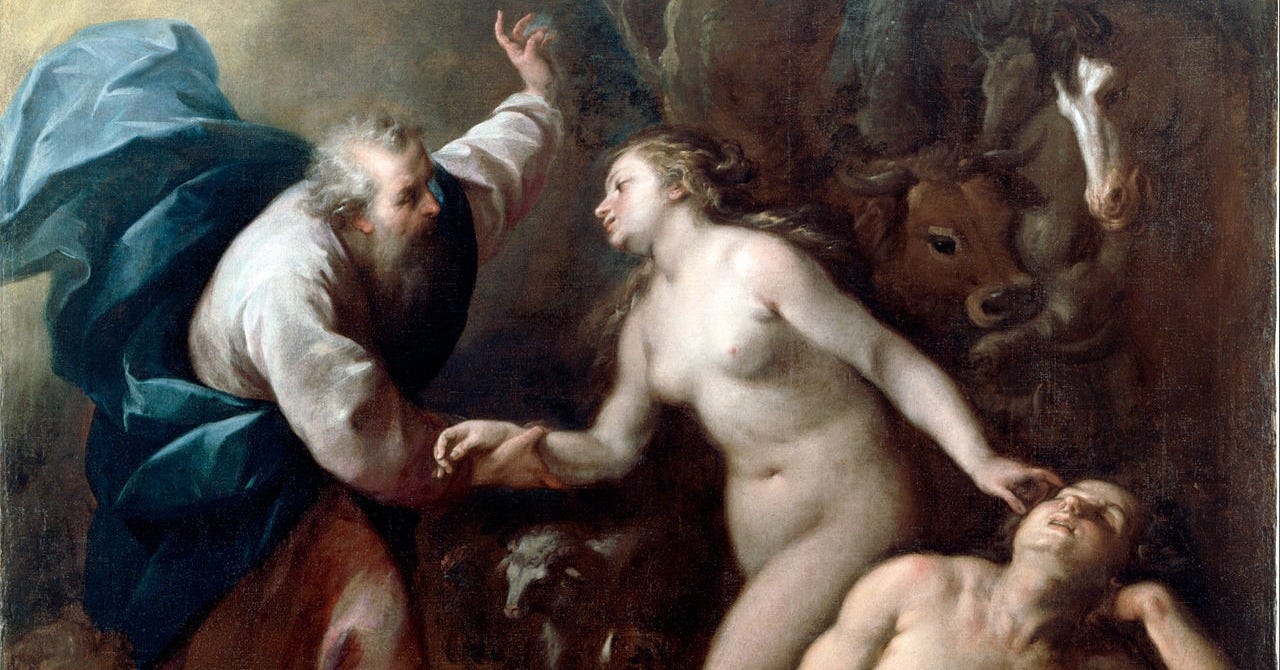
The Naming of the Animals
The Garden remains incomplete. God says: “It is not good that the man should be alone; I will make him a helper fit for him” (Gen 2:18); however, you should take seriously that God does not then make Eve, but rather turns and makes the animals from the dust of the earth and sends them to Adam to be named (Gen 2:19-20). To name something is to exercise authority over it; thus, the naming of the animals both shows Adam’s authority over creation and also shows Adam that no animal is suitable to be his helpmate.
In other words, the naming of the animals is instructive to Adam that he is alone. The Bible says: “there was not found a helper fit for him” (Gen 2:20). The attentive reader will consider why the Bible has dramatic build-up to the creation of Eve. The creation of humanity is unlike any other animals, as the male and female are created separately (and in distinct ways).
To wit, there is a dramatic tension to the creation of Eve—and you should consider the meaning of the fact that woman is the last thing God creates. Adam is not complete until woman is created but in certain ways neither is Creation.
Eve seems less an afterthought and more a pinnacle of Creation—she is the crescendo of the divine creative act.
And this is made even more notable in how she is created.
The creation of Eve, as the commentary in the New Testament, reveals her creation to be a primordial template to how the sexes join in union.
A template somewhat unbearable to an age allergic to authority and complementarity.
