


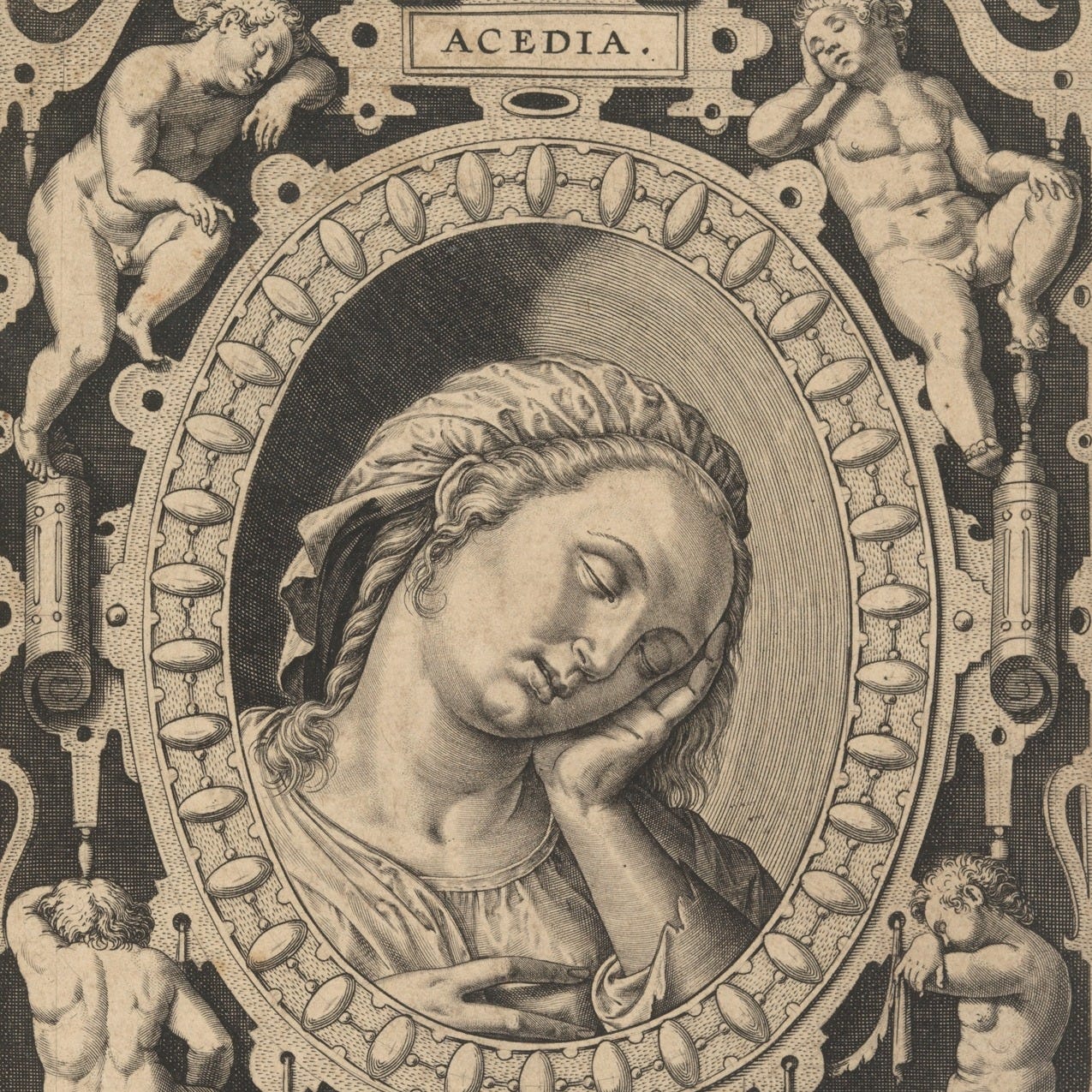
Acedia is the demon of our age.
It slips quietly into your soul and works its ways long before you realize it—making your soul dull, mediocre, and fat.
It is the nature of the soul to burn with love and ascend.
But acedia is like a great pall upon the soul that smothers its loves.
It cools your love and makes you purposeless.
Know this demon.
Know your soul and its loves.
Know how to fight back.
Reminder: this is a teaser of our members-only deep dives.
To support our mission and get our premium content every week, upgrade for a few dollars per month. You’ll get:
New, full-length articles every Tuesday and Friday
The entire archive of members-only essays
Access to our paid subscriber chat room
The Demon that is Everywhere but Unknown
Acedia is a quiet evil that slips into your life and slowly starves your soul—making it fat, mediocre, and dull. It is one of the seven deadly vices, yet, it is arguably the least understood—which means it is the least protected against. Can the soul defend itself against an unknown assailant? Acedia or “slothfulness” is the demon of our day. It is both ubiquitous and unseen.
Christians understand that if you want the spiritually mature, if you want to ascend and become more Christ-like, this demon has to be slain.
But what is acedia?
When most people think of slothfulness, they think of being physically lazy. To be slothful is to binge watch a show or “do nothing” all day. And while this could be true, it misses the heart of the sin.
For example, the marathon runner could be a deeply slothful soul. The successful CEO who works 80 hours a week could likewise be steeped in acedia.
How?
At its heart, acedia is a spiritual laziness. The soul has loves for which it was made, and acedia cools those loves until the soul detaches from them. Acedia decouples the soul from its purpose, its telos, and causes it to drift. And souls may find other things to occupy their time, like running or work, but they remain spiritually lazy, not loving what they should, not ascending to God—it is a laziness about the true goods of life.
Acedia is often called the “noonday devil.” It slips into the soul when you least expect it, in the middle of the day when there are no shadows—it comes amongst the light and not the darkness, it comes amongst our work and not our rest. It makes you lose heart in what truly matters in life and sets you adrift toward purposelessness—yet, most souls never realize what has happened, as acedia works within them long before they realize it—if they ever do. You simply wake up one day and realize you no longer love God or the important things in life.
Acedia is a quiet, pernicious demon.
Acedia is the cooling of love—it is a thick heavy pall upon the soul that smothers its natural loves.
But, to understand acedia well, you must understand the love it suffocates.
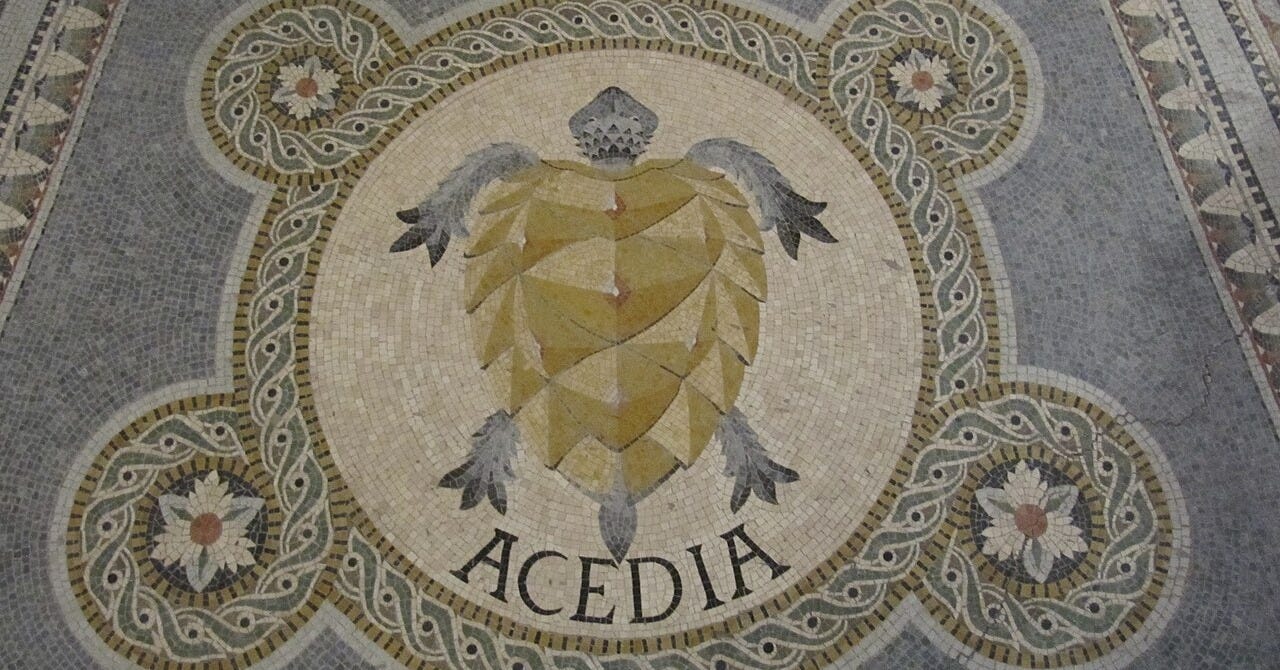
Acedia as Contrary to Love
In his Purgatorio, Dante the Poet tells the story of how souls must ascend Mount Purgatory by traversing seven terraces—one for each seven deadly sin. Dante’s Purgatorio, like his whole Comedy, is not a claim on the specific details of the afterlife but is rather a story of the soul—a moral story to help you live a virtuous, Christ-like life.
As such, his writings are instructive to the spiritual life, and if you look before Dante the Pilgrim and Virgil enter the terrace purging acedia, Dante the Poet has Virgil give a short lecture on love—the attentive reader would ask why this lecture happens here.
In short, Virgil explains that your natural love, like fire, wants to ascend. As fire burns upward by nature, so too does your love have a nature of ascendancy. And why is this important? Because your natural love is desirous for God. It wants to burn upward, ever ascending, until it returns to the One who enkindled it.
The spark of love within you is given to you by God to lead you back to Him.
Now, what is very important here is that Dante the Poet couples this speech by Virgil with the terrace that purges acedia.
Why does Dante the Poet do this?
Because he is showing you that acedia is the smothering of this natural fire of love. Slothfulness cools love and impedes its natural desire to ascend. In fact, acedia can distort the love of the soul into an unnatural love, one that has lost its desire to ascend—one that no longer burns upward toward greater goods and God.
The soul simply wallows in lesser goods and purposeless life.
How can you fight this demon?
How can you fight what is often unseen and unknown?
To bolster the soul against the subtle cooling of love, you must know three things:
A map of the soul and its parts—and how each part has a beauty that it loves
How acedia smothers each part of the soul and what unnatural effect this has
What virtues are necessary to push back against acedia and reclaim the soul
Acedia is everywhere. It will slip into your soul and leave your soul dull, mediocre, and fat—and what should burn bright for the glory of God and the true beauties of this life, wallows in life far short if its actual glorious purpose.
Learn how to burn off the sordid pall of acedia.
Learn how to burn bright for God.