


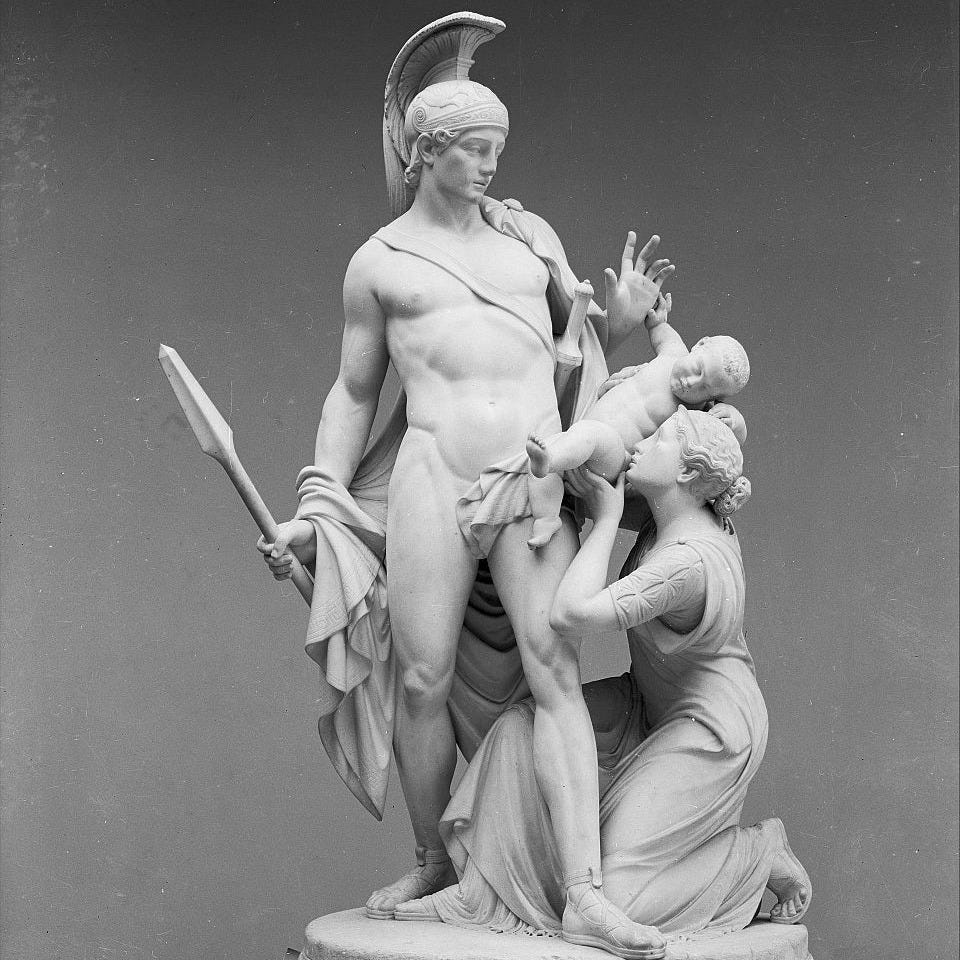
Piety is rarely understood.
Many think it is superstition, naivety, or zealous belief.
But few understand that the ancients held it to be a force for civilization—a cosmic virtue, a source of gratitude toward the fundamentals of a man’s life. It set his duties and arranged his allegiances.
Homer, Aeschylus, Socrates, Jesus, and others all show you this forgotten virtue.
A pious heart is a grateful heart—and these are the hearts that build civilization.
Let the tradition help you recover this ancient virtue.
Reminder: this is a teaser of our members-only deep dives.
To support our mission and get our premium content every week, upgrade for a few dollars per month. You’ll get:
New, full-length articles every Tuesday and Friday (or Saturday!)
The entire archive of members-only essays
Access to our paid subscriber chat room
The Ancient Lesson of Piety
Piety is not what you think.
Many may see it as “religious expression” or even pejoratively as a simple, unthinking belief in the divine—but what if piety was about cosmic order?
True piety is rooted in gratitude. The pious man understands that he owes an unpayable debt to his family, his country, and his God. Why? Because these three things nourished him, raised him, cared for him, long before he could ever contribute. He did not earn this care by his family, his country, or his God—it was freely given.
Piety is the response to goods received. Piety cultivates a heart of gratitude over a debt the individual can never pay back—you can never fully repay your parents, your country, or your God for the life you have been given.
And this piety exists in hierarchical order.
Piety to the divine, to God, governs first, and this is sometimes called “religion.” Piety to the country governs next, and this piety is often called “patriotism.” And lastly you are pious toward your parents (and by extension your family), and this is often called “filial piety,” the respect and honor you owe your father and mother.
You can see now how piety becomes a virtue of order.
It is a cosmic virtue that helps man understand his place in the world, as he navigates these three spheres of piety: the divine, the country, and the familial. It helps him understand what is important in life and the hierarchy in which such goods should exist.
And piety is a lost virtue.
Like a pearl lost amongst the field and forgotten, so too is the West’s tradition of piety.
Piety as a political force, a principle of order, a virtue that aligns you with the cosmos is your inheritance.
If you can recover this virtue, your heart will correspond to the contours of reality—and it will be a barrier against the hate, frustration, strife, and pleonexia that dominates our world.
Learn to be pious.
Learn the pious heart is a grateful heart.
Let’s see how this virtue is shown to us in the ancient stories of the West.
