


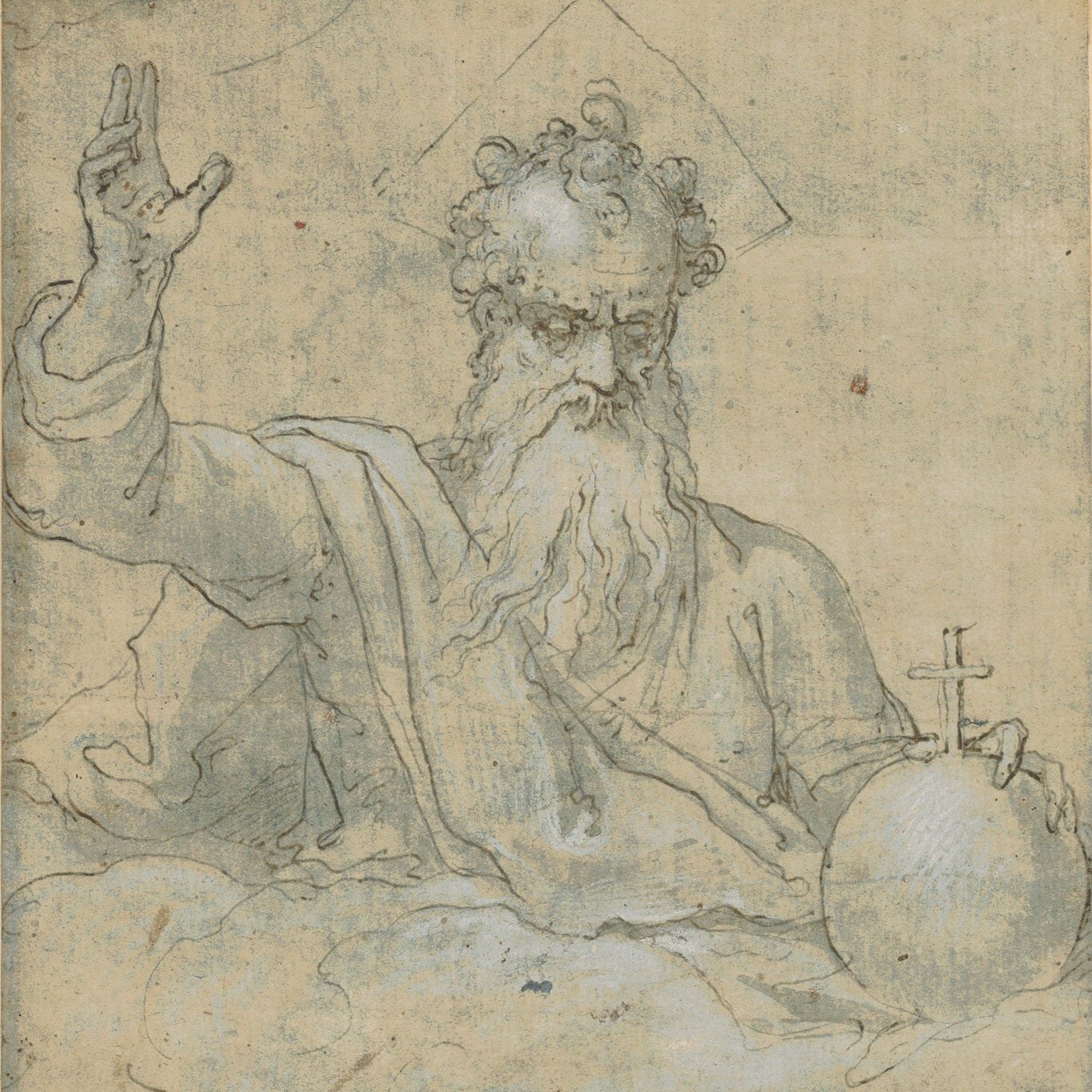
Life is a cosmic play.
And the Divine Playwright has given you a role.
You are called to a life that was written for you before the foundations of the earth were laid. Every person has a part. No one is excluded. No one is relegated to the background.
You matter to God and to this grand human drama in a deep, eternal way.
But here is the question: Can you hear the Voice calling you to your role?
Let’s discover how to discern your vocation.
Reminder: this publication is 100% reader-supported. We are only able to continue writing it thanks to the members who support our mission.
If you find these articles valuable, then please do consider subscribing for a few dollars per month — it helps us out enormously. You’ll get:
New, full-length articles every Tuesday and Friday
The entire archive of members-only articles and essays
Access to our paid subscriber chat room and community
What is a vocation?
Vocation comes from the Latin word vocare, meaning “to be called.” Christians use it as a term that means—what is God calling me to do with my life? You have thousands of choices you will make in your life, but a vocation is something deeper, more existential—it is kneaded into your very existence here on earth.
You can look at this life as a beautiful, cosmic play. Everyone has an assigned role. Everyone has a script written for them before God laid the foundations of the earth. There are no meaningless characters. No NPCs. There is no one who does not matter. Every single person is an actor in this grand human drama because, we all share the same Playwright, the same Divine Author who created you with intentionality and love.
You mean something.
Remember, Christians teach that even if you were the only person on earth, Christ still would have died for you. And there is no human soul for whom God did not die. You have worth—you have worth to God in that vertical, intimate relationship and you have worth horizontally amongst your human family, as you have an important part to play in this grand human drama.
Do not sell yourself short.
But how do you know your role?
How do I know my vocation?
So, how do you discern what God is calling you to do in this life?
There are many paths before you.
First, draw close to God. If you want to see in the dark, draw close to the Consuming Fire. Many try and stand apart from God and hear His voice when they need it. And you draw close to Him not necessarily to discover your vocation, but simply to better remake yourself in His image. Christians see their path as being one of sanctification or theosis—one that calls you to be more God-like. Knowing your vocation comes from knowing God.
How do you do this?
Prayer, fasting, and almsgiving are the traditional ways of drawing close to God. Spend time with Him in prayer each morning and each evening—make each day look like a miniature of your whole life, beginning and ending with God. Prayer helps to perfect the intellect—and do not be afraid to pray alongside and with texts, like the Bible or books written by the saints. You can read holy works in a slow, prayerful manner.
Fasting helps you to control your baser appetites. In other words, it bridles the appetitive part of your soul, the part that loves pleasure. Though pleasure is not bad per se, the desire for it must be reined in by reason. You could give up lunch once a week and fill that time with prayer or reading the Bible. Fasting is always a bulwark against lust, gluttony, and other sins of incontinence.
Almsgiving helps you cultivate a reliance on God—to detach from worldly concerns and gravitate toward a greater dependency on God. It perfects the spirited part of the soul, the thumotic, by having the courage to detach and rely on God in a radical way.
All of these help the soul draw close to God, and those close to God better discern their vocation. It is hard to hear God’s voice if you do not know Him. Many desire some secret, esoteric way to discern their vocation—but knowing God’s will for your life comes with becoming God-like. You have to have a relationship with Him.
What signs, however, accompany having the right vocation?
How do I know I have the right role in this grand human drama?
How do I know I have the right vocation?
One of the surest signs that you have found God’s calling for your life is peace. When you draw close to God’s will for your life, you feel like you have come home. You feel you are where you are supposed to be. Remember that peace is not simply the absence of conflict but the tranquility of order. When you step into your vocation, you step into harmony—you are playing your part in the cosmic play and the script feels right.
This does not mean there will not be difficulties. Think of the vocations of Abraham, Moses, or David. Doing what God has called you to do often includes difficult challenges—but you know you can face them, because you are where God has called you to be. You do not feel lost or unsettled. No matter the challenge, you feel a resounding sense of peace and belonging. Every vocation has a cross.
Yet, God does not reveal everything all at once.
Sometimes in your vocation, all you can discern is the next step. A young man or woman may feel called to marriage, but not have clarity on who they are supposed to marry—the call now is to grow closer to Christ and prepare for the vocation of marriage.
Similarly, a young man who feels he may be called to the priesthood may find the question “are you called to be a priest?” too much—the real question is whether you are called to discern the priesthood.
God often only shows you one step at a time.
And you move toward what brings you spiritual satisfaction, existential peace.
And here is one more aspect to watch—to not have too rigid an understanding of the vocation to which you are called. What does this mean? Well, a man might be called to marriage, but he needs to be open to receiving the reality of marriage—not his preconceived notion of it. You need to be open and malleable to both if God is calling you to something and your understanding of that thing being made more perfect.
But it is in pursuing the vocation with God that the goal becomes more clear.
As you draw closer to the fire, you see more clearly.
If you bring in preconceived notions about your vocation, it can make you recalcitrant to formation—to God working on you to see the good in the thing He’s calling you to be.
Vocations as an Act of Trust
Overall, your vocation is about trust. It is about trusting your Maker to reveal to you the purpose for which you were made. We all have universal vocations, like to love God and neighbor, but we also have particular vocations—a role only we can play.
You’re not alone.
Discerning your vocation is about staying close to God and staying close to those who help you become more God-like. In that intimacy with God, you hear His voice—you feel the path he has for you, by faith and reason, and you place yourself in His hands.
He is the Divine Playwright.
And you have a special role to play—for your good and the good of all.
Dcn. Harrison Garlick is a deacon, husband, father, Chancellor, and attorney. He lives in rural Oklahoma with his wife and five children. He is also the host of Ascend: The Great Books Podcast. Follow him on X at Dcn. Garlick or Ascend.
They did not kill Jesus becsuse he preached good deeds or "you are sinners" who care what some homless guy thinks.....The entire Gospel message of Jesus is EXPLICITLY about how ALL biological Israel except Jesus himself was & would be cursed into complete extinction!
THE GOSPEL JESUS PREACHED WAS NOT DEATH BURIAL & RESURECTION ...HE HARDLY EVER MENTIONED IT!🤣🤡🌏🤣
Many point to verse such as 1 Cor 15:1-4. The first mention of the term "THE GOSPEL" is way back in CH 1!👈💥& Ch 15 itself is about the return of Christ & the resurection of the dead!! 🤣
💥1 Cor 1:6. Even as THE TESTIMONY OF CHRIST WAS CONFIRMED IN YOU: 7. … WAITING FOR ⚡⚡THE COMING OF OUR LORD⚡⚡ Jesus Christ:
💥2 Thess 2:1....WE BESEECH YOU, brethren, 💥BY💥 ⚡⚡THE COMING OF OUR LORD JESUS CHRIST AND BY OUR GATHERING TOGETHER UNTO HIM⚡⚡, … 14. Whereunto he called you ⚡⚡BY OUR GOSPEL⚡⚡ .
💥2Thess 3:5. And the Lord DIRECT YOUR HEARTS into the love of God, AND INTO THE PATIENT ⚡⚡WAITING FOR CHRIST.⚡
Rev 1:2 Who bare record of (1) THE WORD of God, and of (2) THE TESTIMONY of Jesus Christ, and of (3) all THINGS THAT HE SAW. (Rev 19:9..These are THE TRUE SAYINGS of God. .10…for the TESTIMONY of Jesus is the spirit of prophecy.)
👇WHAT DID CHRIST PREACH ?!?👇
BEGINING OF MINISTRY
Luke 4:18/ Isaiah 61:1… The spirit of the Lord is upon me ......TO PROCLAIM acceptable ⏰YEAR OF THE LORD⏰ and THE DAY OF 🚨VENGEANCE🚨
END OF MINISTRY
Lk 21: 20. And WHEN YE SHALL SEE ⚠️JERUSALEM COMPASSED⚠️ WITH ARMIES, THEN KNOW THAT THE ⚠️DESOLATION⚠️ THEREOF IS NIGH .... 22. THESE BE THE DAYS OF 🚨VENGEANCE,🚨 that ALL THINGS WHICH ARE WRITTEN MAY BE 💪FULLFILLED💪... 28 ....for your ✝️REDEMPTION✝️ DRAWETH NIGH
......WHICH IS FROM THE PROMISE OF THE LAW - SONG OF MOSES ITSELF......."UTTER DESTRUCTION" NOT PARTIAL DESTRUCTION
THE TORAH .....SONG OF MOSES:
Deut 4:26 ye shall soon UTTERLY PERISH ... but shall UTTERLY be ⚠️DESTROYED⚠️...30 When thou art in 🚨TRIBULATION🚨 and ALL THESE THINGS COME UPON THEE, even in ⏰THE LATTER DAYS⏰...
Deut 28:15..... ALL THESE CURSES SHALL COME UPON THEE, AND OVERTAKE THEE: …..25. ..and FLEE SEVEN WAYS..… 26. And THYCARCASE SHALL BE MEAT UNTO ALL FOWLS OF THE AIR,....61. Also every sickness, and every plague, WHICH IS NOT WRITTEN IN THE BOOK OF THIS LAW,
Deut 30:1.....WHEN ALL THESE THINGS ARE COME.. THE 🎯BLESSING🎯 and THE 🚨CURSE🚨,....19. Now therefore WRITE YE 🎶THIS SONG🎶... .20. ....and break my covenant. 21.when many evils and 🚨TROUBLES🚨 ...🎶THIS SONG🎶 SHALL TESTIFY AGAINST THEM ......22. MOSES THEREFORE WROTE 🎶THIS SONG🎶
GOD EVEN "HINTED" TO THIS WITH MOSES
NUMBERS 14:12 I will smite them with the pestilence, and disinherit them, and will make of thee a greater nation and mightier than they. 14:19 Pardon, I beseech thee, the iniquity of this people according unto the greatness of thy mercy, and as thou hast forgiven this people, from Egypt even until now.
This story is a foreshadowing of what God had planed for biological Israel latter......Here God was going to kill all of the Biological jews/Israel & start over with Judt Moses ...but Moses pleaded with God so God relented but this was his plan ALL ALONG except it would be Jesus that he started over with!!
The jews-Israel thought Messiah was going to kill everyone who was not a Biological jew in Israel, but Gods "humor" was to destroy all biological jews & START ANEW WITH JUST JESUS "THE SEED"🤣 This is what Jesus preached & why they crucified him. They did not crucify Jesus because he preached death burial & resurrection or thst they needed to do more good deeds.
There is exactly 666yrs between Nebecarnezars 1st year over Isreal 596BC and it's final total complete destruction in AD70....
Daniel 9:11 ....therefore THE CURSE IS POURED UPON US, and the oath that is written in the law of Moses the servant of God, because we have sinned against him. .....24. Seventy weeks are determined upon thy people and upon thy holy city,..........
This fact is also irrespective of peoples ideas of the AD/BC date line which ironically is also proven to be correct..
PERIOD OF THE CURSE LASTED 666Yrs IT. BEGAN WITH A 70 YEAR PERIOD UNDER BABYLON & ENDED WITH "THE LAST DAYS" = A 70 YEAR PERIOD UNDER ROME
596BC.....................70AD
[...........666yrs...........]
[70yr)--------------(70yrs]
The mark his name, the number of his name is TRANSGRESSION, OR BLASPHEMY OR SIN
THE LAST DAYS" = 70 yrs from birth of Christ to AD 70.
THE MYSTERY OF THE GOSPEL OF CHRIST = How God cursed all biological Israel & Jews to extinction!! = REDEMPTION =2nd comming AD70. Only the siritual seed Jesus who was also "THE" physical seed REDEEDMED, only those "IN CHRIST"- SPIRITUALY obtain everlasting blessings because ALL PHYSICAL FLESH IS EXCLUDED FROM THE KINGDOM OF HEAVEN!!
JESUS returned already just as promised & in so doing fullfilled all the law & prophets .......THIS is the reason the law of Moses is no longer in effect.
The real problem is that people have absolutly no real idea what the gospel is.....Oh, you dont belive that??
Revelation IS a theological dilemma. It states Rev 22:16. I Jesus have sent mine angel to testify unto U these things in the churches. Also states it is "the true sayings" of Jesus & that it is "the testimony of Christ". If this is not "the gospel of Jesus Christ" then what is it & should we consider it accursed testimony of an angel? If it is not accursed, then it cannot be some other gospel message then already given. However. This is the conundrum-if this is the gospel, then why do so few understand it? There is a possibility which few consider. The reason people don't understand revelation is because they never understood the gospel in the first place!
👉 2 Tim 4: 4... shall turn away their ears from the truth, and shall be TURNED UNTO FABLES.... 8 , shall give me AT THAT DAY: and not to me only, but UNTO ALL THEM also that 👉LOVE HIS APPEARING👈
💣IMPOSSIBLE to love an appearing U deny!?! (context= AD70 2nd comming of "that day")
👉 2 Tim 3:5 Having a form of godliness, but DENYING THE POWER thereof: from such turn away.
Matthew 10:33 But whosoever shall DENY ME before men, him will I also DENY...
https://www.scribd.com/doc/305366745/Revelation-the-First-Gospel-of-the-Kingdom
https://www.academia.edu/23464127/REVELATION_THE_FIRST_GOSPEL_OF_THE_KINGDOM