


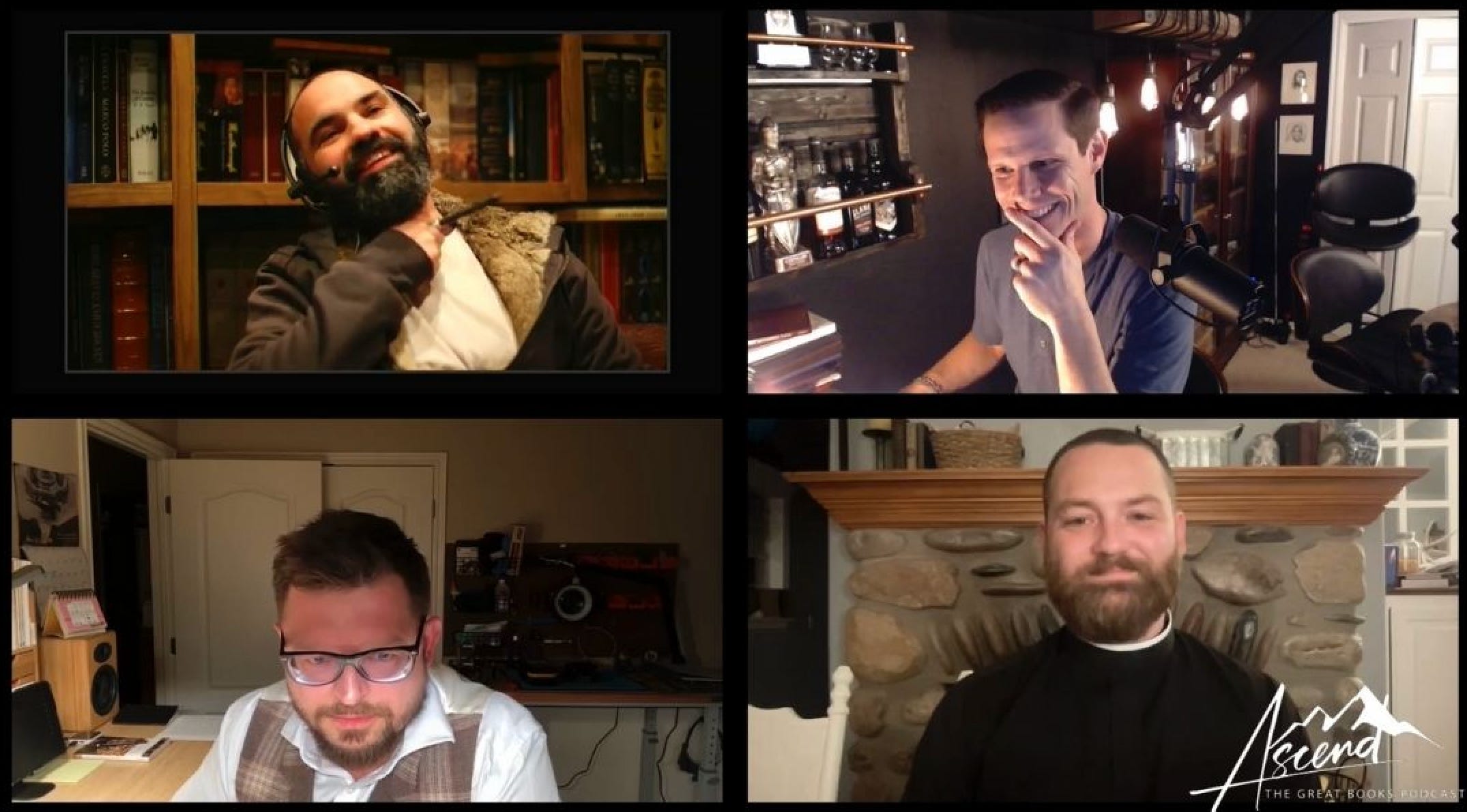
Ascend has everything you need to read the Oresteia well. It is an incredible story about justice. The narrative takes place between the Iliad and the Odyssey and tells of the death of Agamemnon, the revenge of his son Orestes, and the trial of Orestes by the goddess Athena. It builds on everything you loved in Homer and pushes forward the concept of justice. It is a triad, a series of three plays, that begins our study on the ancient Greek plays.
A couple sources that can help you read the Oresteia well.
Video introducing Aeschylus, the famous Greek playwright (below)
Two videos on Agamemnon (below)
Two videos on Libation Bearers (below)
Two videos on Eumenides (below)
The Greek plays are an intellectual bridge between Homer and Plato. Read them and read them well with Ascend.
Join our reading group and study the great books with us!
To support our mission and get all our resources, become a paid book club member. In addition to the weekly podcast, you’ll get:
Live book club discussions / Q&A with Dcn. Garlick & guest scholars
In-depth reading guides and essays to lead you through the great books
Access to our incredible community of readers
The full archive of members-only content (guides, essays, and podcasts)
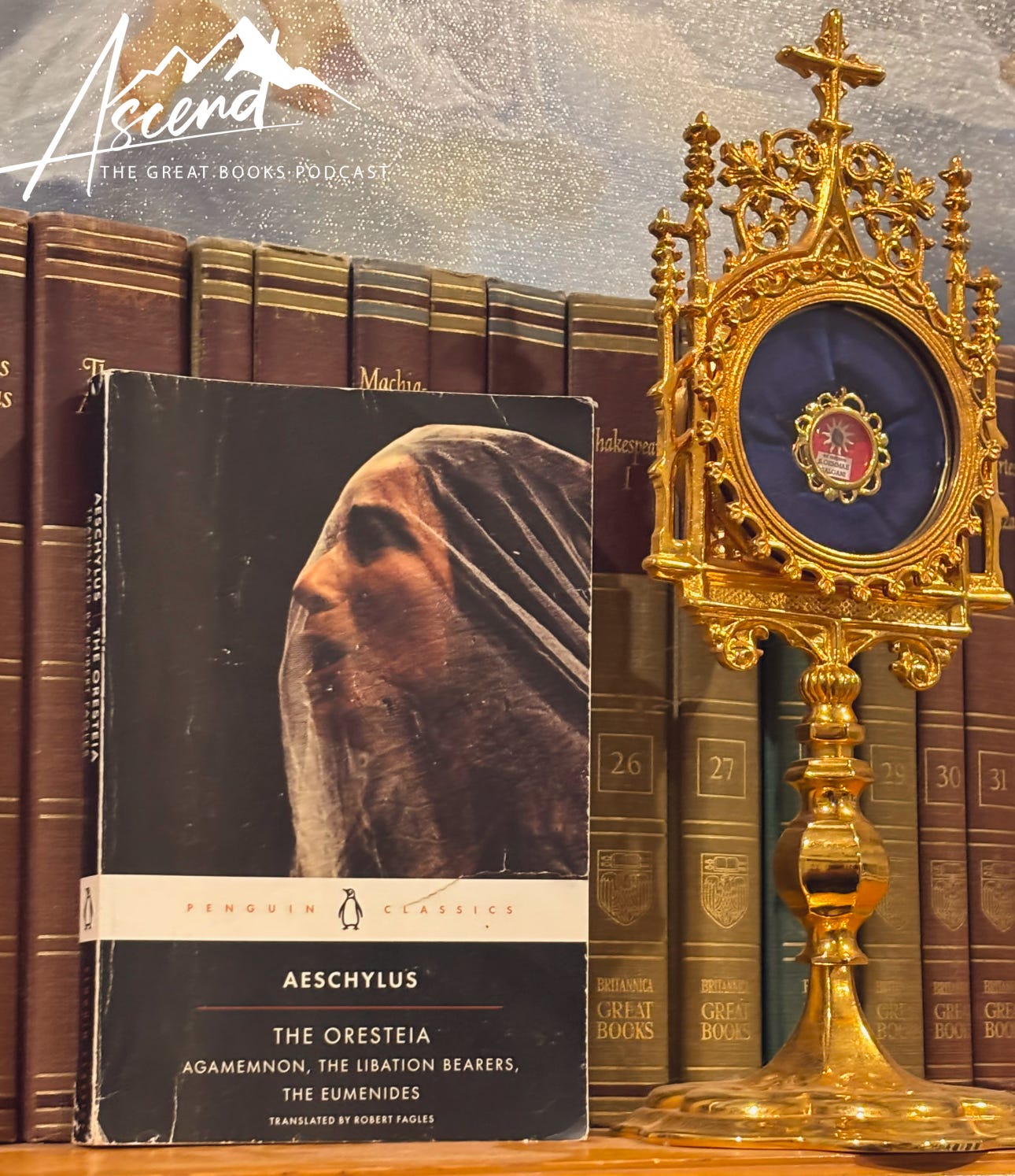
Introductory Letter from Dcn. Garlick
Dear Friends of Ascend,
Aeschylus is a teacher. He is a warrior, a statesman, and the father of the Greek tragedians. His greatest work, the Oresteia, is about justice. It starts with the familial story of the house of Atreus, the murder of Agamemnon, and the revenge of Orestes; yet, under the brilliance of Aeschylus, the narrative moves into a consideration of justice itself and its transformation. The primitive blood avenger model with its blood for blood cycle of revenge (lex talionis) is perfected into a more procedural and dispassionate model of justice. The execution of what is just shifts from the familial to the political. The cycle of violence is broken, and the blood-soaked terror of the Furies is redirected into a civilizing force.
I am indebted to those who joined us on the podcast to discuss this text: Dr. Frank Grabowski, Mr. Thomas Lackey, and Mr. Adam Minihan. Moreover, I want to express my gratitude to the men in my Sunday Great Books men’s group and the men in the diaconate formation class in the Diocese of Tulsa who read and discussed this text with me as well. Iron sharpens iron. Pursuing what is true, good, and beautiful alongside friends is both a spiritually and intellectually powerful act. Aeschylus is the teacher. We are his students.
For our guide, as on the podcast episodes covering the Oresteia, we will be using Robert Fagles’ translation of Aeschylus’ Oresteia. As with his translations of Homer, he is clear, poetic, and dynamic—and is especially good for first time readers.
The Greek plays are an intellectual bridge between Homer and Plato—and this is certainly true of Aeschylus. He receives the tradition from Homer, advances considerations of justice, and lays a foundation for Plato and Aristotle.
Let us approach Aeschylus as a teacher and be open to his lessons on justice, suffering, and civilization.
Dcn. Harrison Garlick
Introduction to Aeschylus
Oresteia Part One: Agamemnon
Oresteia Part Two: Libation Bearers
Oresteia Part Three: The Eumenides
Good work! Reading the Oresteia is a notable accomplishment—especially if you read it in a deep and intentional manner with Ascend. What should you read next? Our next read on the podcast will be Aeschylus’ Prometheus Bound, a wonderful tale on the nature of liberty.
Keep up the good work.
Dcn. Harrison Garlick lives in rural Oklahoma with his wife and five children. He serves as a deacon at Holy Family Cathedral and as Chancellor & General Counsel for the Roman Catholic Diocese of Tulsa. Follow him on X at Dcn. Garlick or Ascend.