


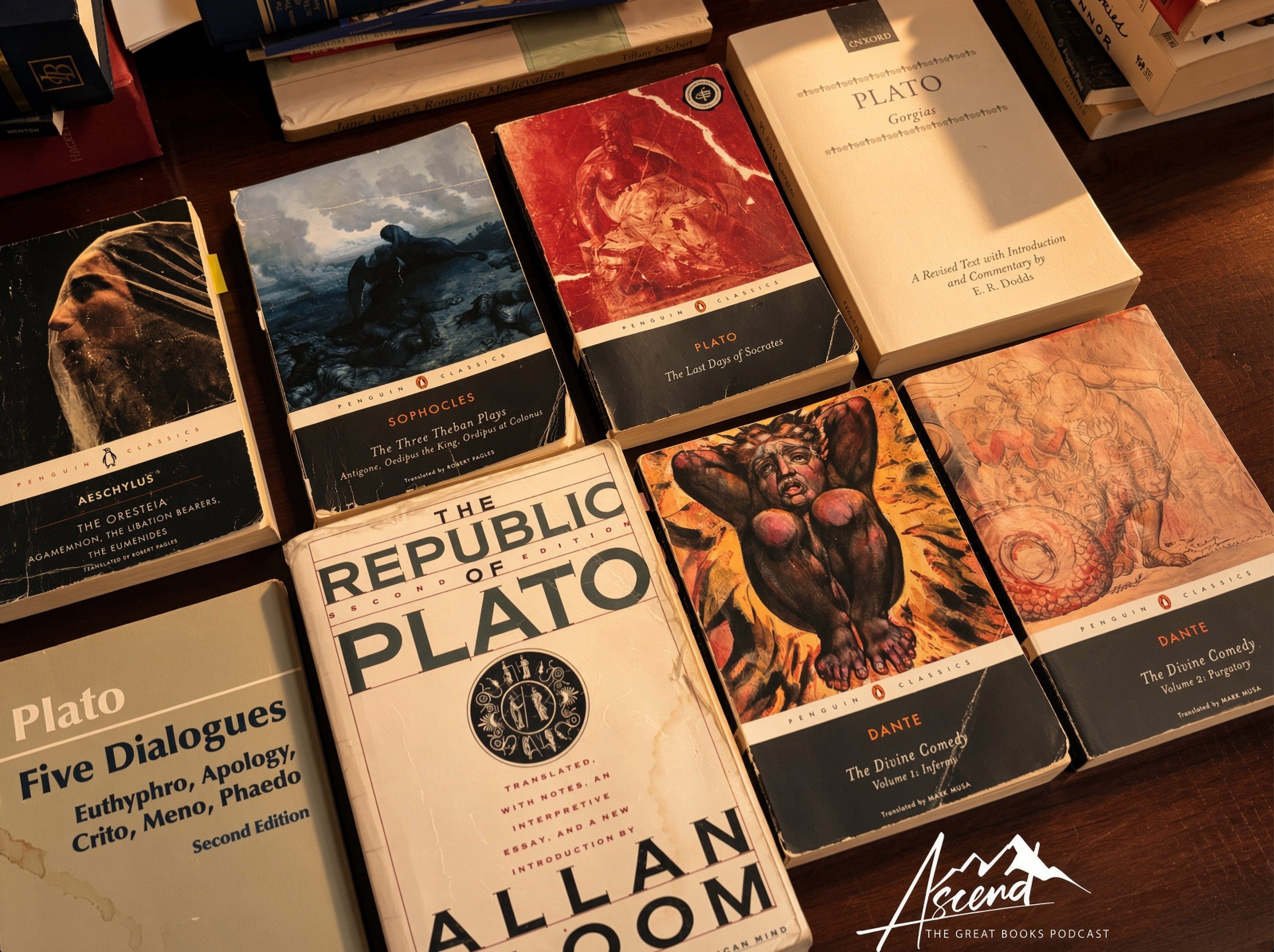
Big news… we are launching our online book club!
Starting today, “The Ascent” is becoming the Ascend Book Club by partnering with Ascend: The Great Books Podcast to bring you the most comprehensive online book club focused on reading the great books and living a beautiful life.
As a subscriber of this publication, on top of our usual articles, you will now receive a weekly podcast on the great books. Additionally, all paid members will get our in-depth, week-by-week reading guides, essays, and access to our LIVE book club sessions. You’ll also get access to our entire, evergreen library of resources to help you read the great books!
So, instead of just sharing articles on the great books, we are going to help you read them!
Our overall purpose remains the same. We do not read the great books to become well-read relativists. We read them to seek truth. And whether we are reading the Bible or Plato, we know that this pursuit of wisdom is never a sterile exercise but an opportunity to grow in virtue—to have a healthy, beautiful soul. We want to become beautiful as Christ is beautiful.
Since 2023, Ascend has partnered with some of the best scholars from around the country to lead people through life-changing conversations on Homer, Plato, Dante, and more.
And now, beginning October 6, we will be reading the most important work in Western philosophy, together: Plato’s Republic…
Join our reading group and study the great books with us!
To support our mission and get all our resources, become a paid book club member. In addition to the weekly podcast, you’ll get:
Live book club discussions with Dcn. Garlick & guest scholars (monthly)
In-depth reading guides and essays to lead you through the great books
Access to our incredible community of readers
The full archive of members-only content (guides, essays, and podcasts)
What are we reading next?
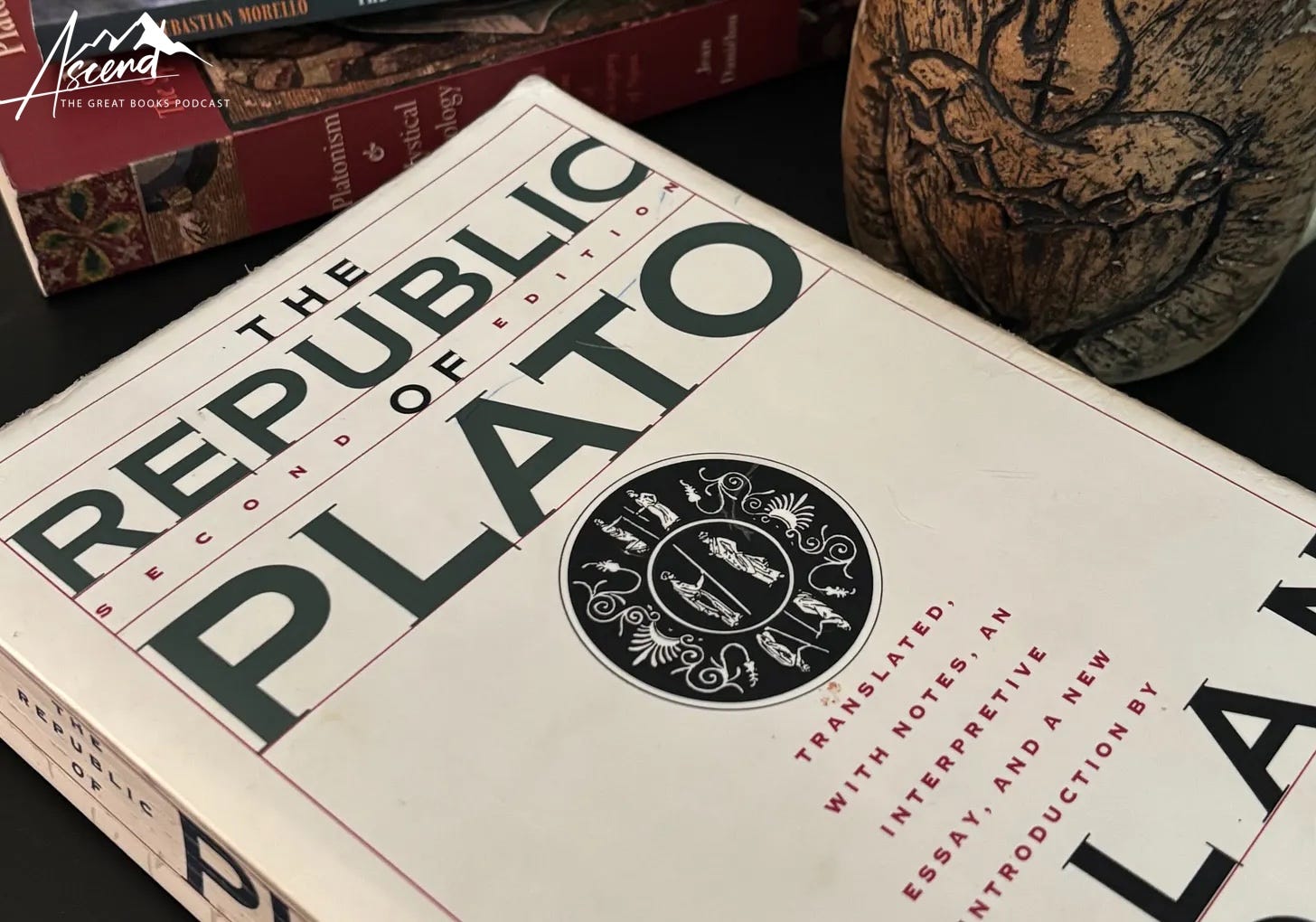
We are about to begin reading Plato’s Republic. We are doing a slow, attentive read-along, beginning on October 6, 2026 and ending on August 31, 2027 (with a break for Lent to read Dante’s Paradiso).
Why are we doing this?
A close, careful read of the Republic will change your life. It is easily one of the greatest texts in Western Civilization, though many do not read it because it can be difficult to understand. We are breaking it down into 30+ episodes with 20+ scholars to help you understand this life-changing book.
Overall, the Republic uses the image of a city to explore two main questions: what is justice, and is justice more profitable than injustice?
But it is so much more. Along the way, Plato uses the character of Socrates to explore virtue, the soul, immortality, education, metaphysics, democracy, philosopher kings, and much more. It has been said that all of Western philosophy is a footnote to Plato, and if that is true, then reading Plato’s most famous work, the Republic, is worth more than reading 100 other books.
How will the read-along work?
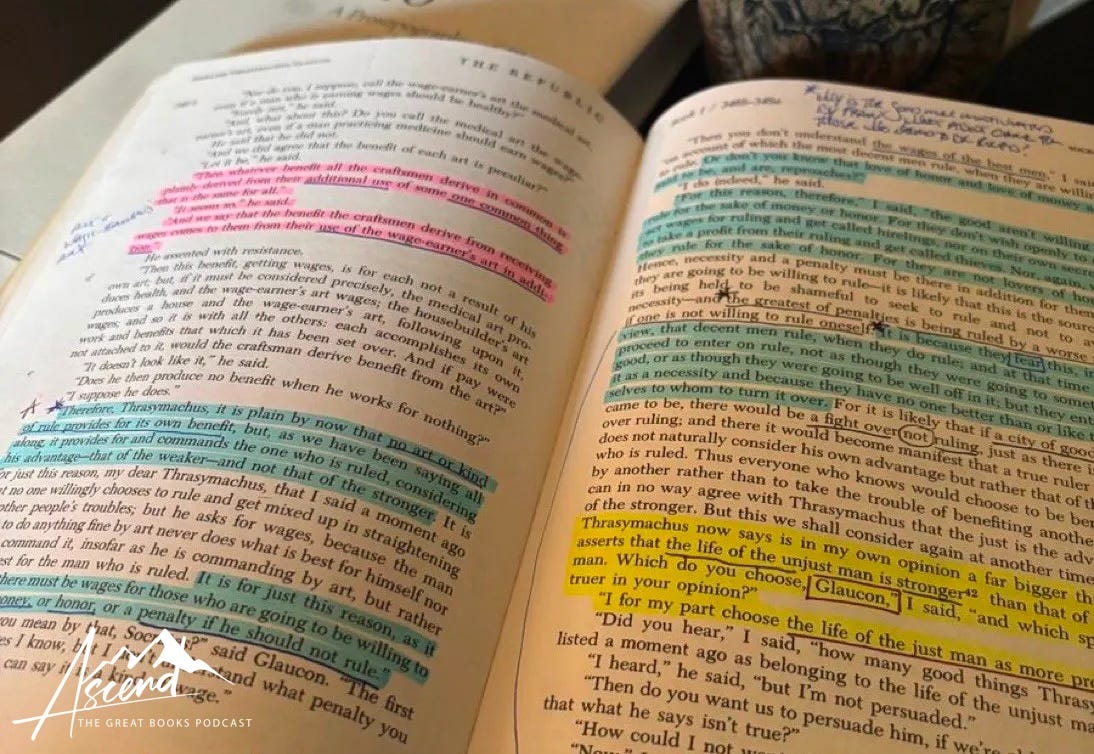
Our paid members will gather once per month for the live book club discussions (hosted by Dcn. Garlick and guest scholars), and we will provide a week-by-week curriculum of resources to guide the read-along. Here’s a sample of our monthly curriculum:
Week 1 – We’ll post a free podcast introducing the text or discussing an adjacent topic, along with a written guide (paid members only) to help you prep for the next week’s reading, plus a long-form essay on the great books (paid members only).
Weeks 2-3 – For each week, we’ll post a free podcast on the reading for that week alongside a post on our new community chat (paid members only), so we can discuss the reading together. For each week, we’ll also post one short, free essay and one long-form essay on the great books (paid members only).
Week 4 – We’ll post a free podcast wrapping up the reading for that month and then host a live Q&A session to discuss the month’s reading with our paid members.
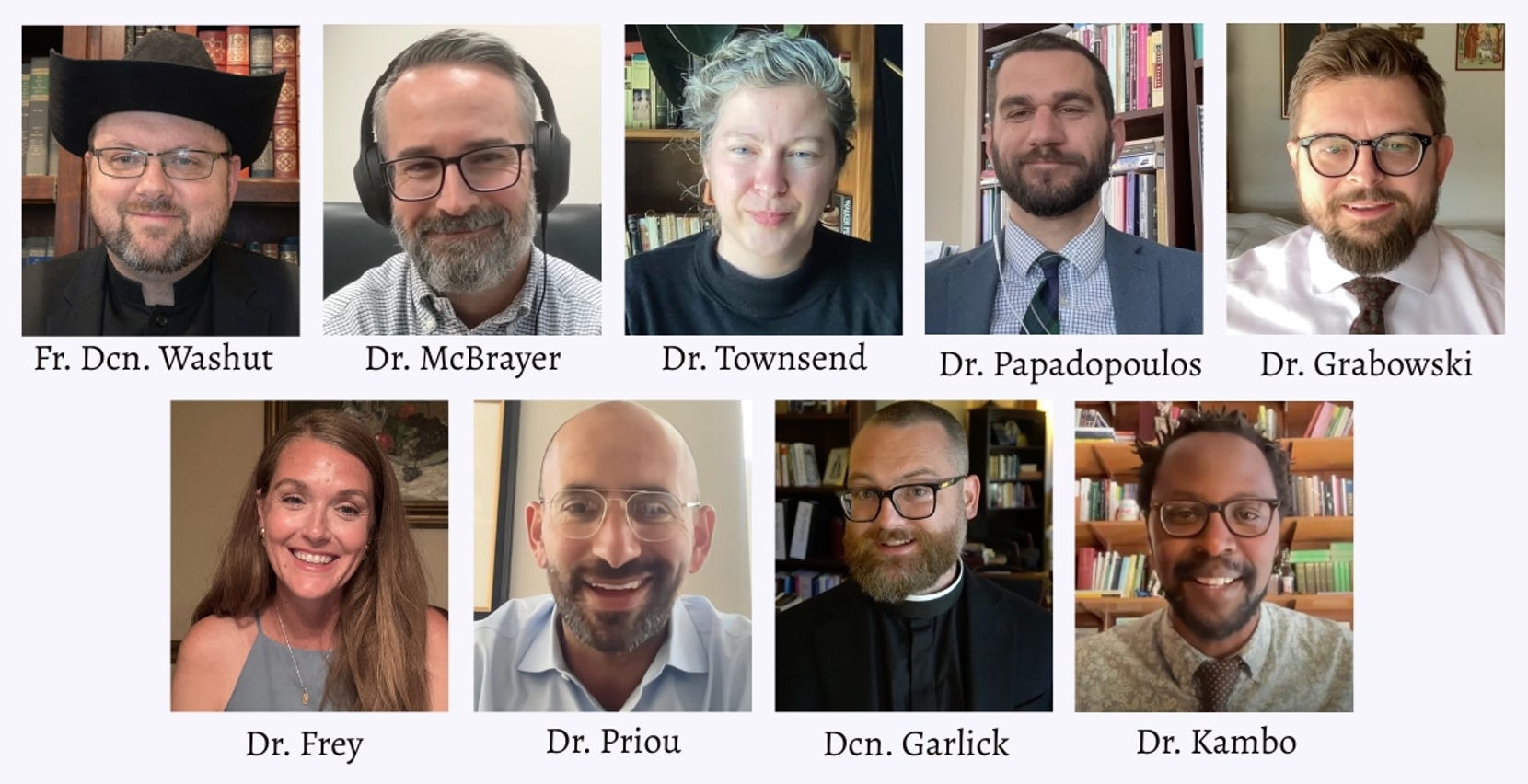
Here are just some of the scholars who will be appearing on the podcast (or the monthly book club sessions) to take us through the Republic between now and Christmas:
For this read-along, we will begin Week 1 with a podcast introducing Plato (September 29), leading into our first podcast on the Republic itself (October 6) during Week 2. Week 2 will focus on Book 1: Intro, Prologue, and Cephalus (327a-331d).
Along the way, we will be discussing everything inside our community chat. Please join us in there—we are studying the great books in dialogue with each other.
We have been working for over a year to plan and structure this read-along, and we are incredibly excited to bring you with us! You can join us by signing up as a member here:
What other books can I study with Ascend?
As of today, our ENTIRE, evergreen library on the great books is available to our members.
We have 150+ previous podcast episodes and 20+ in-depth reading guides—fantastic for small groups, homeschooling, college prep, or autodidacts—in addition to the 100+ articles already published! The home for all our resources will be here on Substack, but you can also find Ascend on X, Apple Podcasts, Spotify, Instagram, and YouTube.
That means you can start reading the great books with Ascend wherever is best for you—you do not have to begin with the Republic if you don’t want to. For each of the texts below, you can access podcast conversations (available to all) and detailed, written guides with introductions, outlines, and questions (paid members only).
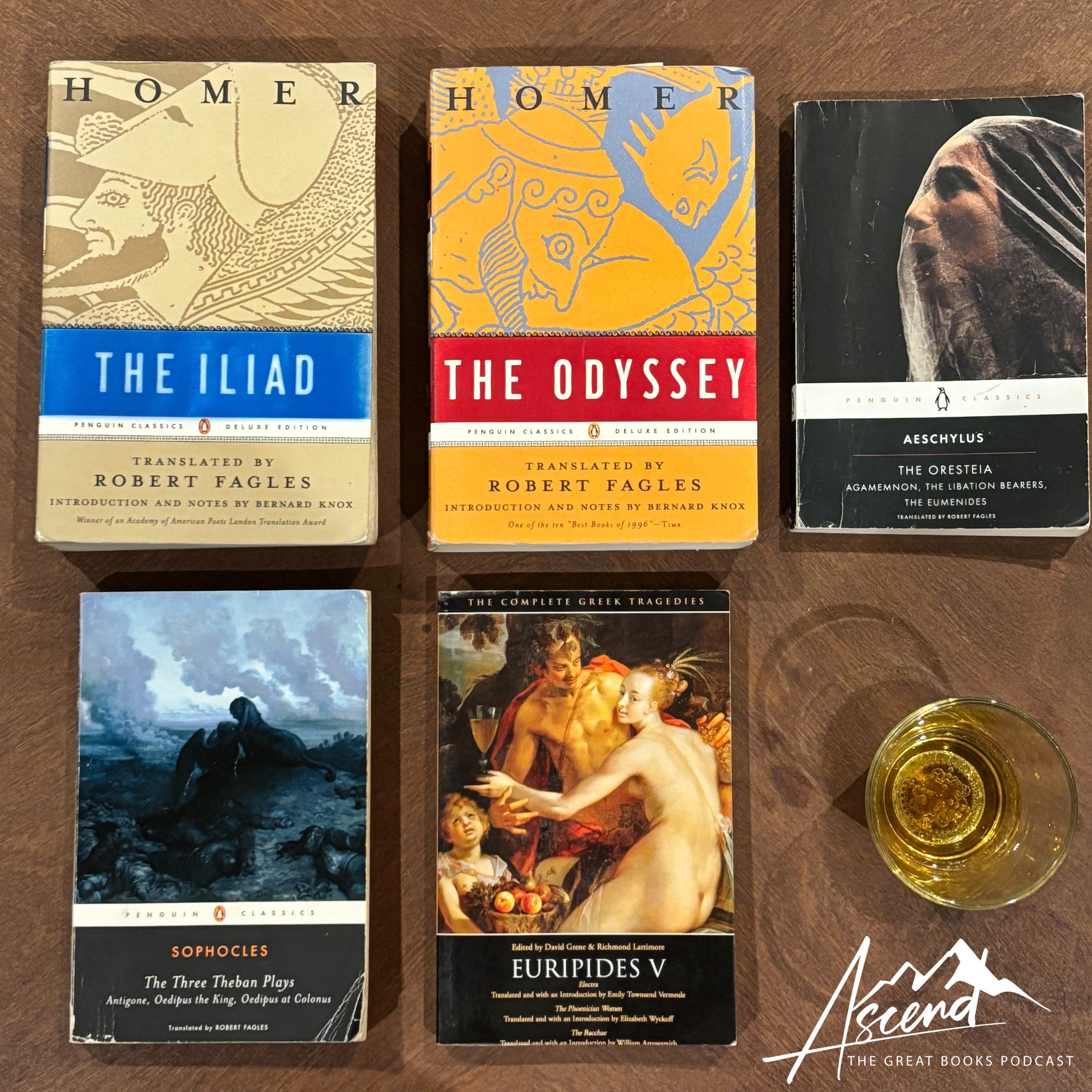
Here are all the great books already covered on Ascend that are ready for you to study anytime! Start a small group and start today:
Paradiso (Dante) – starting Lent 2027
We post topical episodes as well, like “Aquinas and Plato with Dr. Donald Prudlo,” book reviews, like “American Odyssey with Dr. Patrick Deneen,” and episodes based on our online essays, like “Rediscovering Holy Eros.”
Why is Ascend different from other book clubs?
First, Ascend approaches the great books with humility. We approach Homer or Plato as the true teachers, and we are the students—their “great books” helped shape Western Civilization, and we must be docile enough to receive their lessons. Only the humble student can learn the perennial wisdom that built Western Civilization.
Second, Ascend covers the great books at a reading pace. The podcast adheres to a slow, attentive schedule that allows you to move from a beginner to someone well-versed in the text. It is not about how many books you’ve read—it is about whether you’ve read the books well. We don’t just tell you a book is great, we show you why.
Third, Ascend reads the great books in chronological order. The authors of the great books are in dialogue with one another, as Plato is in dialogue with Homer, Aristotle is in dialogue with Plato, and so forth. When you read them in order, you join the “great conversation,” and you participate in the intellectual history of the West. You see the authors in context and you receive a clarity many miss.
Ascend offers an intentional, attentive read of the great books in chronological order while making all of the resources to do this evergreen and available. And now we are adding a book club to this wonderful experience!
How does Ascend read the great books?
Ascend reads the great books through the truth of the Incarnation. Greek reason coupled with Hebrew faith under Roman order prepared the world for the coming of Jesus Christ. As St. Paul tells us, Christ came in the “fullness of time” (Gal 4:4). In other words, Ascend holds that Providence used the pre-Christian pagan thinkers, like Homer and Plato, to prepare the world to understand Jesus, the Logos made flesh (John 1:1)—see Do Christians Owe a Debt to Homer and Homer and the Incarnation. The goal is not some cheap Christianizing of the pagan but a deep, thorough engagement with the pagan as it impacted the world prior to Christ. As C.S. Lewis states: “First let us make the younger generation good pagans and afterwards let us make them Christians.” Always remember that grace perfects nature.
In the pursuit of truth, however, Ascend engages with Christians of many sorts—Catholic, Orthodox, Anglican, Evangelical, etc.—and many non-Christians. Again, we come together with persons of different beliefs and faiths not for the sake of relativistic dialogue, but for a true dialectic seeking wisdom. We should always remember that all truth is God’s truth, because Truth is ultimately a Person.
Let us read the great books together and ascend.
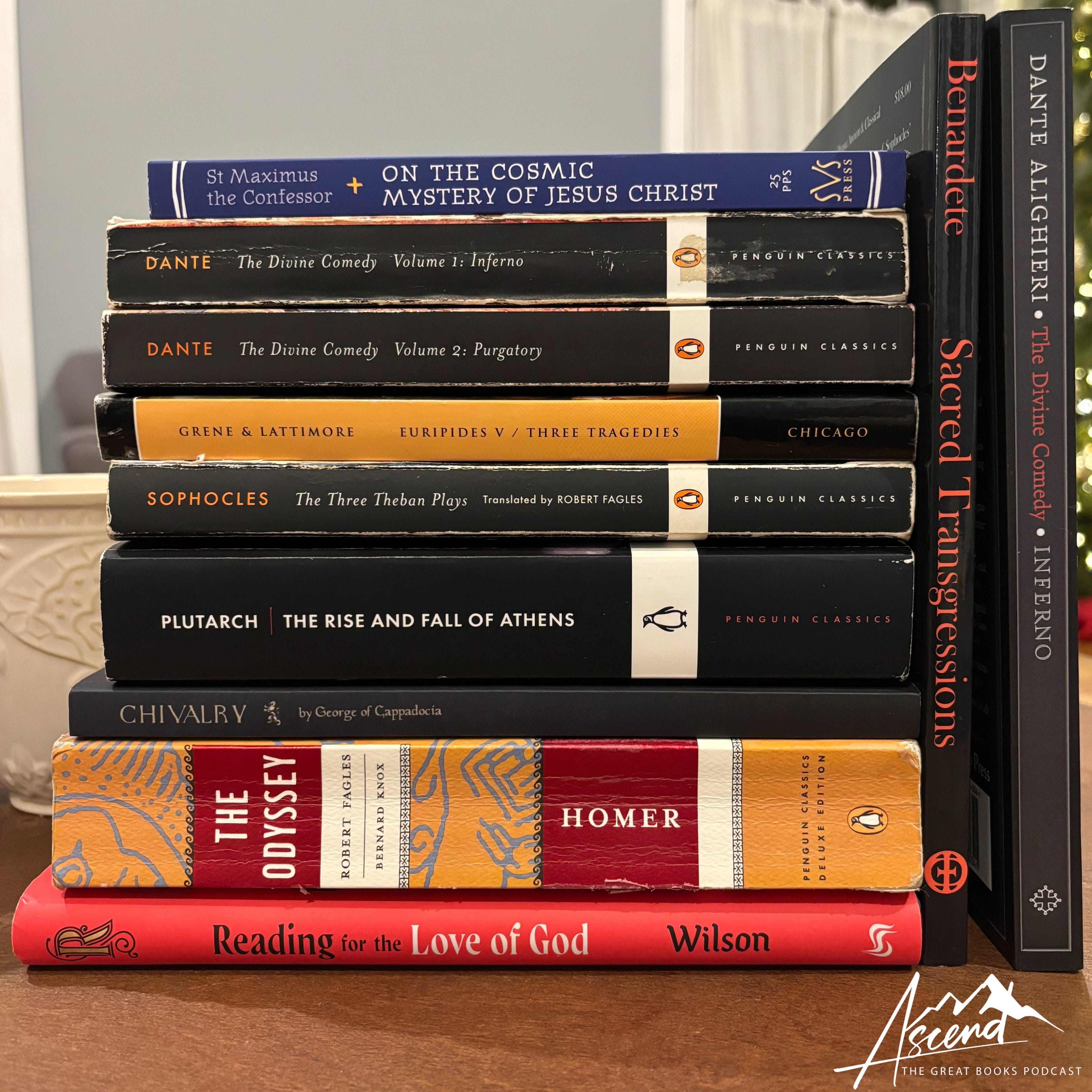
Dcn. Harrison Garlick lives in rural Oklahoma with his wife and five children. He serves as a deacon at Holy Family Cathedral and as Chancellor & General Counsel for the Roman Catholic Diocese of Tulsa. Follow him on X at Dcn. Garlick or Ascend.
Incredible news 🔥🔥🔥