


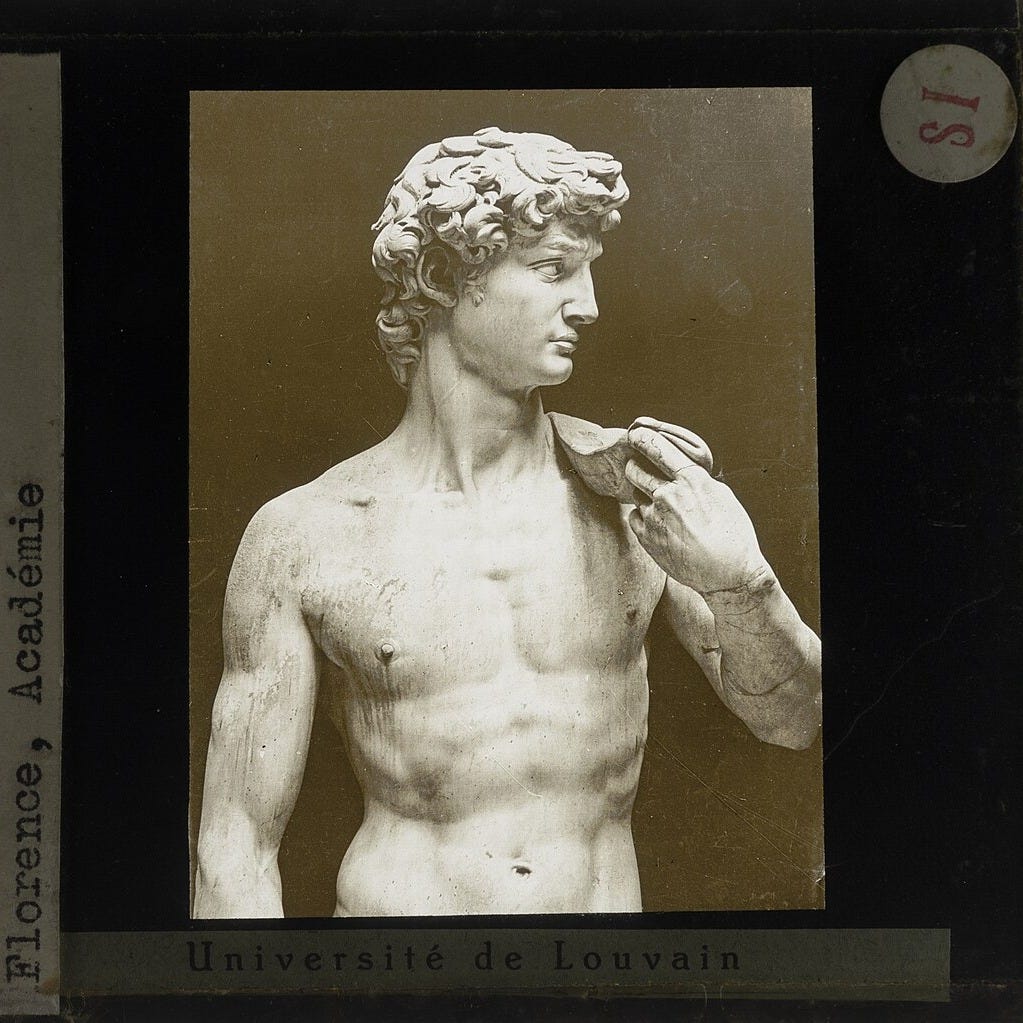
Do artists need to understand their own art?
Many people believe great art comes from great skill and knowledge.
But many artists who create great works share the same mysterious sentiment: “this work just came to me” or “I can’t believe I created this.” Others can never replicate their art and others seem to even misunderstand their own art.
What is this tension in the artist between skill and inspiration?
An ancient conversation can help you understand, but, as the true vision of an artist emerges you’ll be left with one question:
Are there any true artists alive today?
Reminder: you can support our mission and get all our members-only content for just a few dollars per month:
New, full-length articles every Tuesday and Friday (or Saturday!)
The entire archive of members-only essays
Access to our paid subscriber chat room
Is Art a Skill or an Inspiration?
Do artists have to understand their art? In other words, if an artist creates a poem or a painting, should the artist fully understand the work? Or can an artist create a work that exceeds his or her own understanding of it? What about an artist who produces a popular work but misunderstands why it is popular? In other words, what if an artist does not understand what makes their great art great? One thinks of the common critique that George Lucas, the creator of Star Wars, does not understand Star Wars.
How can art, which seems to require knowledge to make, be made without proper knowledge of it?
Another way to enter this questions is by asking whether the creation of art is mainly a craft or skill (techne) or an inspiration, some type of divine possession?
It is a question Socrates asked over two-thousand years ago.
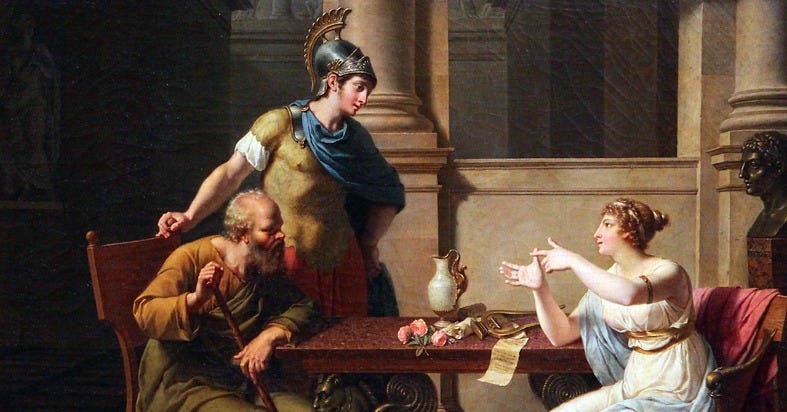
The Story of the Rhapsode Ion
Several hundred years before Christ, a man named Ion of Ephesus, a famous rhapsode, once won a great poetry contest. He claimed that he, above all men, spoke most beautifully about Homer. He could stand in front of thousands of people, recite Homer, and watch them weep or tremble with fear. He can not only recite Homer, but he is the best interpreter of Homer—he knows the Homeric art. Yet, Socrates questions him about whether his poetic art is a true techne, a craft in poetics, or something else. The problem is that Ion seems to only understand Homer—and not poetry. For example, Homer and Hesiod may discuss the same subject, but Ion says he only understands the subject in Homer and not in Hesiod—for other poets, his soul is simply “asleep.”
If Ion understands all things in Homer better than anyone else, but cannot recognize those some things in other poets, what is the nature of Ion’s knowledge of Homer?
If Ion had knowledge of Homer as a craft, as a techne, then he should be able to recognize similar knowledge in other poets—but he cannot.
What then is the nature of Ion’s knowledge of Homer if it is not a craft?
Socrates gives him another option.
The Famous Lodestone Example
Maybe artists are great due to inspiration and not technical skill. How many modern artists speak of not knowing where their art came from or that they are surprised their art came from them? They speak of the creation of art as something that infused them, an external force that moved them to create—one that they do not fully understand. In fact, if they tried to think about the art, it would probably ruin it. Think of ballet dancer or violinist attempting to think through their piece while performing it. It does not work.
Socrates asks Ion whether his poetic prowess is indeed due to divine inspiration. To illustrate, Socrates gives his famous metaphor of the lodestone or magnet. Imagine the Muse is like a lodestone, and her inspiration is like a magnetic power—and the poet, the rhapsode, and the people are all like chunks of iron linked together.
First, the Muse inspires the poet (like Homer), second, the poet inspires the rhapsode (like Ion), and third the rhapsode inspires the people—so, like magnetic power, the emotions and mania of the Muse flow from the poet, to the rhapsode, and into the people.
The inspiration theory would explain why poets cannot often explain their own poetry, as Socrates claims in his Apology. The power of a rhapsode, like Ion, comes not from skill but from divine inspiration—which means it does not require knowledge.
Ion seems more agreeable to this position, but does not want to give up his claim to having a craft, a techne—because he mentions the labor he has exerted to become the best Homeric rhapsode. Yes, he may be inspired, but that does not negate the hard work he’s committed to become a better rhapsode of Homer.
Also, Ion gives another perplexing example that shows he does not fall into complete divine mania, some out-of-mind possession, when he performs.
But the example raises even more questions about the nature of art—at least Ion’s art.
The Decision Ion Makes on Stage
Ion gives us a quick, subtle hint about the true nature of his art. Ion speaks of being on the stage before thousands, like a man possessed by the Muse, yet, Ion states he observes the emotions of the crowd and changes his performance based on their reactions. In other words, the act of being a rhapsode, of performing, is an intentional one based off observation that leads to rational decisions. Ion’s description seems contrary to any theory of full divine possession, as whatever inspiration he did receive has left him with his rational faculties and free will.
However… it is why Ion changes his performance that is so interesting.
He tells Socrates that he knows what emotions will make him the most money from the audience; thus, Ion, in observation of the people, changes his performance to maximize the amount of money he will receive.
Does the mania of the Muse care about money-making? No, not at all.
One could argue that Ion is a fraud.
He does not understand Homer nor poetry as a techne, a craft. He is not inspired by the Muse nor is he a channel of her mania—he is a sophist, a man manipulating the emotions of the crowd for fame and money.
Yet, though Ion may be emblematic of a certain type of so-called artist, the failure of Ion does not answer the question about the origin of art—techne or divine inspiration?
The dialogue, Ion, remains aporetic, meaning it leaves you in bewilderment without a clear answer.
Yet… a clearer answer may be found within the implications of the text—not with Ion, but with the other poet who looms large and silent over the text.
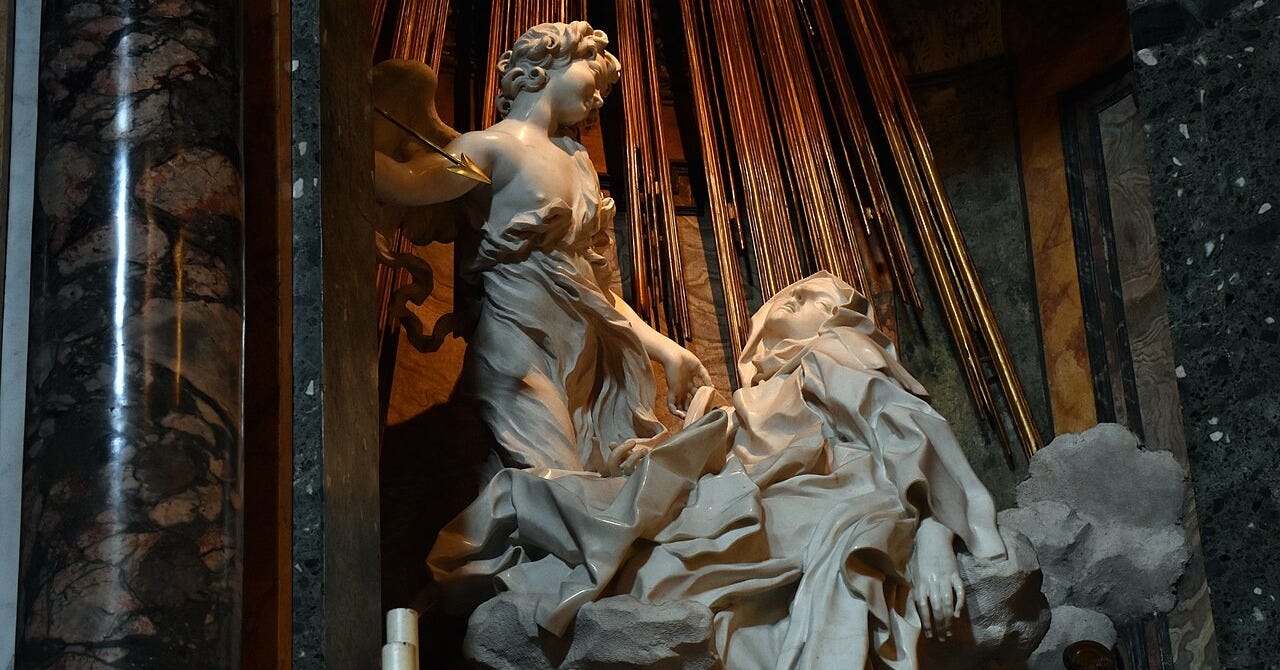
The Hidden Nature of Platonic Art
It is often recounted that Plato “hates Homer” given his critiques, through the mouth of Socrates, of Homer and poetry in the Republic. While a complicated question, what you should recall at the moment is that Plato too teaches via poetry—he teaches through his dialogues, a poetic presentation of the dialectics of Socrates, his conversations. In other words, though Ion stumbles before Socrates’ critiques, the astute reader of Ion will ask: wait, how does this apply to Plato? For Plato certainly writes these critiques not ignorant of how they critique him, but because he wants you to critique him in this manner.
For example, return to the lodestone metaphor.
Whereas the poet’s mania moves from Muse, to poet, to rhapsode, to people, note that Plato’s poetry, if you will, seems to follow a similar chain: the Ideas, Socrates’ dialectics about the Ideas, Plato’s poetic presentation of these conversations in his dialogues, and the reception of the dialogues by the people.
Moreover, in Book X of the Republic, Socrates will critique the poets for being a copy of a copy—they are twice removed from the truth and poetically present a truth they do not understand (the Ion is a great antecedent to this conversation).
The question, of course, is how does Plato not fall into this critique?
Is Plato also not a copy of a copy?
One preliminary distinction between Ion and Plato could be that while the former is a copy of the poet, the latter aims to be a copy of the Idea. In other words, Plato is not attempting to copy Socrates’ historical conversations, he is attempting to copy the Ideas directly, into the poetics of the dialogues, by using the character of Socrates as a vehicle. Plato’s dialogues are not a transcript of a historical conversation. They are poetic, artistic retelling of what we assume has some anchoring in reality—but ultimately, they are poetic teachings of the Ideas, of philosophy.
If Plato presented transcripts, it would be a copy of a copy, but he aims to copy the Ideas, and thus his art is not twice removed from reality like the other poets.
One might suggest that Plato is not critical of all poetry but of bad poetry—a poetry or art that is a copy of a copy, a poor imitator of reality that fails to convey truth well.
In this regard, it is Plato, not Ion, who represents the best of the poets—the exemplar of the artist par excellence.
A New, Ancient Way to Look at Art
Should an artist understand his or her art? Ion the rhapsode seems to fall short of this question, stumbling into a false divine mania aimed at making money. The dialogue Ion leaves us perplexed, it is aporetic, at least explicitly, leaving us without a positive answer to the tension between art as a craft (techne) and art as inspiration.
Yet, by applying the questions Socrates posed to Ion to Plato, a new understanding of art emerges. One that is deeply a craft, a techne, but one that is certainly inspired by a direct knowledge of the truth, of the Ideas.
One wonders how this distinction would apply to our own modern art?
Where does modern art fall in the tension between craft and mania?
Or is modern art mainly a facade aimed at money-making?
Who, amongst the modern artists, is not an imitator, a copier of copies, but is attempting to copy the truth directly—to present what is true in poetic form?
Do these artists exist today?
Dcn. Harrison Garlick is a deacon, husband, father, Chancellor, and attorney. He lives in rural Oklahoma with his wife and five children. He is also the host of Ascend: The Great Books Podcast. Follow him on X at Dcn. Garlick or Ascend.
Very well put!
A thoughtful piece of writing which invokes our mind not only to think deeper but also apply our intelligence to understand the art as well as artists.Great writing and please keep writing more.