


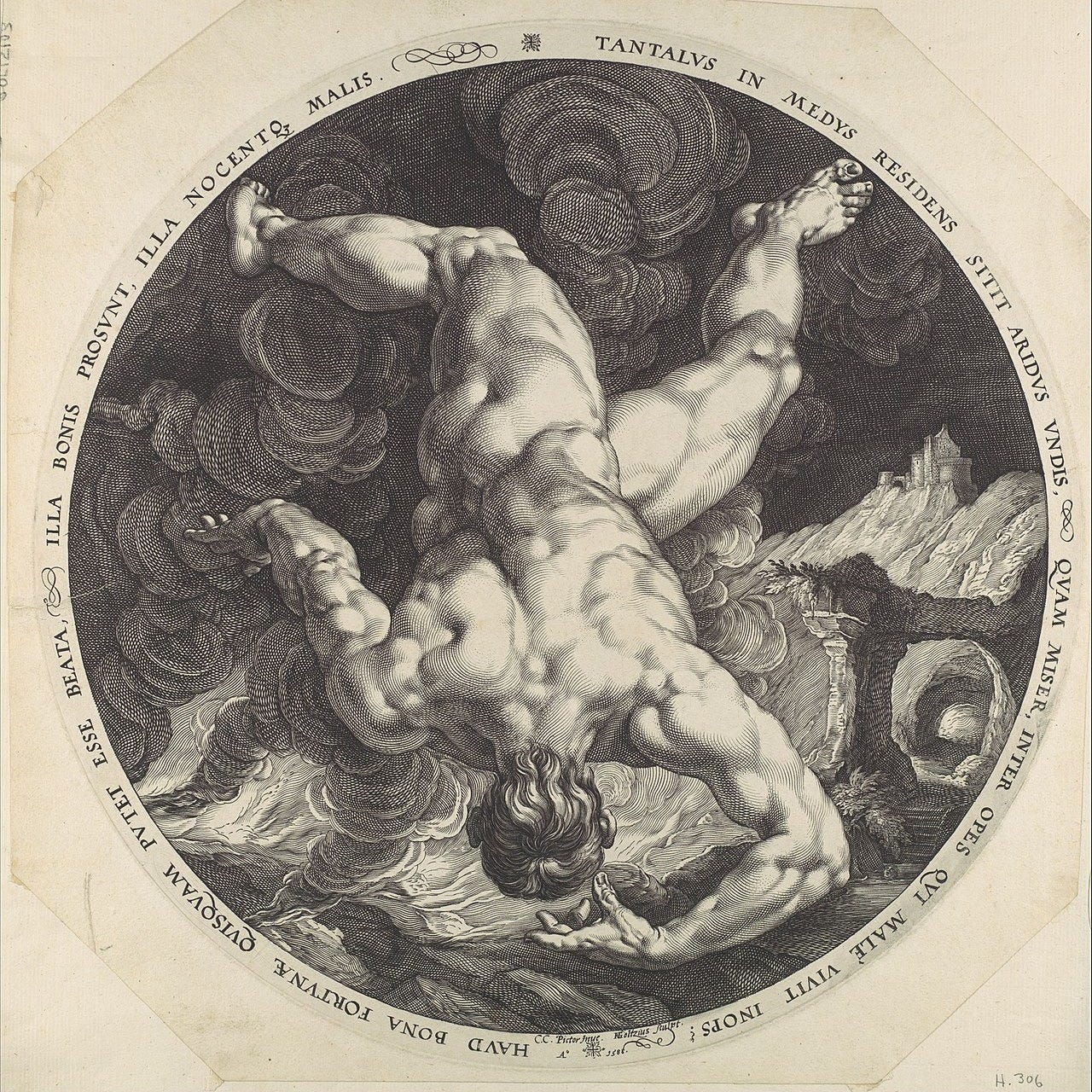
Most people live like slaves.
It is a quiet, unseen slavery that exists even in prosperous, free societies.
You see, humans have an insatiable desire for more.
And many believe they are free when they have the capacity to satiate their desires: the next purchase, the next pleasure, the next conquest.
But what feels like freedom is actually slavery—the soul dethroned by its own desires, chained to an endless craving that can never be filled.
You need to know about pleonexia, the ravenous hunger of the soul for more.
Plato offers you a myth to save your soul.
Reminder: you can support our mission and get all our members-only content for just a few dollars per month:
New, full-length articles every Tuesday and Friday (or Saturday!)
The entire archive of members-only essays
Access to our paid subscriber chat room
The Insatiable Human Desire for More
A soul is made beautiful by arete or virtue. Socrates tells you in the Republic that virtue is a type of health and beauty of the soul, while vice is a type of sickness and ugliness. Both the Old Testament and Plato espouse the same four cardinal virtues: prudence, justice, temperance, and fortitude, as these virtues help to perfect the three parts of the soul.
Prudence perfects the intellect’s love of wisdom, fortitude perfects the spirited part’s love of nobility, and temperance perfects the appetitive’s love of pleasure. But what of justice? Justice is the virtue of being well-ordered or harmonious, so justice crowns the whole soul by having it remain in hierarchy and loving well.
And the soul’s love of these beauties is infinite. For to possess beauty and delight in it is called happiness—and you want to be happy all of the time not just some of the time. And what is this love of beauty called? Eros. You have an infinite erotic appetite for beauty.
And this infinite eros is not a curse to dissatisfaction but an invitation to ascend from lesser to greater beauties until the soul delights in God, Beauty-itself. Your infinite desire for beauty is enkindled in you to lead you back to infinite Beauty, the Divine.
Yet the human desire for more is easily corrupted, and souls fall into what the classical Greeks called pleonexia, an insatiable, unjust desire to take and consume—an extreme greed, lust, and gluttony rolled into one. The erotic desire of the soul becomes unjust, taking whatever it can to satiate its desires for pleasure and satisfaction.
The irony of pleonexia, of course, is that it views itself as more free since it is free from the constraints of virtue.
But they could not be more wrong.
The Ugliness of Vice
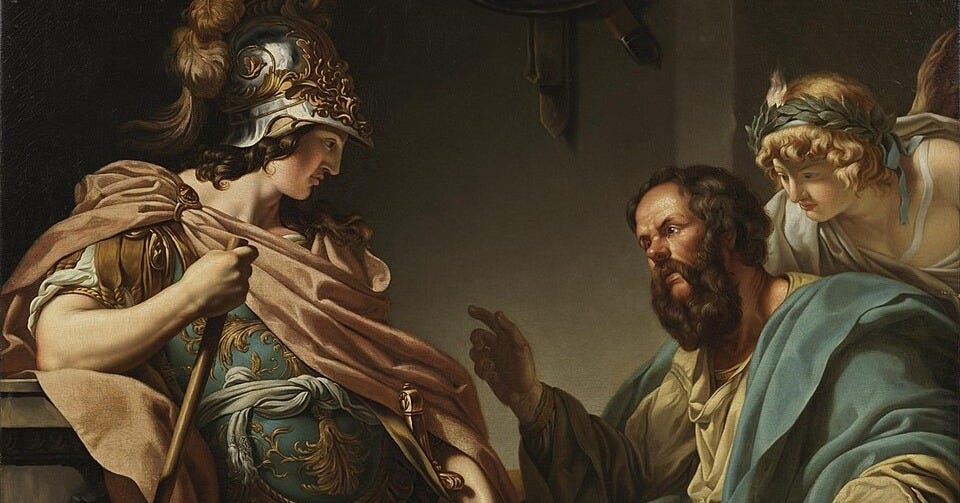
In Plato’s First Alcibiades, Socrates warns the young Alcibiades that he is in danger of becoming a slave. How could this be? Alcibiades is a popular young man who lives in democratic Athens, one of the most free, prosperous cities in the world.
What Alcibiades does not understand is that his vices will make him a slave.
Your soul can sacrifice its own freedom by chaining itself to what is unjust. Many souls that suffer pleonexia believe they are free, because they have the power to satiate their desires—like a tyrant who takes hold of a city. They interpret the capacity to satisfy themselves as a freedom. What they do not understand is that by breaking the constraints of justice, they become slaves.
Under the weight of vice, the soul becomes ugly. It gluts on the lower beauties at the expense of the intellect’s desire for truth. Reason is dethroned in the soul, and the appetitive, the desire for pleasure, reigns supreme. The life of the tyrant may look glorious, but he lives the life of a cow. Socrates warns of this in the Republic, a life focused on food and sex, head down, never looking up to the greater beauties of life—a life worthy of cattle.1
And to warn you about the dangers of unjust desires, Plato gives you a myth of the final judgment.
The Final Judgment of Souls
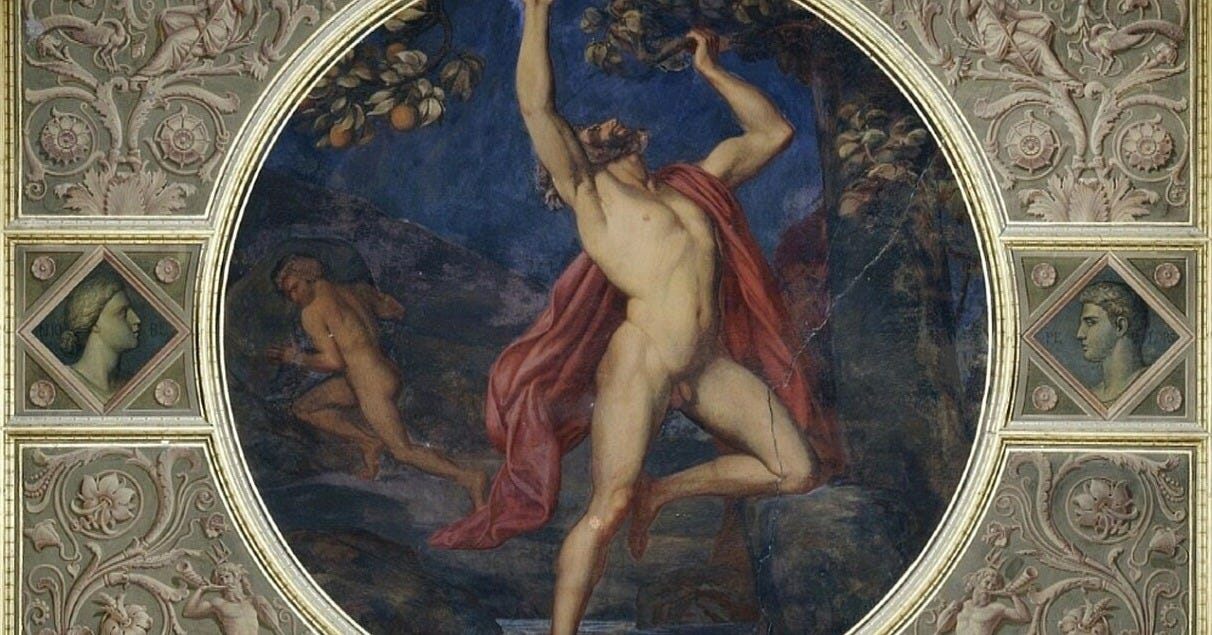
Many are familiar with the Christian teachings on the judgment of souls, but few know that Plato offered instructive myths about how the soul would be judged as well.2
One of Plato’s most famous myths comes at the end of his Gorgias. He first tells that people were judged by living judges prior to their death—but this caused many problems, as the judges judged according to outward appearances. As such, virtuous men were punished, and vicious men rewarded.
So, Zeus reworked the process to where dead judges would judge dead people. In this way, the judges would view the soul of the person, as the body had been stripped away. And why it is important that they see the soul?
Because vice makes the soul unhealthy and ugly. Each vice is a wound upon the soul.
And Plato makes a further claim.
As the tyrant beats his slave, so too does the unjust man beat his soul.
Vice brings slavery, the soul becomes enslaved to pleonexia—but the tyrant of the soul is the soul itself. It is a self-tyranny wherein the soul becomes a slave to its unjust appetites. It is a self-harm, a self-abuse, and a self-slavery.
In this Platonic myth, at the end of his life, the unjust man, the vicious man, presents his soul to be judged, and it is found bruised, battered, and beaten.
The vicious man, the self-tyrant, may live in a so-called free, democratic Athens but lives as a slave to his own appetites, a self-tyranny.
The greatest threat to your freedom is you.
Dcn. Harrison Garlick is a deacon, husband, father, Chancellor, and attorney. He lives in rural Oklahoma with his wife and five children. He is also the host of Ascend: The Great Books Podcast. Follow him on X at Dcn. Garlick or Ascend.
Christianity shares a similar warning, as St. Paul warns of sin as a slavery that leads to death (Romans 6).
Christianity teaches that the soul will be judged after death. Each person is judged immediately upon death (particular judgement), and also that God will judge all of humanity at the end of time (final judgment)—most famously expressed in the story of the sheep and the goats being separated according to how they cared for the weak and vulnerable (Matt 25).
Kafka talks a lot about that!