



Homer is a teacher—and maybe even a philosopher and theologian. He is worth your time. The Iliad is the first great book of Western Civilization outside of Holy Scripture. Most people think it tells of the Trojan war, but that is really the backdrop of Homer’s true focus—what it means to be an excellent man. Through the grit, guts, and gore of the ten-year war, Homer offers you perennial truths on the condition of man—if you are willing to receive them.
Join Dcn. Harrison Garlick and Adam Minihan for their first episodes of Ascend: The Great Books Podcast, as they read and discuss the Iliad at a slow, attentive pace.
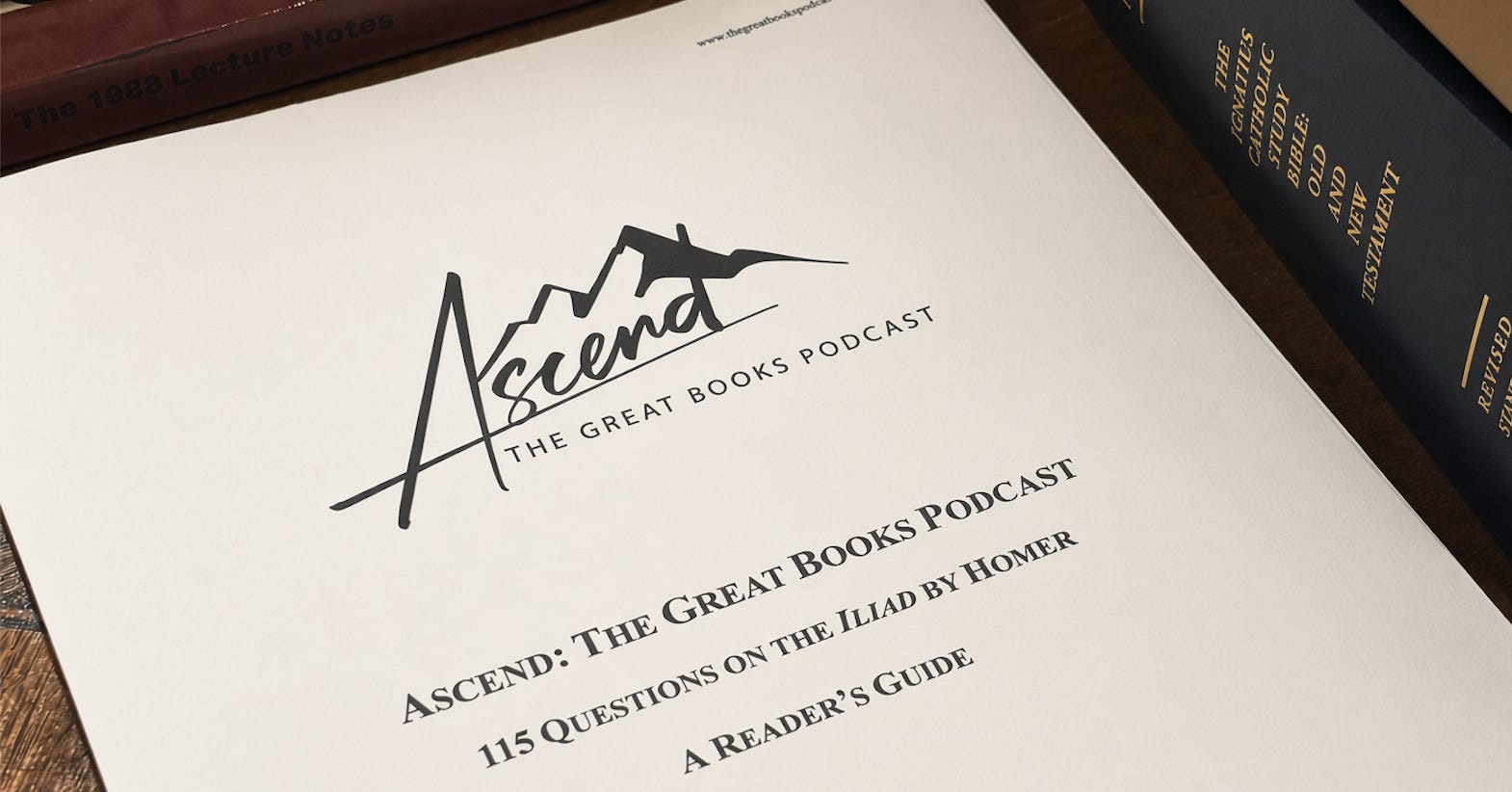
And be sure to check our our FREE 100+ question and answer guide on the Iliad.
Introduction to Homer
Who was Homer? Homer was a Greek bard, most likely from Asia Minor, whose brilliance is seen in weaving together centuries of oral traditions about the Trojan war. The Iliad was most likely written by Homer (or dictated to a scribe) around 750 B.C. Join Dcn. Garlick and Adam as they explore the person of Homer and what you need to know before reading the Iliad.
Also, this series starts on the podcast here: Introduction to Homer.
To go deeper, check out our essays: Do Christians Owe a Debt to Homer? and Homer: Philosopher & Theologian.
The Iliad Books 1-6 Discussions
Homer is a teacher. The opening Books of the Iliad set the foundation, focusing not on the Trojan war itself, but starting in media res with the “rage” of Achilles. You also discover the cause for the war, at least at first glance, which is the Trojan Prince, Paris, absconding with Helen—a sacrilegious violation of guest-friendship (xenia). Most of all, notice the contrast between Achilles and Hector—and the heroic overall. What does it mean to be a good man? What does it mean to be excellent (arete)?
Be sure to check out our FREE 100+ Question and Answer Guide to the Iliad.
The Iliad Books 7-12 Discussions
Books 7–12 carry out Zeus’ promise to Thetis and bring the Achaeans to the edge of ruin. Noteworthy themes include the importance of burying the dead and the rituals owed to them; the tension between fate and Zeus, especially as seen in the “golden scales;” and Achilles’ rejecting the embassy as he explains his two fates. By Book 12, Hector “bursts through in glory” at the rampart, the “doom of Zeus” over the body of Patroclus draws near, and we wait for Achilles’ wrath (and pride) to slack and rejoin his countrymen.
Good work! The Iliad is the first of the great books of Western Civilization, save the Bible, and you’re half way through. Be sure to check out our video discussions on Books 13-24 to better understand what Homer has to teach you (we have all kinds of podcasts, essays, videos, etc., on Homer to help you!).
Keep up the good work. You can read the great books with Ascend.
Dcn. Harrison Garlick lives in rural Oklahoma with his wife and five children. He serves as a deacon at Holy Family Cathedral and as Chancellor & General Counsel for the Roman Catholic Diocese of Tulsa. Follow him on X at Dcn. Garlick or Ascend.