


Does Christianity teach weakness?
Jesus says if someone hits you to turn the other cheek.
Is this not timid, passive, and weak? Well, think of it this way:
If someone hits you, and you are too afraid to defend yourself, have you followed Jesus’ command?
No.
Cowardice cannot be permitted to masquerade as piety.
Here is the subtle teaching of Jesus:
Reminder: this publication is 100% reader-supported. We are only able to continue writing it thanks to the members who support our mission.
If you find these articles valuable, then please do consider subscribing for a few dollars per month — it helps us out enormously. You’ll get:
New, full-length articles every Tuesday and Friday
The entire archive of members-only articles and essays
Access to our paid subscriber chat room and community
What the Bible says
Jesus told his followers to turn the other cheek:
“But I say to you, Do not resist one who is evil. But if any one strikes you on the right cheek, turn to him the other also” (Matt 5:39).
The famous passage is drawn from the Sermon on the Mount (Matt 5-7), the longest single teaching from Jesus Christ in the New Testament. Allegorically, as Moses ascended Mount Sinai to receive the 10 Commandments, so to does Jesus ascend the mountain to give you the New Law. Christ is the new Moses, but also the lawgiver—as Jesus is God. As such, the Sermon on the Mount is best read as a perfection of the Old Law—a movement from the exterior (do not murder) to the interior (do by unjustly angry).
To wit, the New Law focuses on aligning your exterior actions with your heart.
Returning to the verse specifically about turning the other cheek, Jesus offers this teaching again in the Gospel of Luke:
“To him who strikes you on the cheek, offer the other also; and from him who takes away your cloak do not withhold your coat as well” (Lk 6:29).
The verse is often used to show that Christians are weak, timid, and lack the capacity to do spirited (thumotic) things—that Christianity is passive, conflict avoidant, and a pacifist religion.
But is this true?
Let’s look a bit deeper.
The Subtle Teaching in Turning the Other Cheek
The true nature of Jesus’ command is best displayed through a hypothetical.
Jesus told you to turn the other cheek if struck. If you are struck, and you are too afraid to strike back or defend yourself, and thus you are struck again, have you followed Jesus’ command to turn the other cheek?
No.
Jesus’ command to turn the other cheek presupposes the natural virtue of courage.
The sacrifice of Jesus’ command comes in the fact that you do have the courage to defend yourself, to strike back, which is a just act under nature—however, the sacrifice is found in not acting upon what you have a natural right to do for the sake of a higher supernatural good.
But this means the act of turning the other cheek is an act of strength—those who have the capacity to control their spiritedness and withstand another blow for the sake of some higher good, like teaching the assailant a lesson.
In fact, this reveals a true understanding of meekness—strength under control.
Cowardice cannot be allowed to masquerade as piety.
But did Jesus ever model this?
Jesus Turning the Other Cheek
Jesus turned the other cheek during His Passion. When you suffer, it is often because you otherwise cannot cease the suffering—you must suffer the illness, the loss of a loved one, or an unjust attack. The suffering will happen, but you must choose to suffer well, to suffer with virtue.
Christ is a bit different.
Because Jesus is God, the Second Person of the Blessed Trinity, He could have stopped the suffering of his flogging and crucifixion. Yes, He could have called down legions of angels—but He would not need to do so.
You see, Jesus is the Incarnate Son of God, and the Son is the Logos, the Word (John 1:1), through Whom all things were created and all things are held in being (Col 1:15-17). As St. Augustine taught, the Logos is the Divine Mind that holds all things in existence.
Why is this important?
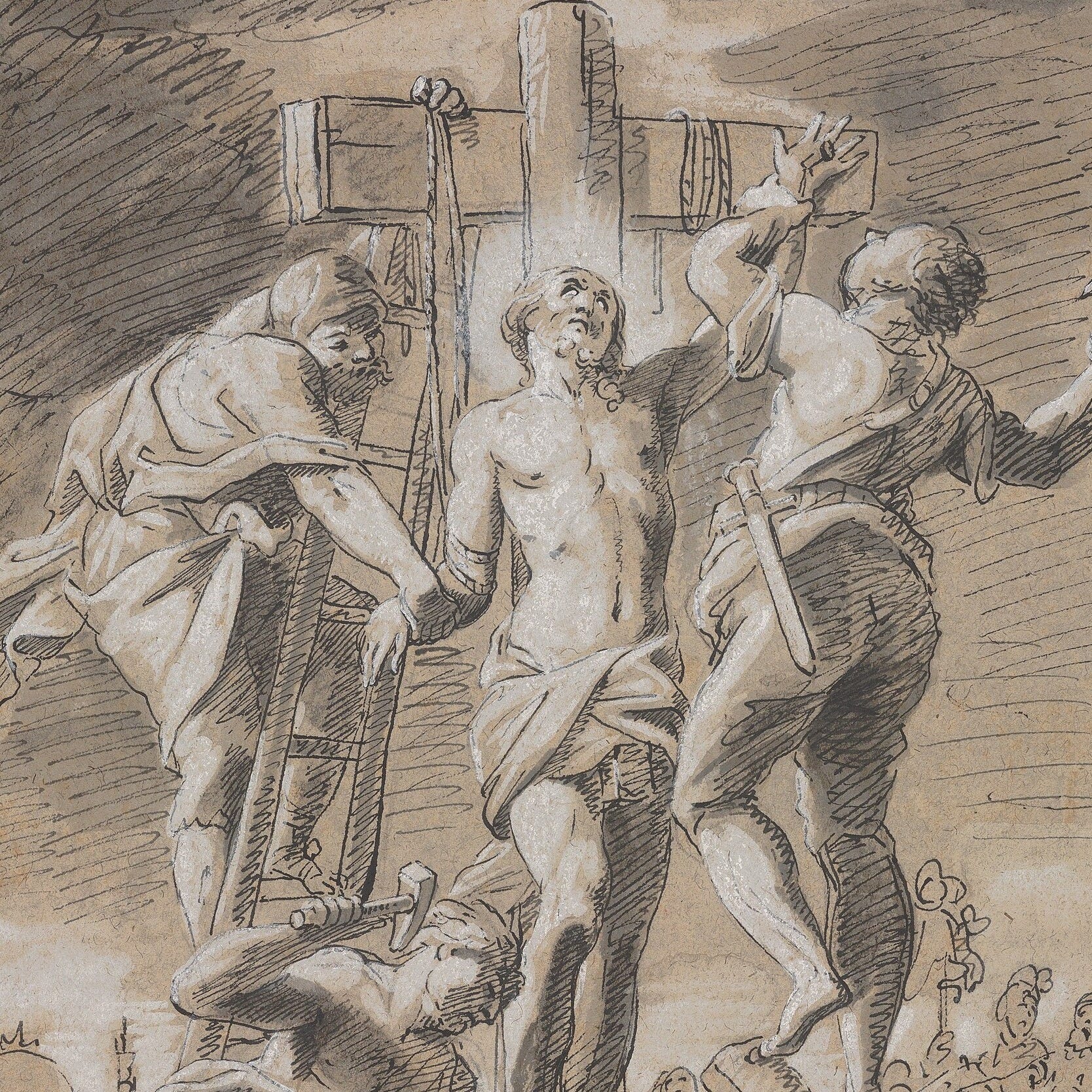
Because as Jesus is being beaten and mocked by the Roman Centurions, He is also holding them in existence. As He is being nailed to the Cross and suffering immense pain, He’s also holding the nail, the wood of the cross, the hammer, and the Romans in existence. For Him to simply think otherwise, would be for Him to cease the situation, the suffering.
In other words, you think of things, because they exist—but things exist because God thinks of them.
To our point, Christ is literally turning the other cheek on the Cross because He could stop the injustice. He could “strike back,” if you will, and stop the entire situation.
But He does not—because His “turning of the other cheek” will bring about a greater good.
Do Christians Teach this Well?
Do Christians teach this passage of Jesus well? For example, if you want your child to be able to turn the other cheek, first teach them to be courageous and stand up against injustice—teach them to be spirited, to be thumotic.
Then teach them how to bridle it for the sake of a higher spiritual good.
And, as an aside, Christians are never called to turn the other cheek of others—to watch others suffer injustice.
Do not teach Christians children to be weak.
Teach them to be strong and spirited—and to offer that natural good to God.
Dcn. Harrison Garlick is a deacon, husband, father, Chancellor, and attorney. He lives in rural Oklahoma with his wife and five children. He is also the host of Ascend: The Great Books Podcast. Follow him on X at Dcn. Garlick or Ascend.
Thymos, as spirit, has passed onto my language, Spanish, as timo. The thyme gland, the one giving you "fire". How the language wanders and changes meanings ...
The true weakness comes from tolerating evil. Christians accept it under the guise of divine providence and “prophecy” as an excuse to cower before wicked men.