


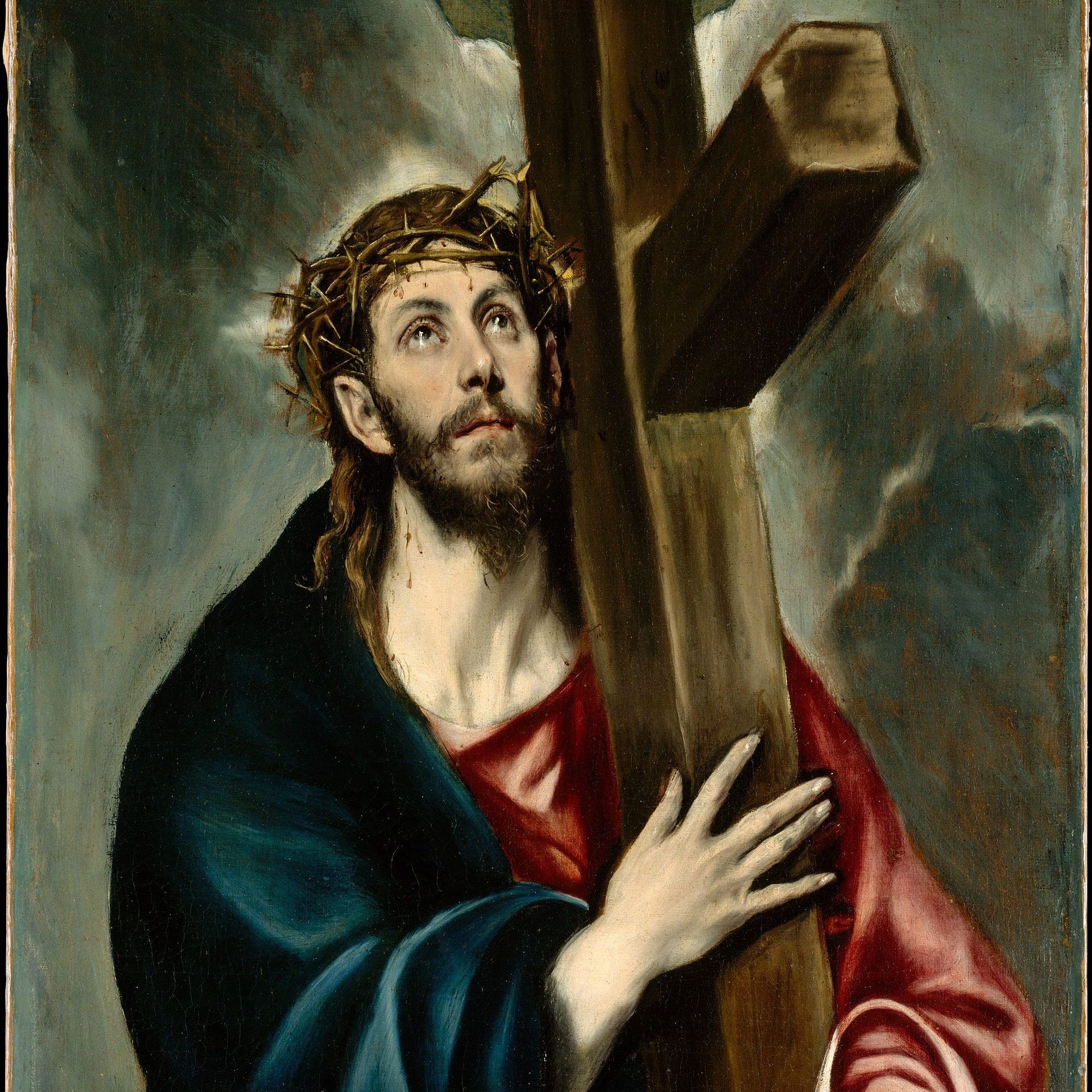
“God died for you.”
You’ve heard it a thousand times. But, what does it mean?
Is the Cross just emotional manipulation—a guilt trip?
Or did logic, justice, and infinite love demand it?
One quick, honest look at the Cross could shatter everything you thought you knew about God’s love.
Reminder: this publication is 100% reader-supported. We are only able to continue writing it thanks to the members who support our mission.
If you find these articles valuable, then please do consider subscribing for a few dollars per month — it helps us out enormously. You’ll get:
New, full-length articles every Tuesday and Friday
The entire archive of members-only articles and essays
Access to our paid subscriber chat room and community
Justice as the Virtue of Harmony
You need to understand that even if you were the only human to have ever lived—God would have died for you. When Jesus died on the Cross, he reconciled man to God, as man has sinned against this Creator—and this was not some abstract act, Jesus had you on His mind when He entered into His Passion and suffered.
But why do Christians believe He had to die?
When you sin (or commit an injustice) the punishment and remediation for that sin is proportionate to the good violated. For example, if someone steals your truck, the punishment must be balanced to the crime—it would be disproportionate (and thus unjust) to execute them or put them in prison for life. The good harmed does not demand it. Furthermore, the restoration or remediation would also need to be commensurate with the value of the truck, i.e., buying them a new truck.
In other words, justice is the virtue of harmony and proportionality. It brings a beauty to the parts by arranging them in order—and the criminal justice system, for example, is supposed to restore the harmony that injustice (a discord) enacted.
So, what do Christians believe this has to do with the Cross?
The Intimacy of God to His Creation
God is the Creator, and man is the creature. In fact, you can view humans as thoughts of God made flesh—He is the Divine Mind and you are a thought of that Mind given created being. You think of things because they exist, but things exist because God thinks of them. God not only created you but holds you in being at all times—you cannot exist apart from him. As St. Augustine states, God is closer to you than you are to yourself.
It is difficult to exaggerate how intimate God is to you—and how you rely on God for your entire being.
So, here is the problem.
God gave mankind free will—which is a necessary principle of true love. For love to be given, it must be given freely. The liberty of Adam and Eve was not given to them to choose between good and evil; but rather, the true purpose of freedom is the ability to choose amongst goods—and one of those goods is to love.
As you know, the story of Adam and Eve is simple but profound—humanity, in its first parents, elected to disobey God and use freedom to pursue a false good outside of Him. The act brought sin and injustice into the world.
So, think about the intimacy explained above.
You disobeying God is like a thought warring against the Mind that thinks it. It is a complete disharmony, an existential discord that enters into an otherwise intimate and beautiful relationship.
But, what does this have to do with the Cross of Christ?
The Answer of the Cross
Jesus Christ is the answer to the problem of justice—the logical problem of the disorder between the creature and the Creator, the thought and the Mind. Here is a simple explanation worthy of deep consideration.
When humanity sinned against God, it was an act of injustice, and each act of injustice is proportionate in its severity according to the good violated. But here is the problem… God is not just “a good.” He is Goodness itself. He is the source of all good, He is Infinite Goodness.
So, humanity’s injustice against God is against an infinite Goodness—which means it demands a proportionate punishment, an infinite one. Here, you can start to see the logic of hell. Moreover, to mend the relationship, to have remediation, a restoration of the relationship, also takes an infinite effort—one in balance with the good harmed.
Humanity owes an infinite debt to God, but humanity is finite. Only God is infinite goodness.
So, here is the problem as simple as can be: humanity owes the debt but only God has the power to pay it.
In other words, humanity was left without the capacity to amend its own error—it could neither pay the punishment nor restore the relationship.
Here is the key. The only way the relationship between God and man could be restored is if there was a God-man. Justice demanded a marriage between man who owed the debt and God’s power to pay it.
Hence, the God-man, Jesus Christ, is the answer to this cosmic injustice.
The answer is a God willing to suffer for His Creation—to show what love is. Though He was owed the debt, God was willing to step into humanity and pay it.
It is a beautiful story of love—a love for you.
The Cross as an Invitation
Christians believe that God loves you SO MUCH that He became a man to pay our debt and restore our relationship with Him. Even if you were the only human soul ever born, God would have still died for you. In fact, there has never been anyone who has been born for whom God did not die—He died for everyone.
The choice is yours.
Christianity is an invitation to become part of the new humanity, a humanity under the headship of Jesus Christ—to accept the sacrificial gift of Jesus’ death and resurrection and step into the mended relation between God and humanity. In fact, through Jesus Christ, God offers you His grace—which means His “divine life.”
When Christians speak of “being saved,” these are the deep theologies underneath that simple statement—that the Divine Mind has restored the relationship with His own thoughts. The Creator has invited the creature into a restored and perfected harmony with Him—in which the only visible creature made in the image of God (Imago Dei) can participate in the divine life and enjoy that beatific experience for all eternity.
Through the Cross, God offers a deep and abiding rest, a tranquility of order, between the creature and the Creator, the thought and the Mind.
Jesus loves you.
PODCAST ANNOUNCEMENT: We are partnering with our friends over at Ascend: The Great Books Podcast to start a series of podcast episodes on some of our most popular articles here on The Ascent! First, we are going to discuss the hidden meaning of Narnia’s endless winter; and second, we’ll discuss the spiritual harm of lying. We want your QUESTIONS! We would love to answer your questions about these articles on the podcast. Submit your questions on our subscriber-only community chat. Good things ahead!
Dcn. Harrison Garlick is a deacon, husband, father, Chancellor, and attorney. He lives in rural Oklahoma with his wife and five children. He is also the host of Ascend: The Great Books Podcast. Follow him on X at Dcn. Garlick or Ascend.
That shows us the deep, deep love of God, for his creation.
May we present it and represent it as such, so more and more people can see it, repent and believe, and turn to this awesome, God that we serve.
Yes, what a great essay.
Spot on.
Always good to hear the simplicity that is the gospel.
that will totally preach...