


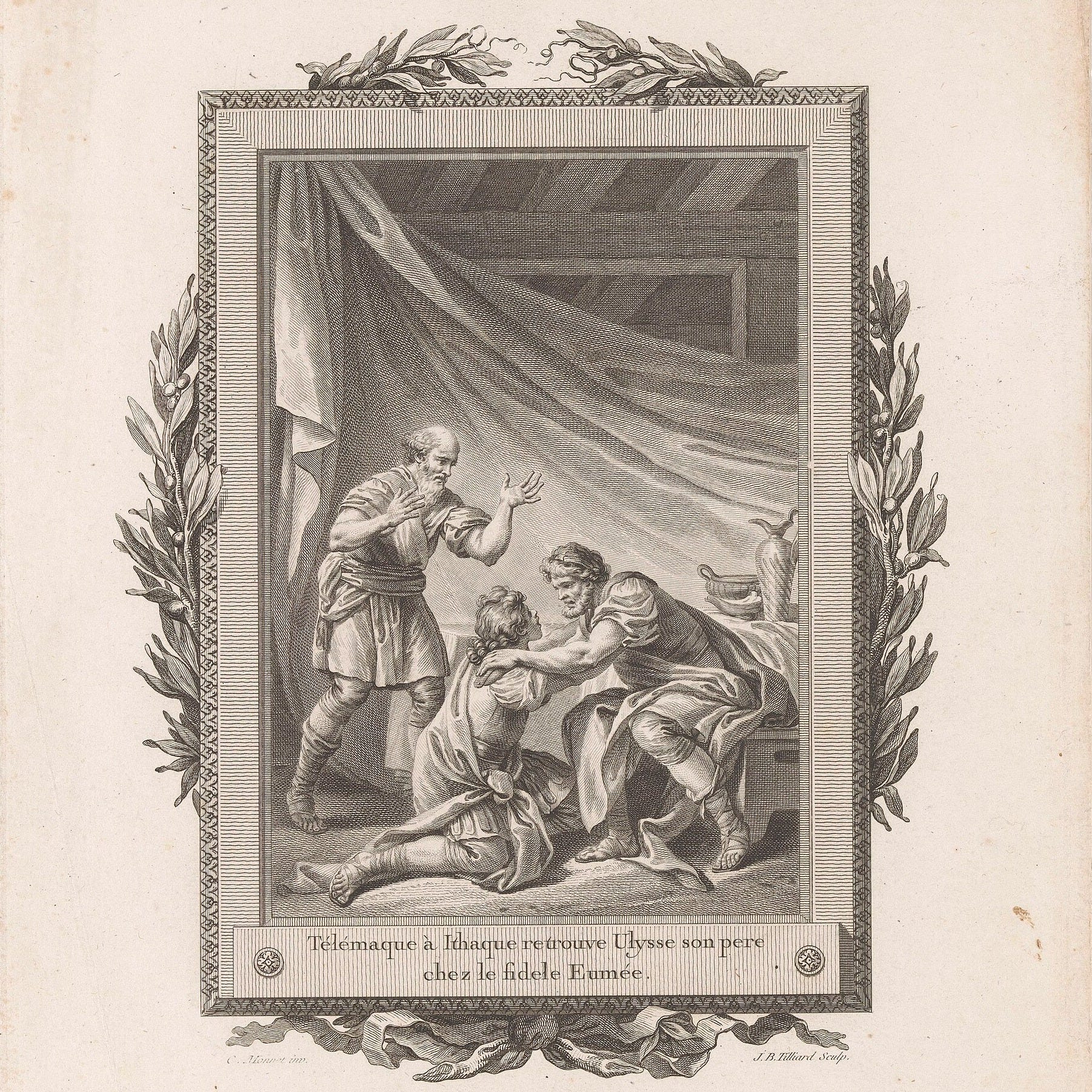
Boys must learn to be a threat.
Many today see masculinity as something toxic, something unnecessary in an age of soft egalitarianism.
But Homer shows you that true masculinity is a threat to injustice—that the boy who becomes a man must both desire justice and have the spiritedness to enact it.
Telemachus, Odysseus’ son, is the poetic image of what it takes for a son to become a man.
And though Homer shows you the crisis of fatherlessness, he also shows you what it takes to overcome it.
Let’s look at 7 lessons from Homer on how a father can help his son become a man.
Reminder: this is a teaser of our members-only deep dives.
To support our mission and get our premium content every week, upgrade for a few dollars per month. You’ll get:
New, full-length articles every Tuesday and Friday (or Saturday!)
The entire archive of members-only essays
Access to our paid subscriber chat room
The Boy Needs to Become a Man
Homer is a teacher. He opens the Odyssey with the word “man,” then turns our attention to a fatherless boy who must become a man, Odysseus’ son, Telemachus. Part of the brilliance of Homer is weaving together the coming home of Odysseus with the coming of age of Telemachus.
Telemachus suffers from fatherlessness. He has had no father, no Odysseus, to help him become a man. He is surrounded by injustice in his own home—the suitors who court his mother, Penelope, and he is inept. Telemachus is not a threat to the suitors, he is not a threat to injustice. He is an adolescent full of frustrated thumos—spiritedness—who claims the reins of power one moment and is tucked into bed by his childhood nurse the next. His journey is the story of a son learning how to become a man—and part of that story is the need of a father.
Fathers today face a quieter version of the same crisis. Many sons grow up without a living model of ordered masculinity. Homer shows that maturation is not automatic—age does not make a boy a man. It requires mentors, journeys, models of piety and hospitality, partnership in justice, and the final recognition that a boy has become a man.
Let’s look at seven lessons in Homer that show how a boy becomes a man—an important lesson for fathers raising sons (and for mothers who, like Penelope, have to allow their son to become a man).
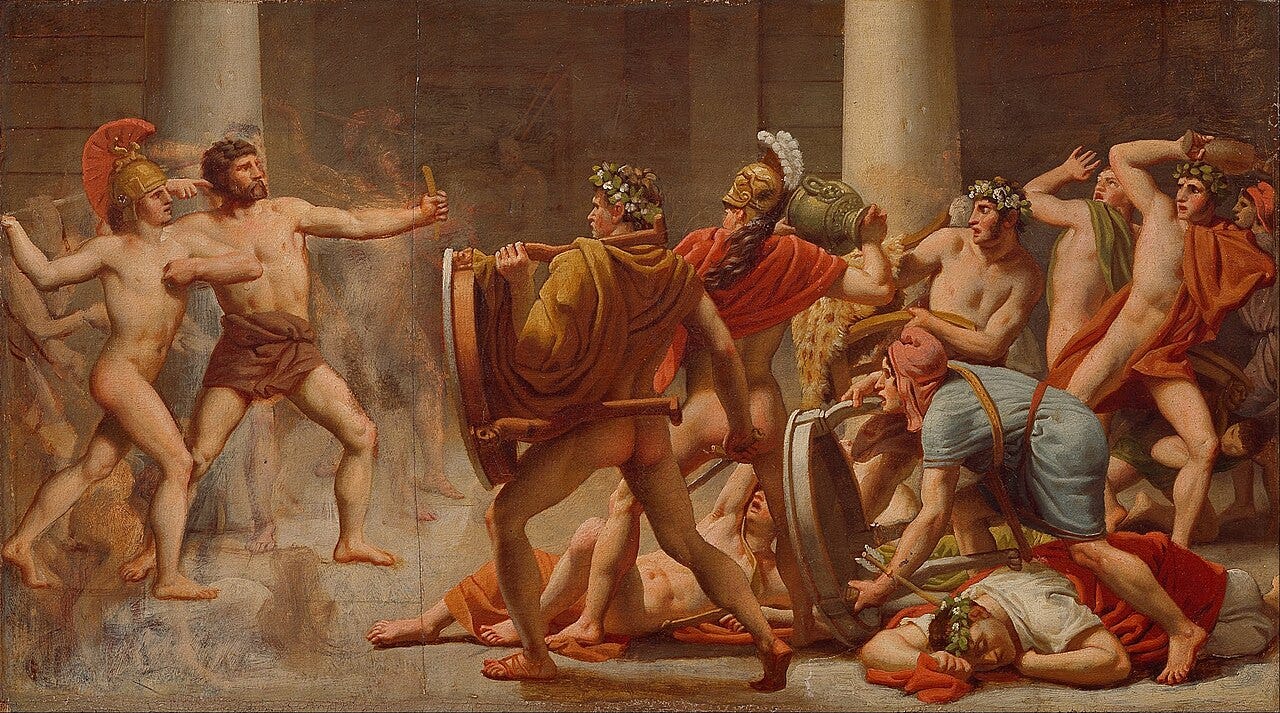
1. A Son Must be Stirred to Act, to Mature
In Book 1 of the Odyssey, Athena, the goddess of wisdom, arrives at the house of Odysseus, gone for twenty years, disguised as Mentes and tells Telemachus to stop dreaming and “be a man.” She does not coddle him. She knows that Telemachus is not a threat to the suitors who devour his home. He is a boy, soft, and easily frustrated. He is inept and knows it. His house is in disorder. Telemachus must leave, he must go on his own odyssey to find news of his father—but Athena knows Telemachus’ journey will not do anything to bring his father home. So why go? Because Telemachus needs to mature—he needs to get out from underneath the soft, feminine hands of his mother and nursemaid and take risks. He needs to prove himself to himself.
As Dr. Pavlos Papadopoulos observes, the difficulty Telemachus faces “in becoming a man when his father has been absent almost his entire life” is “right there in this very ancient text,” speaking directly to “the crisis of masculinity and the broken family and absent fathers.”1 Telemachus thinks he’s going to find his father, but he’s actually going to find what his fatherlessness robbed him of—self-confidence and masculinity.
How does this apply to today?
Notice how someone had to speak a hard word to Telemachus. Someone had to tell him it was time to act. It was time to leave what was safe, take risks, and prove himself.
2. Willingness to take Authority and Lead
A subtle read of Homer shows that Ithaca and Telemachus are parallels of one another—both are suffering the effects of an absent leader, the king and father respectively. One symptom of this absent political leadership is that Ithaca has not called a political assembly in twenty-years—or since Odysseus’ departure for Troy. Telemachus calls the assembly and attempts to step into the role of his father—even going as far to sit in his father’s royal chair. It is a good step in his maturation, but he is, unfortunately, still very much an inexperienced child. The assembly falls apart with no real political effect or cohesion. Telemachus loses his temper and cries.
As Dr. Frank Grabowski notes, “speech has lost its force” in Ithaca, a disordered polis. It is ruled by the oligarchy of the suitors. Telemachus wants to lead, but he lacks the rhetorical skills and the political prudence—and the thumotic grit to see it done.
How does this apply to today?
Sons need the opportunities to cultivate their leadership skills. Whether at the family dinner table, social gatherings, or other settings, look for opportunities for sons to grow in confidence in their capacities to speak and lead a crowd. Telemachus fails in something important, because he had no practice with lesser opportunities.
What else does Homer teach us?
Homer shows you, in a poetic image, how a son must mature into a man of prayer and piety, a man who is a threat to injustice, and a man who is the pride of his family lineage—and more!