


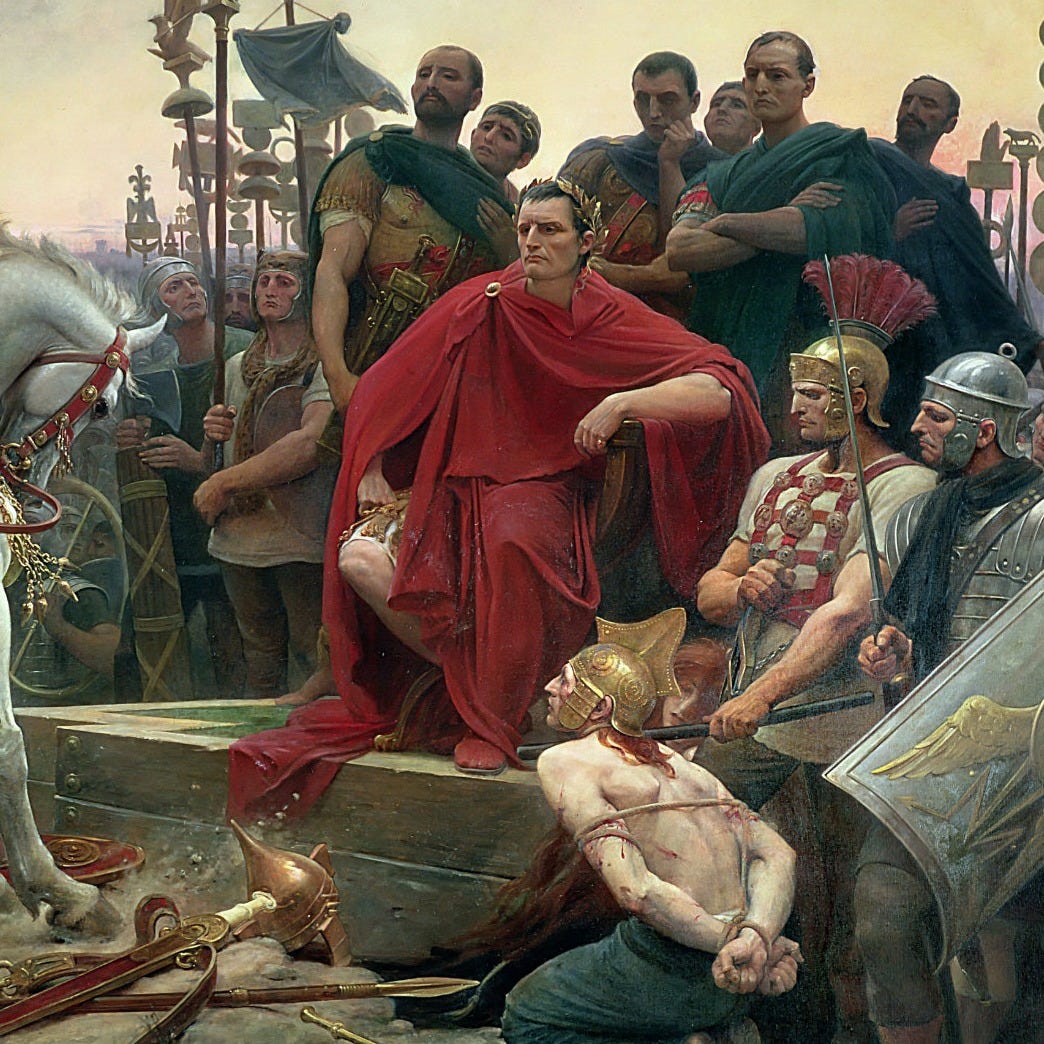
Young men desire greatness, and we offer them comfort.
Young men desire glory, and we offer them safety.
Young men are starving for nobility, human excellence, and all the glory, honor, and fame that comes with it.
Yet, how can they live a life they never see?
Well, here are 12 ancient texts to help young men see the spirited life.
Reminder: you can support our mission and get all our members-only content for just a few dollars per month:
New, full-length articles every Tuesday and Friday
The entire archive of members-only essays
Access to our paid subscriber chat room
Young Men Need to See Greatness
Young men desire adventure, and we give them screens. Young men desire the heroic act, and we give them comfort. Young men desire glory, and we give them “safe places.” It is a tale almost as old as the West itself—young men must leave the comfort of their homes and achieve something glorious. It is in the adventure that they find themselves and their true capacities.
Young men must become thumotic. In the Iliad and Odyssey, Homer uses the term thumos to refer to the spirit of man, a nascent understanding of the soul. Odysseus, for example, will speak to his own thumos while enduring the battering seas of Poseidon. In Plato, the term is refined to mean the part of the soul that desires nobility—a human excellence. When the thumos satiates in what is noble it produces glory, honor, and fame—men do great deeds and immortalize their names within history. It is the part of the soul perfected by courage, for the thumotic must be brave to overcome the difficulties that merit honor and glory.
Young men must become thumotic.
In English, the word is often translated as spiritedness or the spirited part of the soul. And despite our age of comfort and safety, this part of the soul still yearns for nobility and honor—especially in the hearts of young men. One thinks of Telemachus in the Odyssey, and how he must leave his home and mature—he must become a man, a threat to the suitors devouring his father’s house.
And how do young men learn to be thumotic?
The power of memetics.
Young men need to see the thumos in action—they need to see spirited men doing great deeds. They have to be shown that this type of life, the life of glory and excellence, is a true choice. In our age of so-called civility, it is more difficult for a young man to see the thumotic in action.
Even worse, the thumotic is often intentionally hammered out of young men—cultivating them to be soft, passive, and indecisive.
So, where can young men experience the memetic power of the thumotic?
In ancient texts.
The following is an introductory text on some of the best texts on thumotics from the ancient Hebrew, Greek, and Roman cultures.
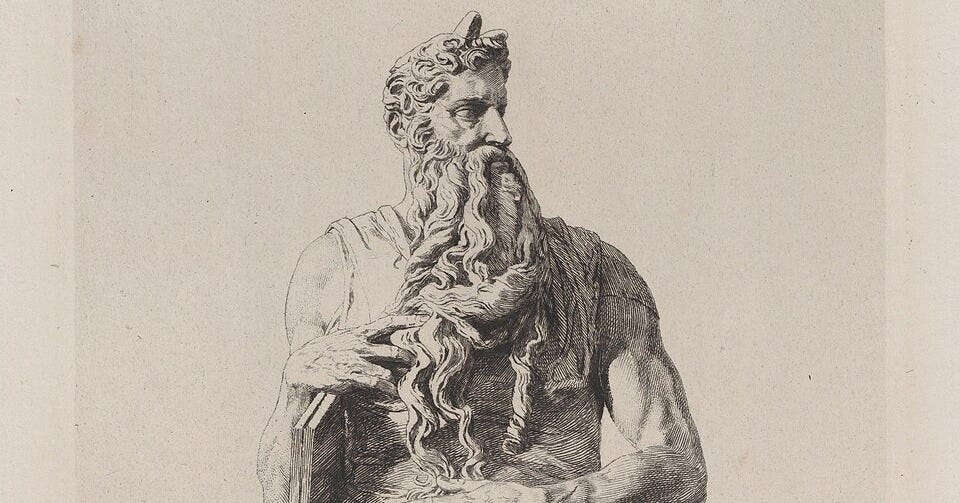
1. Exodus (The Story of Moses)
Every man needs to study the life of Moses. Both Jewish and early Christian thought turned to the life of Moses as the quintessential image of the spiritual life—and this includes the thumotic. He is the orphan, the prince, the shepherd, the messiah, and the lawgiver. Moses was educated in the royal house of Pharaoh and knew how to bring together a people; moreover, like most thumotic men, he was hot-tempered and that anger led him at times to righteousness and other times to failure. There is no greater story than the life of Moses—for it is a pattern for the thumotic soul’s ascendancy to God and glory.
2. Book of Joshua
The Book of Joshua is about war and conquest. Joshua, the leader after Moses, receives the direct order “Be strong and courageous” and obeys by conquering the promised land against overwhelming odds. The text cultivates thumos by showing what disciplined, obedient boldness looks like when a man steps into leadership after a great leader like Moses.
In Joshua, the power of memetics shows a leader willing to achieve the glory and future promises to his people—an amazing example of overcoming difficulties.
3. Book of Judges (The Samson Narrative)
Few stories benefit young men more than the narrative of Samson. Outside the tremendously spirited acts he accomplished, Samson is also a warning to young men. You may cultivate a tremendous bravery to cover difficult things—but have you cultivated temperance? What if the evil that comes against you isn’t a raging lion but a beautiful woman? Like David and Solomon, Samson teaches young men that being spirited is not enough—to be truly excellent one must cultivate all the natural virtues: prudence, justice, temperance, and fortitude.
And Samson is also a story of redemption—of when you fail finding a path back to glory. Samson died with his boots on and took down more Philistines in his death than he did throughout his entire life. He became a blind slave, but he died in glory.
4. I & II Samuel
There are few pieces of literature in the ancient world that can rival the story of David. From the humble shepherd boy to the giant-killer to the warrior-poet-king of Israel, David’s life is an amazing image for the young masculine mind. David is an archetype. He is a man after God’s own heart, a man of righteous anger and poetic beauty. And yes, like Samson, he falls into great sin and suffers for it—but David’s story is also one of redemption.
Young men need to understand the story of David and why God loved him.
5. I & II Kings
Often neglected, the stories contained in first and second Kings offer a lot to the young masculine mind. Stories of the throne, courage, prophets, warrior-kings, and more give a myriad of lessons on justice and leadership. These stories also show that it is one thing to acquire the throne but another to rule—can the thumotic soul not only win the throne but rule wisely? Again, the thumotic is an entrance to the entire moral life and cannot be divorced from virtue over all.
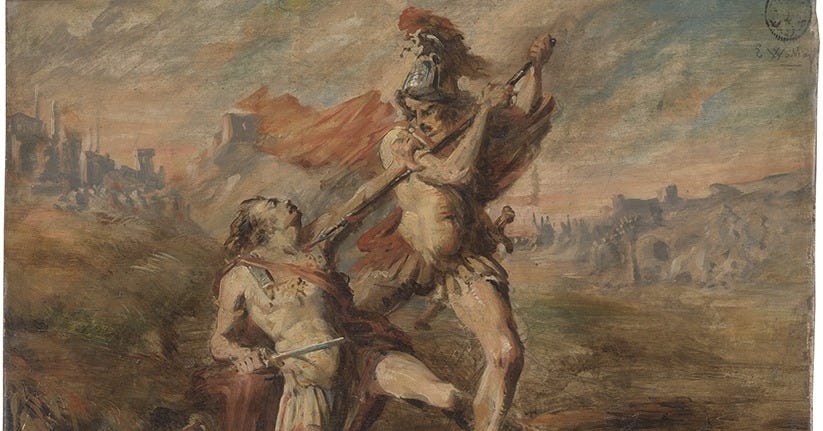
6. Iliad
Often seen as the text of memetic power par excellence, the rage of Achilles and the piety of Hector clash in tremendous tales of courage, excellence, and strength. The rage of Achilles reflects the fire in the hearts of young men—especially those who find their nobility and excellence throttled by bureaucracy and lesser men. Hector, the first of the nine-worthies in the medieval tradition, is an example of both piety and failure. He is the hero of Troy and defends his polis with strength and honor until his death—an image of piety toward the gods, the polis, and the family.
The Iliad, as Socrates tells us, is about justice, but Homer’s lessons are wrapped in gory tales of arete, combat, and personal glory. It is a tale of both the thumotic and its limits. It is a must-read for all young men.
7. Odyssey
Most people focus on the coming home story of Odysseus, but the Odyssey is also about the coming of age story of his son, Telemachus. The young man must leave his home and its influences and become a man—he must find his thumos and become a threat to those who endanger his father’s house. Odysseus too gives a heroic image, one different than the Iliad, of a man who needs both spiritedness and cleverness to survive the journey home. Like Moses and David, Odysseus is not without his faults, and Homer often presents him as a character in tension—but the lessons are found in those comparisons.
The coming home and coming of age stories of the Odyssey make it a must-read for any young man.
8. Plutarch’s Lives
Plutarch’s Lives has memetic power as its purpose. Plutarch gives you short biographies of great men—Alexander, Caesar, Cato, Alcibiades, and more—to show you how real men have grasped glory. He offers a thousand lessons on what to imitate and what to avoid. For young men this is pure memetic fuel: dozens of concrete archetypes of thumotic excellence (and failure) that bypass abstract philosophy and go straight to the part of the soul that is desirous of immortal glory.
9. Xenophon’s Anabasis
One of the best but most neglected books for young men, the Anabasis tells the tremendous journey of ten thousand Greek mercenaries who become stranded deep in the Persian Empire and must journey home. The book is thumos in action: no miracles, no safety net, just grit, discipline, and the refusal to submit. Its memetic power is visceral—a true template for leadership and endurance.
10. Marcus Aurelius’ Meditations
Written by one of the two most powerful men in the world, the Meditations is a real-life philosopher-king trying to channel raw thumotic energy into disciplined leadership. A stoic masterpiece, the Meditations pushes the thumotic to the next level—a level of control and reason. In many ways, the maxims of Marcus Aurelius provide the young thumotic soul the next step in its ascendancy toward glory and excellence.
11. Arrian’s The Campaigns of Alexander
Arrian, drawing on eyewitness sources, delivers the definitive ancient account of Alexander the Great’s conquest of the known world—from Greece to India—at the head of his loyal companions. It radiates pure thumos: relentless drive, tactical genius, physical courage, and the refusal to stop even when his own men beg for rest. Alexander the Great is the quintessential young, thumotic conqueror—a model for even Julius Caesar. Most importantly, Alexander the Great showed young men what was possible—to be a world-conqueror. Empire was possible in the West.
12. Julius Caesar’s Commentaries on the Gallic War
Written by Caesar himself, this is the ultimate commander’s dispatch from the front lines: seven years of brutal campaigning, bridge-building, siege warfare, and turning hostile Gaul into Roman territory. It cultivates thumos through calculated boldness, speed of decision, and total ownership of outcomes. Its memetic power is direct and practical—young men absorb the mindset of the man who writes his own victories while making war look like disciplined art, teaching that real leadership means marching into the unknown and imposing your will on chaos.
But what about Jesus…?
Christians teach that grace perfects nature. In other words, participating in the life of God (“grace”) both heals and elevates what men and women have by nature—and this includes the thumos as part of the soul and the natural virtue that perfects it, courage. In other words, the teachings of Jesus on grace presuppose natural virtue. But the perfection from conqueror to martyr, from Achilles to Christ, is a step that best comes when young men have first learned to be brave—to be thumotic. For more on this, see Turning the Other Cheek is not Weakness and also, similarly, When “Love Your Enemy” means Justice.
St. Maximus did not teach against the thumotic, but taught the thumotic must be bridled by gentleness. St. Basil did not teach to reject the pagans, but rather to read them as a natural preliminary to the Bible—a preliminary that will make you a better reader of the Bible. Once again, the classical pagans are not a threat to Christianity, but rather help it raise even higher.
Dcn. Harrison Garlick is a deacon, husband, father, Chancellor, and attorney. He lives in rural Oklahoma with his wife and five children. He is also the host of Ascend: The Great Books Podcast. Follow him on X at Dcn. Garlick or Ascend.
It's sad how often the Book of Judges goes overlooked. Samson's story eerily parallels the modern masculinity crisis. I'm so glad you included it here.
Great piece. Of course the ancient world takes us from conqueror not only to martyr, but to Christ, King and Conqueror, as well. Mightier than Achilles by far.