


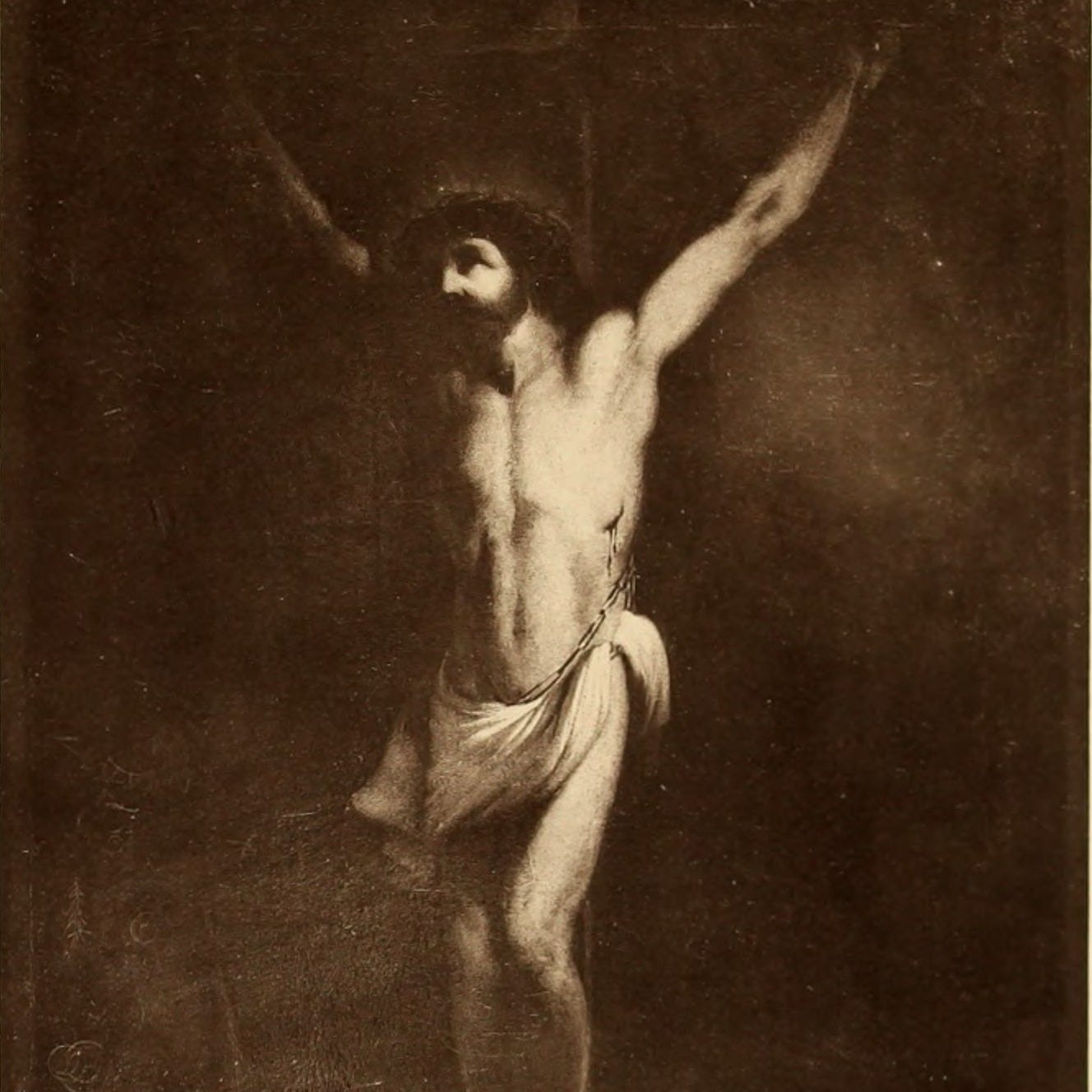
What if you could know what Jesus was thinking on the Cross?
Well, you can.
Around a thousand years before Jesus died on the Cross, Jesus’ own ancestor wrote a lament about being surrounded by his enemies.
Little did he know he was revealing the hidden mind of the suffering God.
And it radically changes the story of the Cross—as the cry of despair by Christ is revealed to ultimately be a shout of triumph amongst His enemies.
A shout of victory to which you are invited.
This is a teaser of our members-only deep dives.
We are a 100% reader-supported publication. To support our mission and get our premium content every single week, please consider subscribing for a few dollars per month.
New, full-length articles every Tuesday and Friday
The entire archive of members-only articles and essays
Access to our paid subscriber chat room and community
Why did Christ die for you?
At the heart of Christianity lies a staggering claim: God died for you.
Before you can understand how the Bible reveals the mind of Christ upon the Cross, you need to understand the purpose of the Cross.
Christians have many ways to articulate the mystery of the death of Jesus, but one helpful explanation is that the Cross is the answer to the problem of justice.
You see, when you commit an act of injustice, it is just to punish you proportionately for your offense. So, if you steal a truck, your punishment may be some time in prison and restitution toward the owner.
If you stole a truck and received the death penalty, that would be unjust.
Justice is about harmony and proportionality. And the punishment for an unjust act must always be proportionate to the good violated.
Well, here is the problem.
God is not simply one good amongst many. He’s not even the highest good of some hierarchy of goods. He is Goodness-itself, the source of all good things. He is infinitely good.
So, when mankind sinned against God, Adam and Eve committed an act of injustice against the infinite Goodness-itself.
Man, as a finite creature, cannot pay the punishment of offending infinite Goodness.
It is beyond his capacity, his very being.
And so, following St. Anselm’s famous dilemma of the Cross, the problem is that man is guilty but only God has the capacity—because man is finite but owes an infinite debt, while God is infinite but innocent.
How do you solve this problem?
You need a God-man.
You need someone who is both God and man, an incarnate God. God steps into humanity to reconcile the injustice of mankind. It weds the capacity to pay the debt with the guilt of the one who owes it.
It is here that the story moves from a problem of justice to a radical story of love—that God would become man and die for His Creation in order to reconcile them to Himself.
It is in this narrative of love and suffering that you may ask—what was God thinking upon the Cross?
You may know that Christ, the God-man, cried out: Eli, Eli, lema sabachthani (Matthew 27:46).
And you may know that this means: My God, my God, why have you forsaken me?
But did you know that this line is actually the title of a Psalm?
And that Christ is referencing this Psalm as a subtle hint to those who follow Him that what is on His heart upon the Cross is found in a thousand year old text.
It is an incredible invitation to a deeper understanding of Jesus.
