


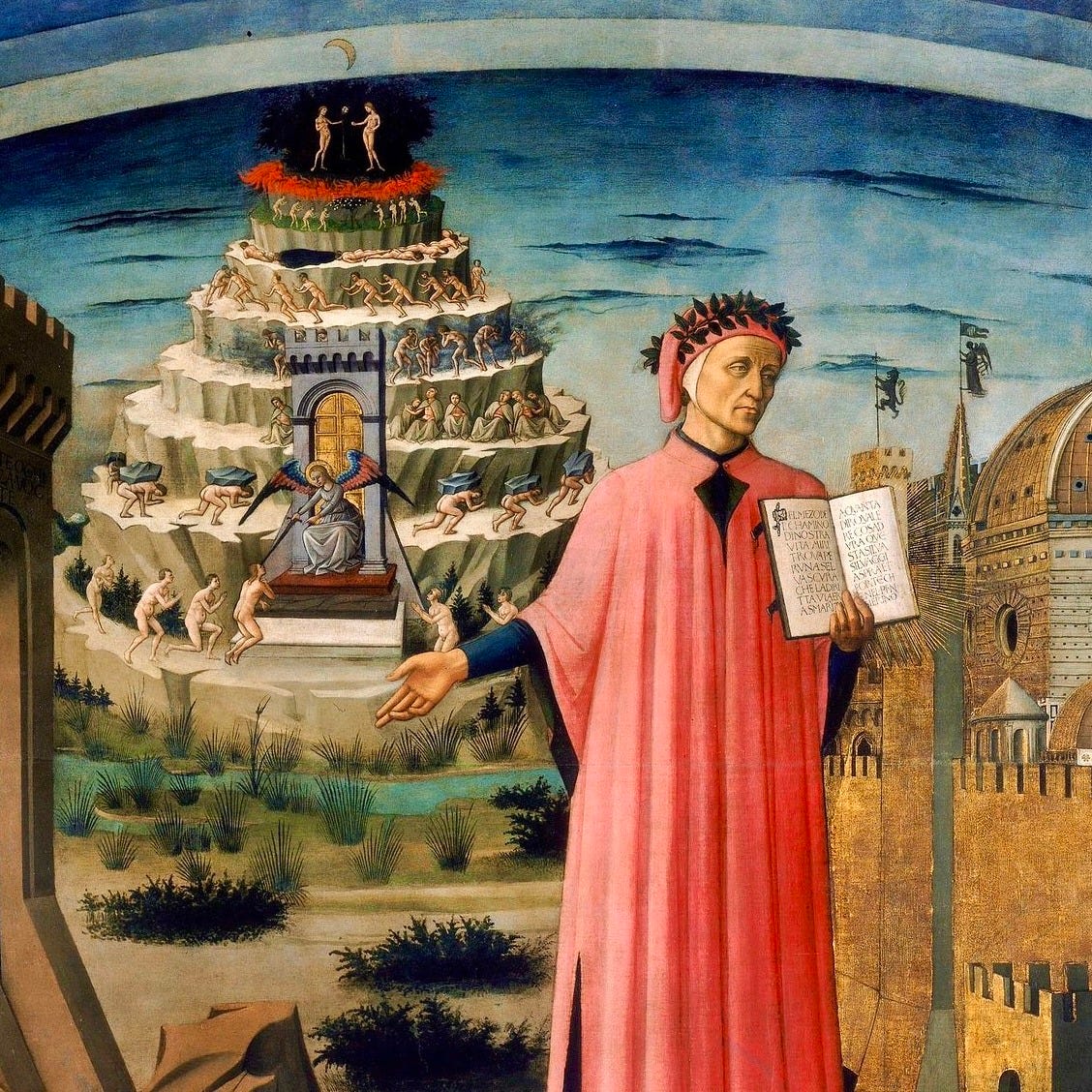
Hell wins our attention.
Dante’s Inferno hooks us with its grotesque punishments, its lurid sins, and its seductive stories—because we recognize that depravity in ourselves.
But the canticle that will save your soul is Purgatorio.
In the Purgatorio, Dante provides a map for the soul’s ascent to God—an entire library of resources to assist the soul in becoming beautiful as Christ is beautiful.
It is the most human of the canticles—a story of failure, forgiveness, and perfection.
Your soul needs the Purgatorio. Here is why.
Reminder: you can support our mission and get all our members-only content for just a few dollars per month:
New, full-length articles every Tuesday and Friday
The entire archive of members-only essays
Access to our paid subscriber chat room
A Surprisingly Human Story
The Purgatorio is the most human canticle in the Divine Comedy. You shift from the eternal despair of the Inferno to a journey of ascent marked by humility, hope, and the desire to make your soul beautiful as Christ is beautiful. Dr. Jason Baxter, who recently translated the Purgatorio, calls the Purgatorio “a place of eternal New Year’s resolutions,” where souls have entered into salvation—but they remain imperfect, still attached to sin. Dr. Baxter comments: “They have repented of a life of emptiness... But they’re not yet good at love. And they’re not yet good at communion.”
Unlike the damned in hell who suffer eternal torment or the blessed in heaven who are perfect in Christ, the Purgatorio is about overcoming sin and embracing God—and this makes it the most like your pilgrimage here on earth, the most human of the canticles. The penitent souls embrace their punishments, because the punishments are purgative—they are purging away the disorder and moving the soul closer to Christ.
It is in the stories of the penitent souls on Mount Purgatory that you see yourself—an invitation to become more of your true self in God.
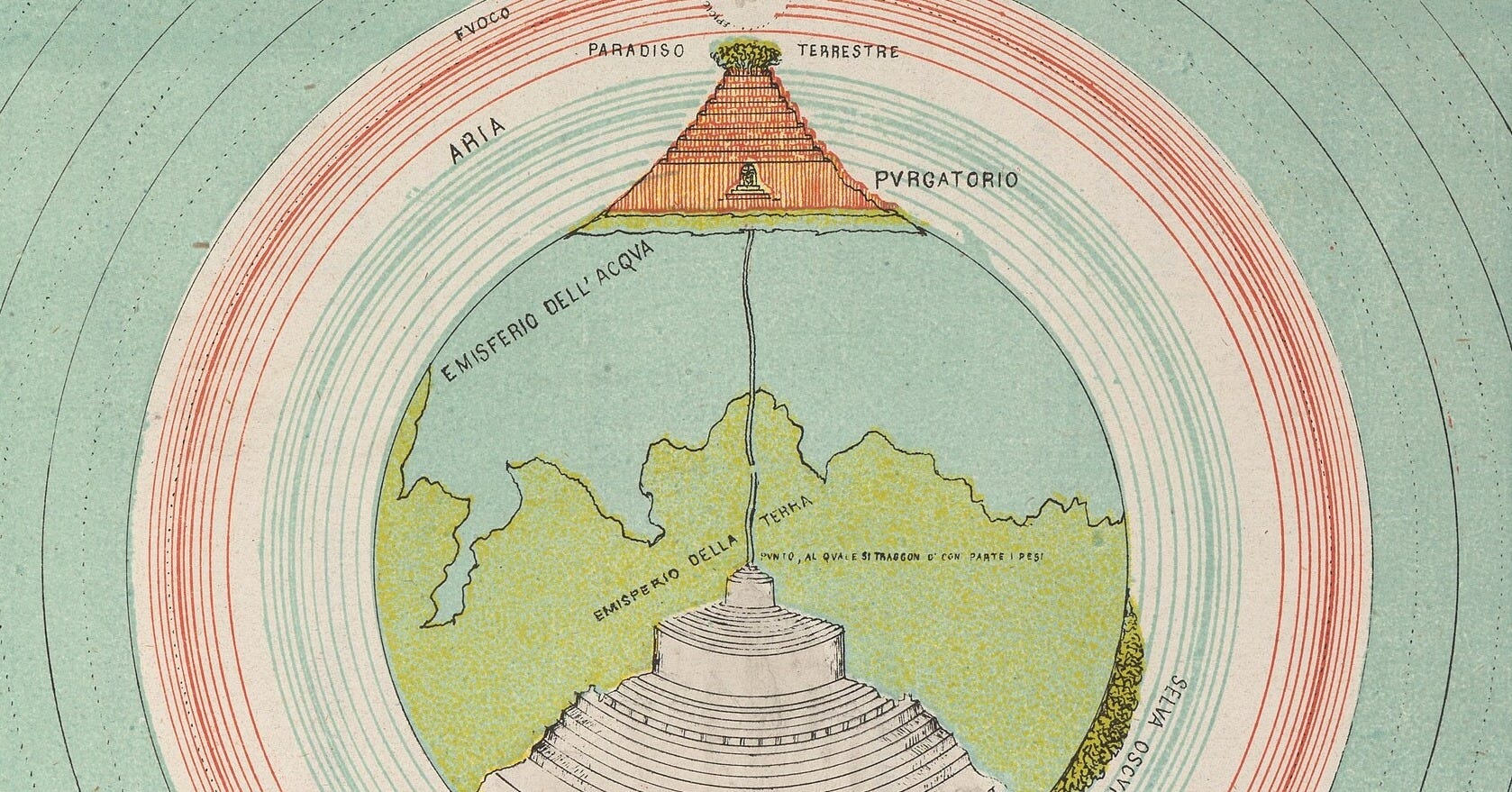
Like Surgery on the Soul
The Purgatorio is like “spiritual surgery,” says Dr. Baxter, a painful process in which the “carcinogenic” elements of sin are removed and replaced with love. Like in hell, the souls endure pain and suffering, but here is the primary difference: the souls in purgatory embrace the suffering. It is purgative. In other words, the pain has a purpose. There is joy in purgatory amongst the green hills, warm sun, and bright skies. Everyone is working on their soul. Everyone is spiritually maturing.
Using a different metaphor, the Purgatorio is like a spiritual guidebook. It is one of the absolute best texts you could read if you want to become more Christ-like. Dante the Poet provides you a priceless mapping of the soul’s ascent to God. He presents purgatory as a mountain with seven terraces and each terrace purges one of the seven deadly sins—pride, envy, wrath, acedia, avarice, gluttony, and lust. But here is the amazing part: each terrace has an entire liturgy of resources to help you purge your soul of that sin.
The liturgy includes a pattern that repeats on each terrace: souls performing penance, a meditation on examples of the virtue that purges the vice, meditation on examples of the vice, a prayer, a guardian, and a benediction or beatitude. So, what does this look like in practice?
Well, on the first terrace of the Purgatorio, the penitent souls are purged of pride. For their penance, they carry large stones on their back and force them to bow—a posture of humility. On the ground, the souls meditate on examples of pride carved into the floor of purgatory, like the fall of Satan. As the stone lessens as they grow in humility, they are then permitted to see examples of humility carved into the side of the mountain. The prayer they say is the Paternoster, the Our Father, the beatitude sung is Blessed is the poor in spirit, and the guardian is the angel of humility—who will let you pass to the next terrace.
Each terrace is a library of resources to help you purge the sin.
It is one of the best mappings of the soul’s ascent to God ever written.
The True Purpose of the Christian Life
Dante the Poet understands the purpose of the Christian life. He understands that the life of a Christian is not about avoiding sin but about actively configuring your soul to Christ. It is a positive vision, one that calls the soul to simultaneously become more Christ-like and more itself. Dr. Baxter sees the Purgatorio as incarnational, a human tale in which you become more human the more you ascend to God.
In a world of despair and ugliness, Dante’s Purgatorio gives you the hope that a beautiful transformation of the soul is possible. You can be “re-greened,” as Dr. Baxter states, a Dantean concept of new springtime, of a new beginning.
Dante the Poet gives you a map to a beautiful life with God—if you will receive it.
PS: Read the Purgatorio for Lent!
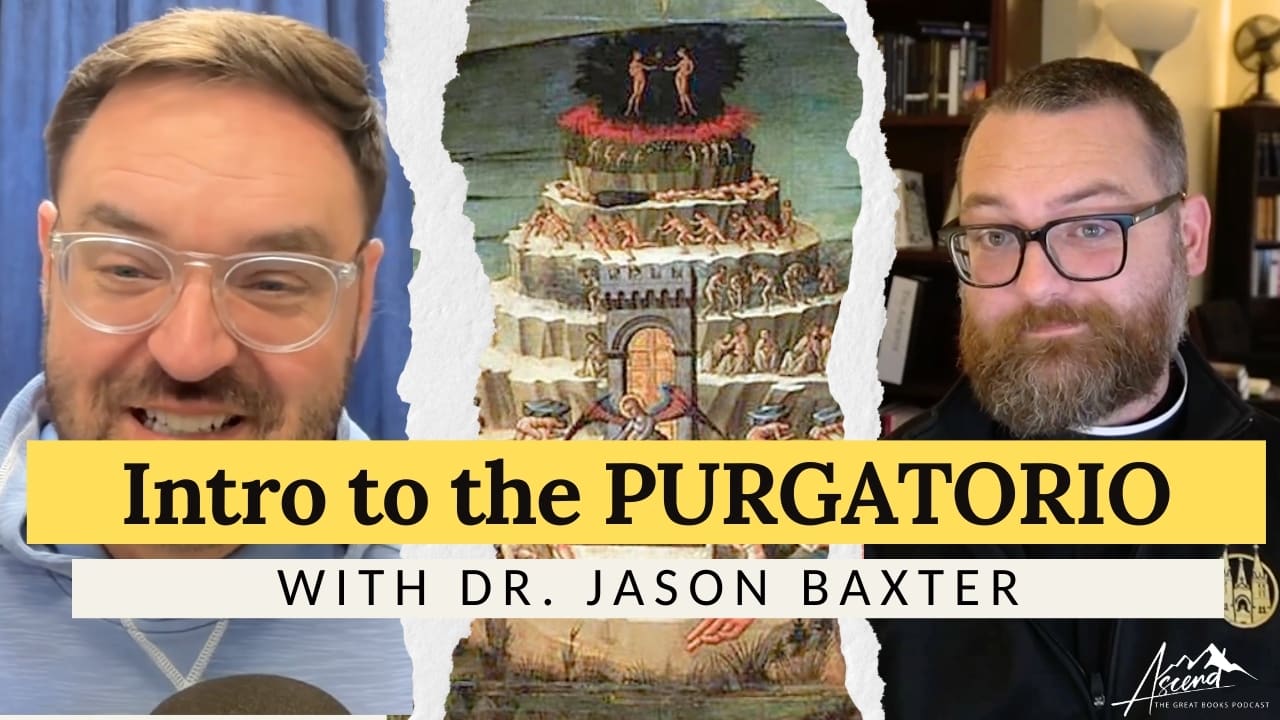
Want something good to read over Lent? Join Dcn. Garlick, Dr. Jason Baxter, and others as they discuss Dante’s Purgatorio for Lent over at our sister publication, Ascend: The Great Books Podcast. Out today is An Introduction to Dante’s Purgatorio with Dr. Jason Baxter and the reading schedule and information is in the shownotes. And if you haven’t read the first canticle of the Comedy, the Inferno, then don’t worry! Ascend read that last year for Lent, so all those videos, podcasts, and written guide are already posted. Read Dante and have a great Lent!
Dcn. Harrison Garlick is a deacon, husband, father, Chancellor, and attorney. He lives in rural Oklahoma with his wife and five children. He is also the host of Ascend: The Great Books Podcast. Follow him on X at Dcn. Garlick or Ascend.
What a horrible thought: locked in some place of anguish after a lifetime of trial and error.
Your soul needs Christ, Who on the cross said, "It is finished!"
You could spend 100,000 years in some Purgatory and not be one whit closer to perfection,
but thank God, you don't have to because His righteousness is yours.
Rejoice in the freedom Christ won for you, and meditate on that.