


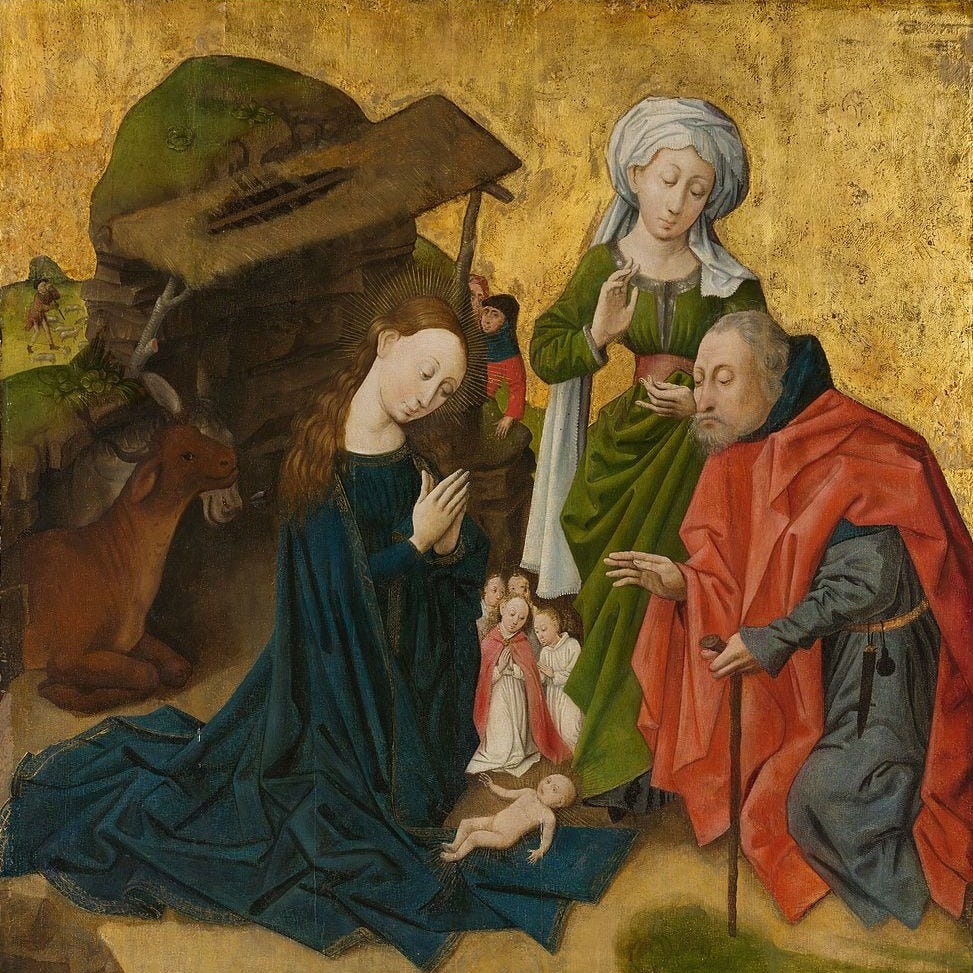
You could have the best Christmas of your life this year.
Advent is the liturgical season of preparation and penance leading up to Christmas, but it is often lost amongst the dominant consumerist culture.
The world wants the Christian feasts but not the Christian fasts.
How then can you best use Advent to cultivate in the soul a proper anticipation of the mystery that is Christmas?
Well, a good medieval saint gave you a wonderful mediation on the three advents of Jesus Christ.
It helps to break away from the flat, false perceptions of Christmas and dive into the rich mystery of Christmastime.
Advent is a time to ascend! The spiritual path awaits.
Reminder: you can support our mission and get all our members-only content for just a few dollars per month:
New, full-length articles every Tuesday and Friday
The entire archive of members-only essays
Access to our paid subscriber chat room
What is Advent?
In the Catholic tradition and many other Christian groups, the year is organized into liturgical seasons that reflect the life of Christ. In this way, your journey throughout the year mirrors the life of Jesus. Advent is the season before Christmas. Advent means “to come” or “to arrive.” It helps to cultivate the soul for Christmas, like the season of Lent does for Easter. Advent consists of four Sundays, which are represented by four candles on the Advent wreath. Each Sunday a new candle is lit in anticipation of Christmas or “Christ’s Mass,” the celebration of the Incarnation, i.e., when the Second Person of the Blessed Trinity, the Son, became man.
Yet, Advent is often overshadowed by the consumerist, secular culture that has surrounded Christmas. Many are often surprised, as you may be, to know that Advent is a penitential season. It is a season of self-reflection that should be marked by sacrifice and self-discipline. You should note that both the Advent and Lenten seasons use purple as the liturgical color, a color symbolizing penance. The spiritual intent of Advent presents a stark contrast to consumption and materialism that marks the weeks before Christmas in the United States. The general culture starts celebrating Christmas immediately and then after Christmas it is over, while the original intent, seen in the liturgical year, is that the weeks of Advent would be a slow, sober anticipation that gradually builds to the joy of Christmas—and then a whole season of Christmas time is celebrated.
But the world wants the Christian feasts (e.g., Christmas, Easter) but not the Christian fasts (e.g., Advent, Lent).
So, how can you break from the cultural consumerist mold and better prepare your soul for Christmas?
You can turn to a good saint for guidance.
St. Bernard of Clairvaux (AD 1090-1153), one of the great mystics, presents you with a wonderful lattice work upon which you can grow in your spiritual understanding of Advent. He set forth three advents of Jesus Christ, and all three are represented in the liturgical season of Advent. Each one comes with a new truth to contemplate and new spiritual practices to put in place. It is a wonderful introduction to Advent and a great place to start.
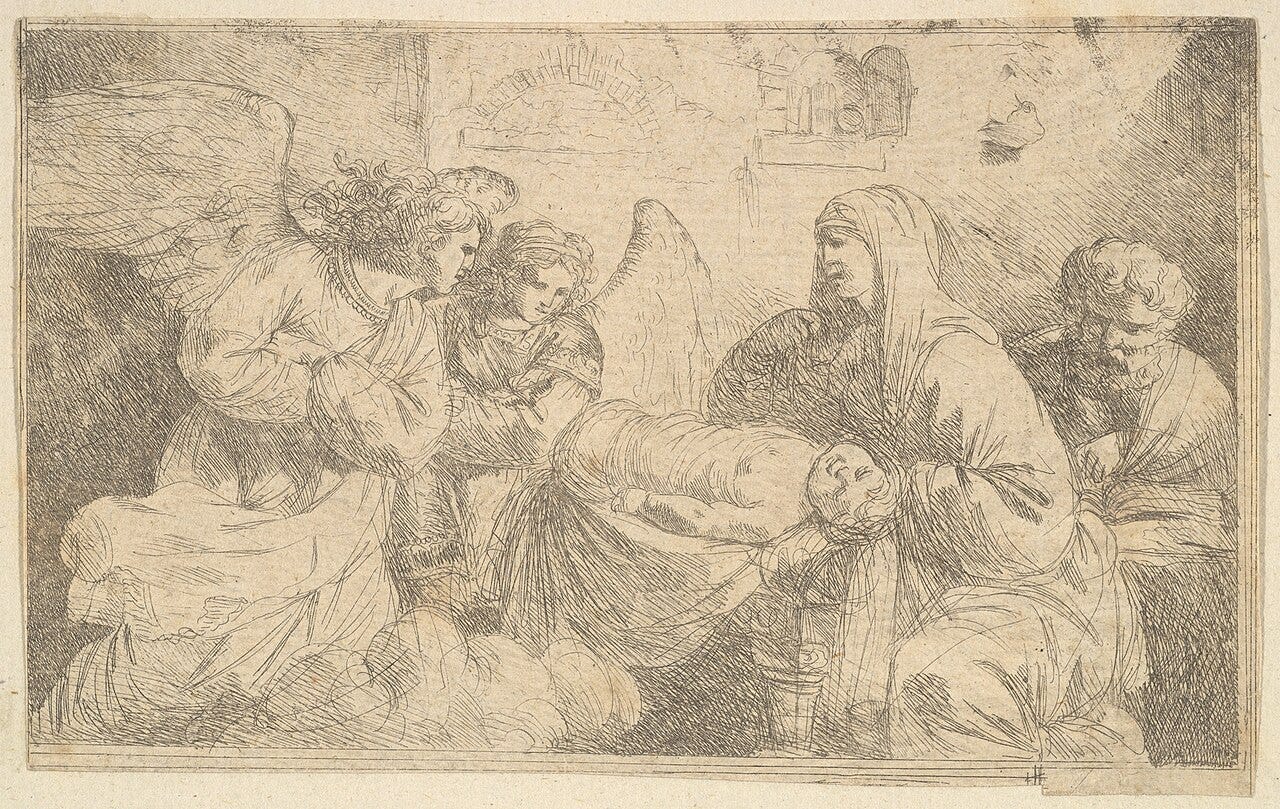
The First Advent: The Incarnation of Jesus Christ
The first advent is the advent most associated with the Advent season and Christmas: the Incarnation of Jesus Christ. Though the most familiar, that does not mean it is the most understood. Christians believe that God became man in Jesus Christ—that Jesus was fully man and fully God. He was born of the Virgin Mary and was human, like you, in all ways except sin.
Yet, an important but overlooked question here is who became flesh?
Yes, it is true to say that God became man, but more specifically the Christian belief is that the Second Person of the Blessed Trinity, the Son, became man. Who is He? In other words, does the Son have an identity or role prior to becoming incarnate that could help you appreciate what has actually occurred at Christmas?
St. John opens his Gospel as follows: “In the beginning was the Word, and the Word was with God, and the Word was God” (John 1:1). He later tells us that this Word became flesh in Jesus Christ (John 1:14). But what or who is the Word? In the Greek, St. John is using the term Logos, which is a rich and multivalent word in Greek philosophy. It often means the ordering principle of a thing, its rational structure or essential nature. For example, Socrates in the Euthyphro is seeking the logos of piety, and in the Republic he is seeking the logos of justice. Aristotle will use logos to describe an argument that appeals to the intellect. The word logos has diverse but related meanings in other thinkers too, like Philo of Alexandria (c. 20 BC–AD 50), the Hellenized Jewish philosopher, and Heraclitus (c. 535–475 BC).
St. John draws from this rich Hellenized tradition to describe the Second Person of the Blessed Trinity as the Logos to show that the Word is the ordering principle of all reality. The opening of St. John’s Gospel is an allusion to the opening of Genesis, as St. John wants you to connect the Word made flesh with the Word God spoke to create. God created all things by His Word, and it is this Word, the Logos, that has become flesh—the very logic of being has become man. The Word, made flesh in Jesus, made all things and continues to hold all things in being (Col 1:17). St. John’s use of the term Logos reveals an indelible Greek mark upon Christian thought.
So, in this first advent of Christ, you are invited to contemplate who has become flesh and, in understanding the richness of the Logos, contemplate the humility of God. St. Augustine referred to the Logos as the Divine Mind. In other words, in the Incarnation, the Mind comes to dwell amongst His thoughts. It is an act of divine condescension, of divine humility—and not only does He become man, but he’s born to modest family in a manger.
In understanding the grandeur of the Logos, you can understand the humility of the Incarnation—a humility you and other are called to imitate.
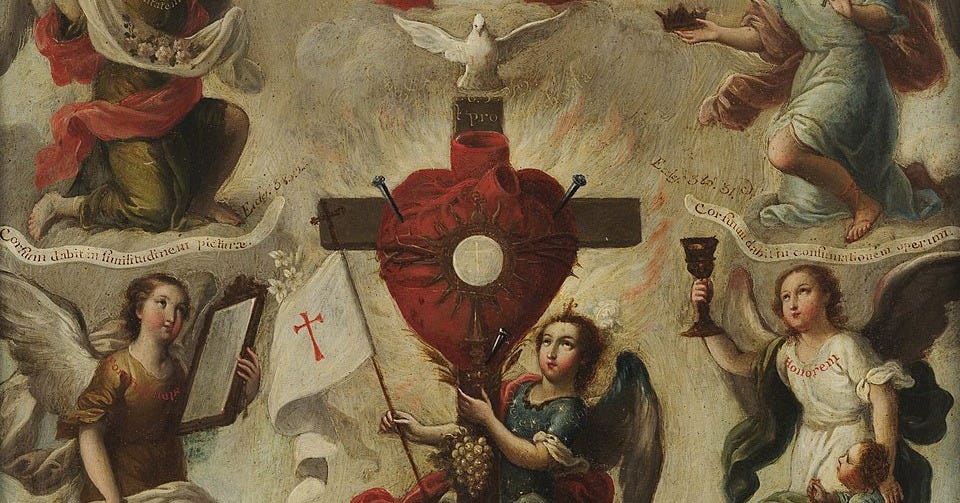
The Second Advent: The Blessed Sacrament
If the first advent of Jesus is an historical event, the second advent is the daily arrival of Jesus Christ in your life. Jesus loves you, and Christians see Jesus working in their lives in small and subtle ways. The second advent invites the soul to be be grateful, to have a true piety, for the workings of the Lord in its life.
This is most clearly seen in what Christians, specifically Catholics, called the Blessed Sacrament or Holy Communion. Catholic believe that Holy Communion, also called “the Eucharist,” which means “thanksgiving,” is the body, blood, soul, and divinity of Jesus Christ. In other words, Jesus gives His followers His true self as an act of divine communion with them—they are brought into the Body of Christ, the Church, under the headship of Jesus. It is by uniting to Jesus, the Second Person of the Blessed Trinity, that the Christian enters into the life of love of the Trinity—the salvation of mankind.
Notice that again this second advent is an act of divine humility. Jesus, God Himself, that which created reality and holds it in existence, comes in the form of food for His followers (John 6:22-71). For those who receive Communion, it is an act of divine humility to which one must respond with proper reverence and respect. As with the first advent, God leads by humility and His followers echo it.
So, in the second advent, you can contemplate how Jesus is at work in your daily life, which is most evident in the daily advent of Christ is the Blessed Sacrament—the giving of Himself to humanity daily.
How can you take greater note of the blessings you have received? How can your gratitude (piety) for Jesus’ work in your life inspire you to be more Christ-like?
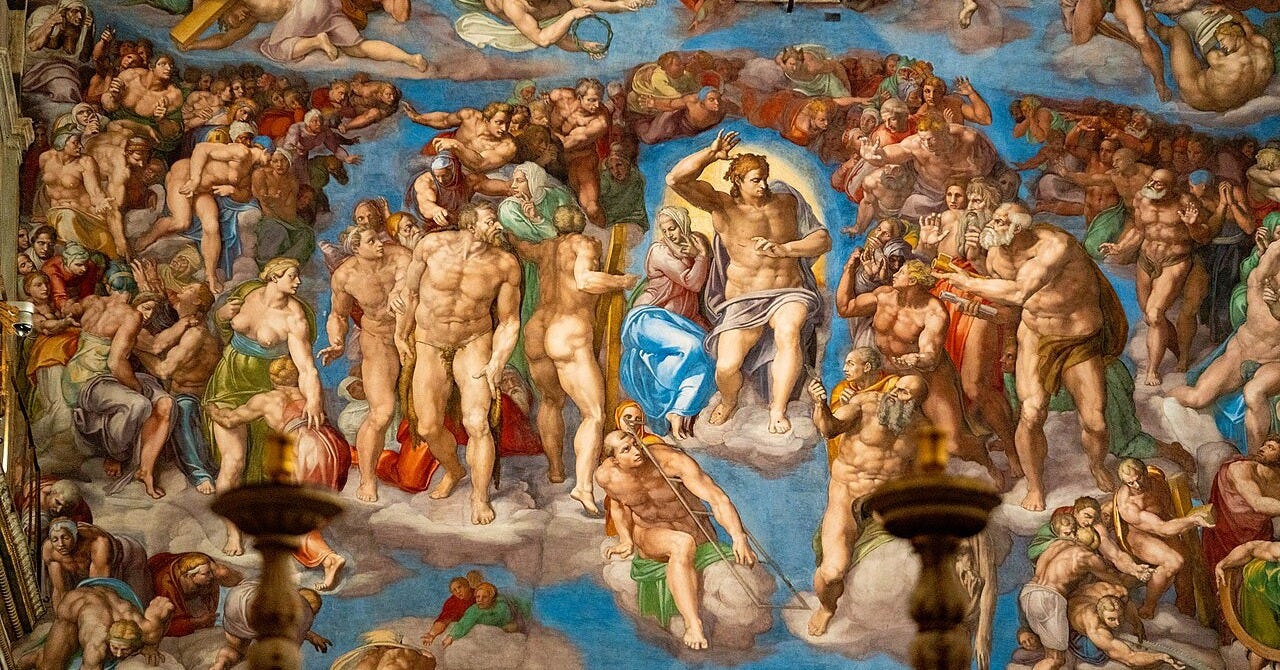
The Third Advent: The End Times
The third advent of Jesus Christ is the one most unassociated with Christmas. It is not the quiet, humble advents of the Incarnation or the Blessed Sacrament, but the Christ who comes at the end of the world—one who comes in triumph and victory. In the Catholic Mass, many are often surprised that the bible readings for Advent speak of the end times—but this is because the first two advents of Christ as supposed to remind us that Christ is coming again. It presents the clearest picture of why Advent is a penitential season, because in Advent we are called to remember the four last things: death, judgment, heaven, and hell.
What a contrast to the world’s consumerism leading up to Christmas!
The third advent is not an invitation to despair but rather to hope. Are you prepared for your death? This Christian devotion is captured in the phrase memento mori, i.e., to remember your death. Recalling that you will die is not some morbid practice, but rather a healthy contemplation of how you spend your days. It makes you think of whether you are living your life with purpose and excellence—or have you drifted into acedia and things without any real meaning? Do not waste your life. Remember that you will die and live accordingly.
The third advent invites you to contemplate the four last things (death, judgment, heaven, and hell). So, what spiritual practices can help? The classic go-to practices for discipling the soul are prayer, fasting, and almsgiving. Again, this is where Advent takes on its penitential character.
It may seem odd as everything around you cries out to consume to incorporate these three spiritual disciplines, especially fasting, into the Advent season, but these practices will help your soul prepare for the mystery of Christmas. You can still participate in amicable Christmas festivities, but you may think about giving something up over Advent, like TV on weekdays or picking a new prayer to learn, like the Our Father or the Glory Be. Another popular pious act is to clean out your house and give what you do not need to the poor (or have children clean out their toys).
You can incorporate these disciplines (fasting, prayer, almsgiving) in even small ways to great spiritual effect.
Prepare for the Mystery of Christmas
Advent is a time of preparation. The world wants the Christian celebrations but not the Christian self-discipline. By listening to the ancient voice of St. Bernard, you can intentionally enter into the mystery of Christmas. Contemplate the the three advents of Christ and practice the virtues they extol.
You can have an amazing Christmas.
The spiritual path is set before you.
Happy Advent!
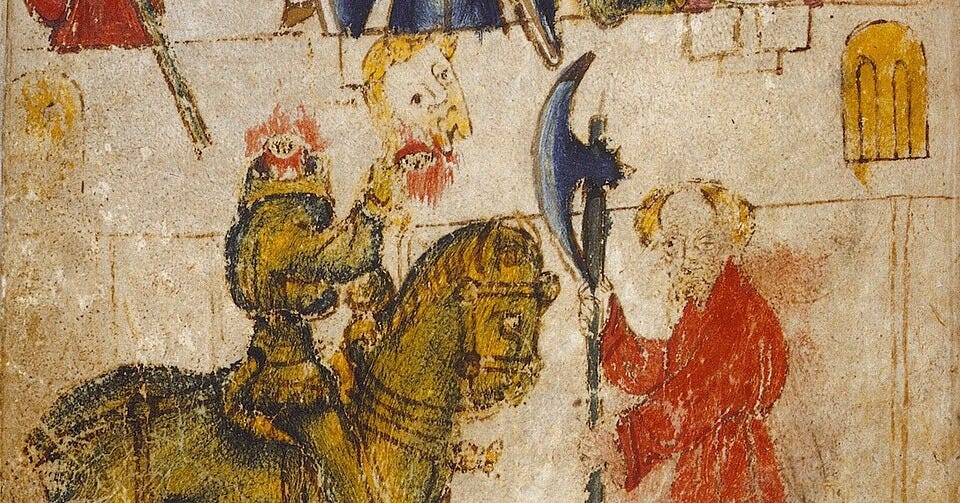
Post Script: A Christmas Reading!
We are reading Sir Gawain and the Green Knight (trans. by Tolkien) for Christmas! Join Dcn. Garlick and others over at Ascend: The Great Books Podcast to read this excellent Christmas tale together! It is a wonderful poem that tells one of the most famous stories from the Arthurian legends. We’ll be discussing an intro and Fitt 1 (12.16), then Fitts 2-3 (12.23), and end the discussion with Fitt 4 (12.30). Just follow the podcast or YouTube channel and join us!
Dcn. Harrison Garlick is a deacon, husband, father, Chancellor, and attorney. He lives in rural Oklahoma with his wife and five children. He is also the host of Ascend: The Great Books Podcast. Follow him on X at Dcn. Garlick or Ascend.
I didn't know about the three Advents. I know about the four Adventssonntage, when I lived in Switzerland, where you sang and prayed the four Sundays before Christmas. The first was two days ago. For the children, the Adventskalender, starting the 1st December, with 24 windows, each with a small sweet inside. One a day is opened. The last one is double, with a Nativity and the biggest sweet inside.