


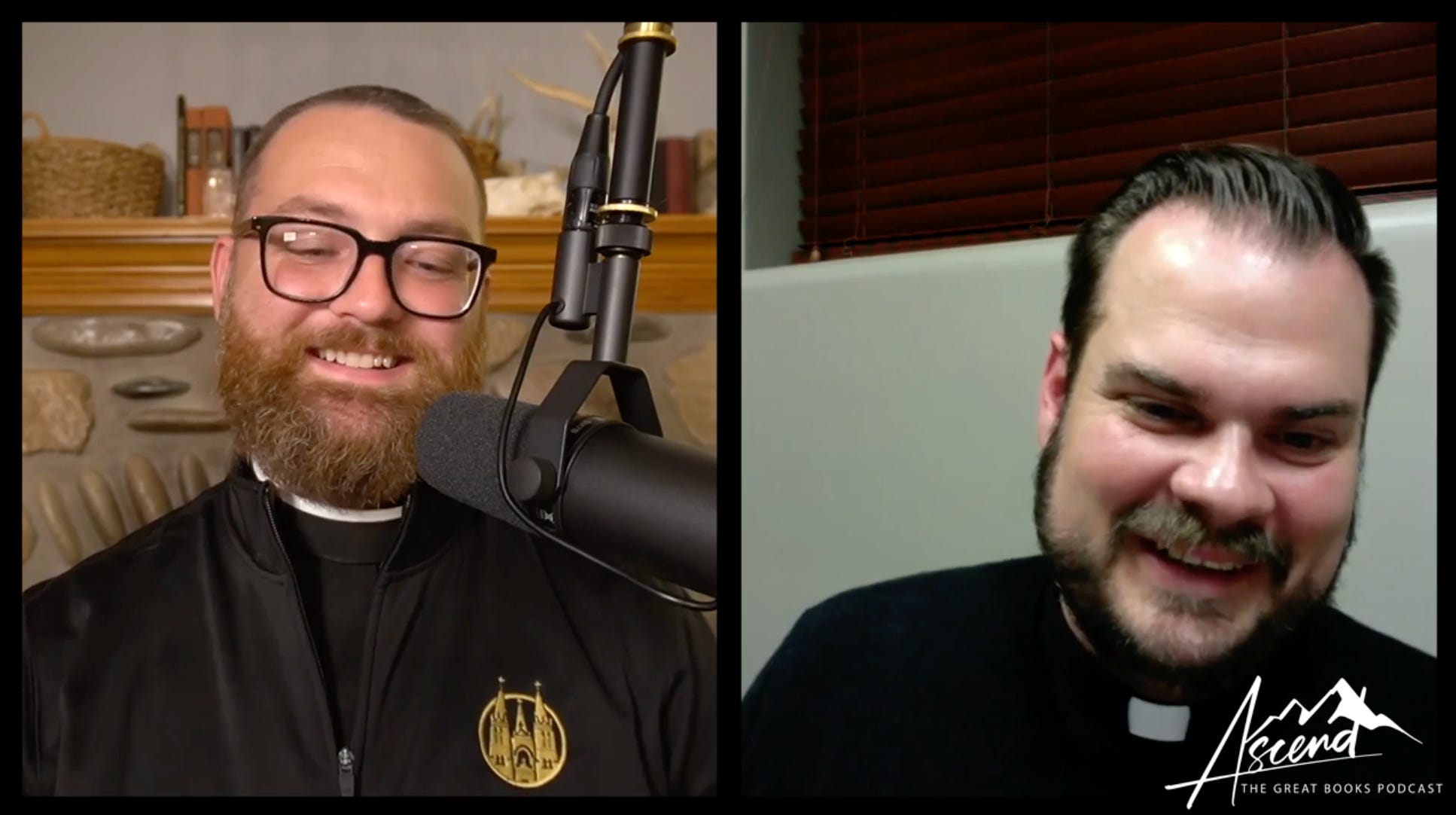
The Apology is one of the great speeches in the Western tradition. And Ascend was honored to host Fr. Justin Brophy, OP, to be a guide and mentor through this vitally important text.
The discussion explores Socrates’ defense speech at his trial in 399 BC, set against the backdrop of post-Peloponnesian War Athens. The conversation delves into key themes, including the role of Aristophanes’ The Clouds in shaping Socrates’ negative reputation, the tension between philosophy and politics, and the influence of Alcibiades on the charges of impiety and corrupting the youth.
Fr. Brophy and Dcn. Garlick examine Socrates’ story from the Oracle of Delphi, his distinction between human and divine wisdom, and his refusal to charge fees, distinguishing him from sophists. They also discuss the broader implications of Socrates as a threat to the democratic polis, the conflict between philosophy and poetry, and the natural antagonism between the demos and the great-souled man. The episode highlights Socrates’ pedagogical approach and the relevance of his trial to modern questions of truth, virtue, and societal stability.
Here are the Ascend Book Club materials to help you read:
Detailed Q&A written guide to help you navigate the Apology well
Two excellent videos exploring the Apology (below)
Videos also available as archived podcasts.
“Killing God for His Impiety,” a reflection on the Apology.
Join our reading group and study the great books with us!
To support our mission and get all our resources, become a paid book club member. In addition to the weekly podcast, you’ll get:
Live book club discussions / Q&A with Dcn. Garlick & guest scholars
In-depth reading guides and essays to lead you through the great books
Access to our incredible community of readers
The full archive of members-only content (guides, essays, and podcasts)

Video Discussions on the Apology
While not necessary, it is beneficial to study the Euthyphro prior to the Apology to better understand the question of piety. The Euthyphro raises the question of what is piety, and the Apology arguably answers this question by showing you how Socrates describes his daemon and the God. On a separate note, the Apology shows you the tension between the philosopher and the democratic city—and the problems of democracy are made more explicit in the Republic, see “The Spiritual Harm of Democracy.”
Good work finishing the Apology. The conversation continues with Socrates in prison in the Crito and then Socrates’ death in the Phaedo. The last days of Socrates are worth your time and attention. Keep up the good work.
Dcn. Harrison Garlick lives in rural Oklahoma with his wife and five children. He serves as a deacon at Holy Family Cathedral and as Chancellor & General Counsel for the Roman Catholic Diocese of Tulsa. Follow him on X at Dcn. Garlick or Ascend.